

Last Updated: November 1, 2026
Quick Summary
Sensory friendly food ideas for children work by changing the food, setting or pace so the sensory input feels manageable, rather than asking a child to tolerate a texture their body rejects. Match meals to your child's sensory profile, keep two or three safe foods on the plate, and add one small new item beside them.
- Sensory seekers crave crunch and strong flavour, so offer raw carrot batons, crackers and popcorn.
- Sensory avoiders need plain, separate, consistent food such as plain pasta with butter and smooth yoghurt.
- Work on one sensory dimension at a time and keep the other four familiar.
- Food chaining moves from an accepted food to a new one through small logical steps.
- Speak to your GP or health visitor if your child is losing weight or eating very few foods.
Table of Contents
- Why Sensory Friendly Food Ideas Work Better Than Persuasion
- Matching Sensory-Friendly Meals for Children to Their Profile
- Crunchy Food Ideas for Children Who Need That Feedback
- Soft, Smooth and Predictable Safe Foods
- Food Chaining for Picky Eaters: A Gentle Bridge to New Foods
- Sensory Food Play Activities That Build Comfort First
- Safety, Substitutions and When to Ask for Help
- Filling the Gaps While Their Diet Stays Narrow
- Frequently Asked Questions
Why Sensory Friendly Food Ideas Work Better Than Persuasion
Most mealtime battles are not discipline problems. They are sensory problems wearing a disguise.
That is why sensory friendly food ideas for children work where persuasion fails. If you want to understand why kids reject healthy food textures, that guide explains the reasons behind the refusal.
Below, we'll share ideas that suit different children, plus a low-pressure approach to introducing anything new.
Matching Sensory-Friendly Meals for Children to Their Profile
Sensory-friendly meals for children work best when they match the child's sensory profile rather than a generic "picky eater" label. Broadly, children lean towards seeking more sensory input or avoiding it, and the same plate can delight one and distress the other. NHS guidance on children's sensory differences is a useful starting point if you are still working out which pattern fits your child. If you are unsure whether your child has sensory processing differences, you can recognise the signs of sensory processing issues in children.
A more useful way to plan is to think in five sensory dimensions, texture, temperature, smell, sound and taste, and note which ones your child reacts to most strongly. Most children have one or two dominant triggers, and once you know them you can pick foods that work with the grain of their nervous system rather than against it.
Sensory Seekers: Children Who Want More Input
Seekers crave crunch, strong flavour and heavy texture. They often eat loudly, prefer foods they can snap or crack, and find soft, uniform textures boring. Give them:
- Raw carrot batons, cucumber sticks and pepper strips
- Toasted pitta triangles or plain crackers
- Apple slices with a yoghurt dip
Sensory Avoiders: Children Who Need Less
Avoiders find mixed textures, strong smells and unpredictable shapes overwhelming. They want food that looks the same every time. Keep it plain, separate and consistent:
- Plain pasta with butter, no sauce
- Smooth yoghurt in the same bowl each day
- Bread cut into the same shape
Mapping Food Ideas to Each Sensory Dimension
Temperature. Some children find hot food overwhelming because the smell intensifies as it cools.
Smell. Strong smells can trigger refusal before the food reaches the mouth.
Sound. The sound of eating, crunching, slurping, squelching, can be distressing for some children.
Taste. Some children prefer bland, predictable flavours and find anything sharp or mixed overwhelming.
A simple rule of thumb: pick one dimension to work on at a time.
| Dimension | For children who need less | For children who seek more |
|---|---|---|
| Texture | Mashed potato without lumps, smooth yoghurt, blended soup | Toast strips, roasted chickpeas, rice cakes, cucumber batons |
| Temperature | Lukewarm rather than hot food | Frozen yoghurt tube or warm toasted sandwich |
| Smell | Plain rice, plain pasta, bread, oatcakes | Cinnamon on porridge, mint in yoghurt, vanilla in milk |
| Sound | Yoghurt, mashed potato and porridge reduce the noise | Popcorn, crackers and raw vegetables deliver crunch |
| Taste | Bland, predictable flavours | Salty, sour or spicy notes |
Crunchy Food Ideas for Children Who Need That Feedback
Crunchy food ideas for children are the simplest win in the whole sensory toolkit, because crunch delivers clear, predictable feedback that seekers find calming. The key is offering crunch without a battle over the main meal.
Try these:
- Toast strips cut thin and baked until crisp
- Roasted chickpeas tossed in a little oil and salt
- Sweet potato fries cut into matchsticks for maximum edge
- Rice cakes with a thin spread of cream cheese
- Cucumber and pepper batons served ice cold
- Plain crackers as a side to any meal, no negotiation needed
Serve crunchy foods alongside the familiar meal rather than instead of it. A child who knows crunch is always available is far more relaxed about the rest of the plate.
Soft, Smooth and Predictable Safe Foods
Safe foods are the backbone of sensory-friendly eating, and they deserve more respect than they usually get. A safe food is one your child accepts every single time, without inspection or anxiety. It is not a failure of parenting; it is the anchor that makes everything else possible.
Build meals around two or three safe foods and add one small new item beside them. Smooth textures suit avoiders particularly well: mashed potato without lumps, smooth yoghurt, blended soup in a familiar cup, porridge at the same consistency each morning. Predictability matters as much as texture, so keep the plate, the cup and the seat the same where you can.
The NHS advice on fussy eating makes the same point: repeated, calm exposure beats pressure every time.
Food Chaining for Picky Eaters: A Gentle Bridge to New Foods
Food chaining for picky eaters is a step-by-step method that moves a child from an accepted food to a new one through small, logical changes in texture, taste or appearance.
A typical chain looks like this:
LittleVitz Milk Frothing Wand →
- Breaded chicken nuggets, the current safe food
- A different brand of breaded nugget, same shape
- Breaded chicken strips, slightly longer
- Breaded chicken pieces with a thinner coating
- Plain cooked chicken with a little breadcrumb sprinkled on top
- Plain cooked chicken
Each step stays for as long as your child needs, often a week or more. If a step is refused twice, go back one and try again later. The goal is success at every rung, not speed.
Sensory Food Play Activities That Build Comfort First
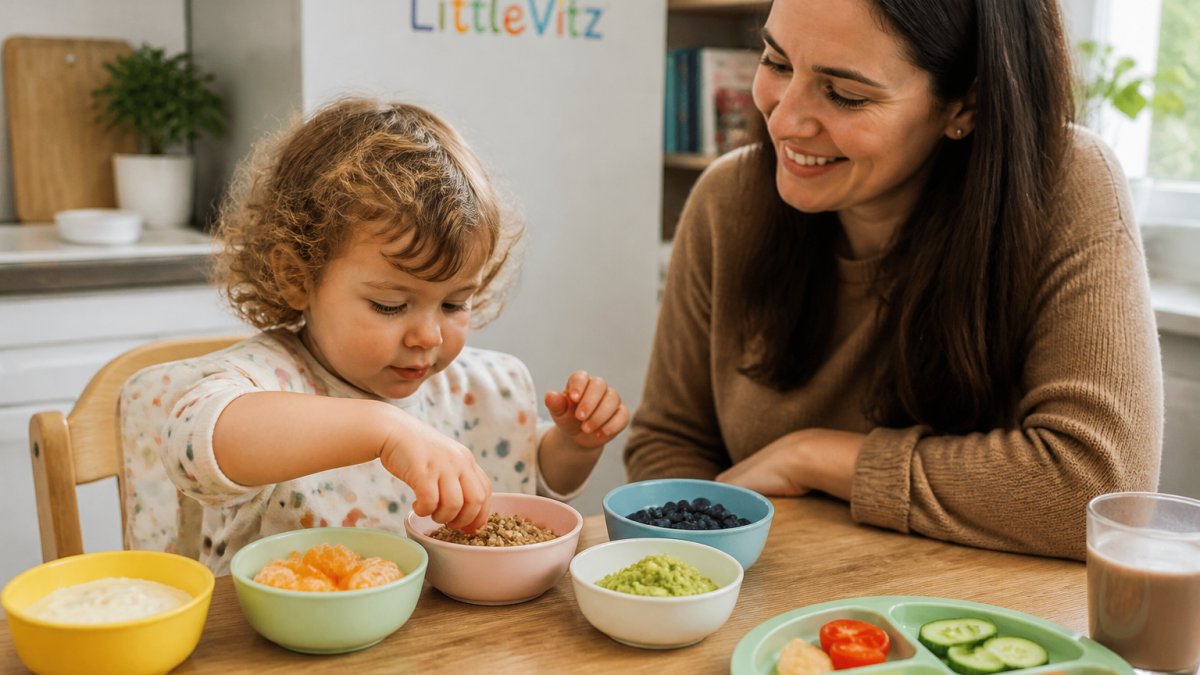
Sensory food play activities take the pressure off eating entirely by separating "exploring food" from "consuming food". Research from the charity Contact on feeding differences consistently highlights that pressure at the table backfires, while play lowers the stakes.
Try these at a time when nobody is hungry and there is no meal to finish:
- Texture trays: small bowls of dry pasta, rice, lentils and cereal for hands-only exploration
- Washing vegetables: a bowl of water, a scrubbing brush and carrots or potatoes
- Baking together: measuring, mixing and shaping dough with no expectation of eating the result
If your child recoils at the very idea, start with dry, non-messy materials and build up.
Safety, Substitutions and When to Ask for Help
Two practical checks keep sensory-friendly eating safe: choking risk and dietary substitutions. Both deserve more than a passing glance, because a food that is safe for one child can be risky for another.
Choking Safety by Age
Choking risk changes as children grow, and the preparation that suits a five-year-old is not the same as what suits a two-year-old. The following guidance reflects common practice and NHS advice on preventing choking in children.
Under 12 months. Foods should be soft enough to squash between your finger and thumb.
12 to 24 months. Continue to soften and cut. Quarter grapes and cherry tomatoes lengthways, grate or finely chop raw carrot and apple, and avoid whole nuts, popcorn and hard sweets.
2 to 4 years. Most children can manage a wider range of textures, but whole grapes, cherry tomatoes, nuts, popcorn and large chunks of raw carrot still need quartering, grating or chopping. Cut sausages lengthways rather than into coins, and remove stones from fruit.
5 years and over. Choking risk drops as chewing and swallowing mature, but supervision at the table still matters, especially for children who eat quickly or while distracted. Whole nuts and popcorn are generally suitable from around five, provided your child chews well.
A useful rule for any age: if a food is round, firm and roughly the size of a child's airway, cut it lengthways into quarters or grate it.
Allergy and Dietary Substitutions
Sensory-friendly eating often narrows the range of foods a child accepts, so it is worth knowing simple swaps that keep meals nutritionally balanced without introducing a texture or taste your child rejects.
- Dairy-free: swap yoghurt for a fortified plant-based alternative, and use calcium-fortified milk alternatives in porridge and smoothies. Check the label for added calcium and vitamin D.
- Nut-free: use seeds, soft-cooked pulses or mashed avocado for protein and healthy fats. Sunflower seed butter can stand in for nut butter in many recipes.
- Gluten-free: choose gluten-free bread, pasta and crackers, and check oats for cross-contamination if your child is coeliac.
If your child avoids a whole food group, speak to your GP or health visitor about whether a supplement or dietitian referral is appropriate.
When to Ask for Help
If your child is losing weight, eating fewer than a handful of accepted foods, or mealtimes are causing real distress, speak to your GP or health visitor. Severe restriction can point to ARFID, and a professional can help you understand the signs and the support available. For guidance on nutritional supplements for ARFID children, including spotting gaps and choosing a multivitamin, that parent's guide is a helpful next read.
Filling the Gaps While Their Diet Stays Narrow
Widening a diet takes months, and children need nutrients every day in the meantime. That gap is where a supplement earns its place, provided it is one your child will actually accept.
LittleVitz Kids Super Greens is a chocolate-flavoured nutritional powder made with a blend of vegetables, fruits, vitamins and minerals. If you are unsure whether your child will take to it, the trial pouch offers a 5 serving tester to try first.
Widening a narrow diet is slow work, and some days it will feel like nothing has changed. The pressure lifts when you stop negotiating and start matching food to how your child's senses actually work.
Frequently Asked Questions
What foods are good for children with sensory sensitivities?
Start with foods that are predictable in texture and colour, such as plain crackers, yogurt, smooth porridge or soft fruit. Children with sensory needs often do better with foods kept separate on the plate rather than mixed together. Crunchy options like plain crackers or raw carrot sticks suit children who seek extra feedback, while smooth, soft foods suit children who find mixed textures overwhelming. Try one new food alongside two familiar safe foods so the meal still feels safe.
How can I introduce a new food without pressuring my child?
Use a low-pressure exposure plan: put the new food on the plate next to something familiar, without asking your child to eat it. Let them look, touch, smell or lick it over several days. Food chaining for picky eaters works well here, starting from a food they already accept and changing one thing at a time, such as the shape or the cooking method. Keep mealtimes calm and never bargain or reward with pudding for eating vegetables.
What crunchy food ideas might a sensory-seeking child enjoy?
Sensory seekers often enjoy strong crunch and bold flavour. Try plain crackers, toast fingers, raw carrot or cucumber sticks, apple slices, dry cereal or roasted chickpeas. Crunchy food ideas for children work best when the texture is consistent bite to bite. Serve them alongside a dip so your child can control how much mess and flavour they take on, and keep portions small so the plate never feels overwhelming.
When should I seek professional advice about my child's restricted eating?
Speak to your GP or health visitor if your child is losing weight, dropping foods they used to eat, avoiding whole food groups, or if mealtimes cause real distress for the family. Ask sooner rather than later if you suspect choking difficulties or a swallowing problem. In the UK, your GP can refer you to a paediatric dietitian or a speech and language therapist who specialises in feeding, and early support makes a real difference.
