

Last Updated: November 13, 2026
Quick Summary
To fix toddler constipation naturally, add one fibre-rich food at each meal, offer water at every meal and snack, and set a gentle two to three minute toilet sit after breakfast with feet supported. Give it a week, as toddler bowels respond slowly and consistency beats intensity.
- Soluble fibre in oats, pears and pulses absorbs water to keep poo soft and easy to pass.
- Aim for around six to eight small cups of fluid daily, roughly 150 to 200 ml each.
- Keep milk to around two cups a day so it does not crowd out fibre-rich foods and water.
- Try a clockwise tummy massage for a few minutes and build in running, climbing and dancing.
- Speak to your GP if constipation lasts more than a couple of weeks or there is blood in the poo.
Table of Contents
- Why Toddler Constipation Happens and What to Try First
- Foods for Toddler Constipation That Actually Help
- How Much Water Intake for Toddlers Keeps Things Moving
- Building a Toddler Constipation Toilet Routine Without Pressure
- Gentle Tummy Massage and Movement to Ease Discomfort
- When to Seek Help for Toddler Constipation
- Filling Nutritional Gaps While You Sort Out Their Tummy
- Your Next Step: Build a Gentle Daily Plan
- Frequently Asked Questions
Why Toddler Constipation Happens and What to Try First
Toddler constipation is when a child has hard, dry poos that are painful or difficult to pass, often fewer than three times a week. It is common, and in most cases you can start helping at home today. Many parents feel stuck with this, and the good news is that small, steady changes usually make a real difference.
So why does it happen? Usually it comes down to a few everyday things.
Common Causes You Can Address at Home
Most toddler constipation has a simple trigger you can spot once you know what to look for:
- Not enough fibre, too many white breads, pasta and crisps, too few fruits and veg
- Not enough fluid, especially when they are busy playing and forget to drink
- Withholding, a toddler holds on after one painful poo because they fear it hurting again
- Too much milk, filling up on milk leaves little room for fibre-rich foods
- Changes in routine, starting nursery, potty training or travel can all disrupt things
The withholding cycle is the one parents miss most. One hard poo leads to fear, fear leads to holding on, and holding on makes the next poo harder. Breaking that cycle early matters.
The First Three Changes to Make This Week
You do not need a complete overhaul. Start with these three:
- Add one fibre-rich food at each meal. Pear, apple with skin, oats or peas are gentle starting points.
- Offer water at every meal and snack. Put a cup within reach and sip alongside them.
- Set a gentle toilet sit after breakfast. Two to three minutes, feet supported, no pressure.
Give it a week before judging results. Toddler bowels respond slowly, and consistency beats intensity every time.
Here are the everyday causes to look for and the first changes to make this week.
Common cause |
First change to try |
|---|---|
Not enough fibre |
Add one fibre-rich food at each meal |
Not enough fluid |
Offer water at every meal and snack |
Withholding after a painful poo |
Gentle toilet sit after breakfast, two to three minutes |
Too much milk |
Keep milk to around two cups a day |
Changes in routine |
Keep toilet sits at the same times every day |
Foods for Toddler Constipation That Actually Help
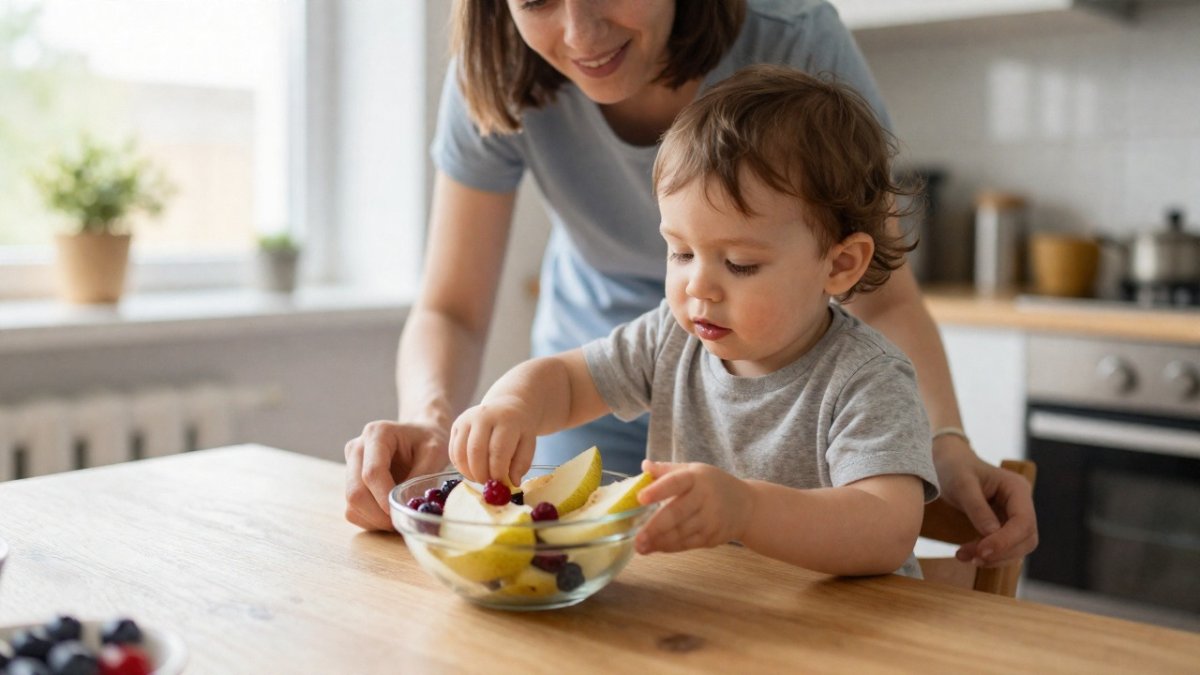
The best foods for toddler constipation are those high in fibre that also hold water, so they soften poo rather than just adding bulk. Think pears, prunes, oats, beans and berries. Add them gradually over a few days so little tummies adjust without wind or cramping.
Why Some Fibre Foods Work Better Than Others
Not all fibre behaves the same way in a small tummy. Soluble fibre, found in oats, pears, apples and pulses, absorbs water and forms a soft gel that keeps poo moist and easy to pass (Improving bowel function in constipation).
Parents sometimes load up on dry, bulky fibre, such as wholemeal toast and crackers, without enough fluid. That can firm things up rather than soften them. The fix is to pair every fibre food with a watery fruit or a drink.
Fibre-Rich Foods to Add Gradually
Try one new food every couple of days from this list, and offer a child-sized portion rather than an adult one:
- Fruit: pear (half a small pear, chopped), apple with skin (a few slices), prunes (one or two, chopped), berries (a small handful), kiwi (half)
- Veg: peas (two tablespoons), sweetcorn (two tablespoons), broccoli (a few florets), butternut squash (two tablespoons mashed)
- Grains: porridge oats (three to four tablespoons cooked), wholemeal toast (half a slice), wholewheat pasta (a small child's bowl)
- Beans and pulses: baked beans (two tablespoons), lentils (two tablespoons in a soup or mash), chickpeas (a tablespoon mashed into a dip)
- Healthy fats: a drizzle of olive oil or a teaspoon of nut butter, if age-appropriate
These are guides, not targets. A toddler's appetite swings wildly from day to day, and a portion that looks tiny to you may be a full meal to them. Offer the portion, let them eat what they want, and top up with a drink.
Watch out: adding a lot of fibre at once without extra fluid can make things worse, not better. Pair every new fibre food with a drink, and build up over a week rather than a day.
Foods That Can Make Constipation Worse
Some everyday favourites work against you. You do not need to ban them, just balance them:
- White bread, white pasta and white rice in large amounts
- Crisps, chips and dry crackers
- Too much cheese and full-fat milk
- Bananas, if your toddler eats several a day
- Very dry cereals with little milk
If your child lives on a narrow list of "safe foods", you are not alone. Our guide to nutritional gaps in a toddler's diet explains how to widen variety without turning mealtimes into a battle.
How Much Water Intake for Toddlers Keeps Things Moving
Fluid is the other half of the fibre story. Fibre without water can firm things up rather than soften them, so getting drinks right matters as much as getting fibre right.
A cup here means a small child's cup, roughly 150 to 200 ml, not a full adult glass. Spread across the day, that is a few sips at breakfast, a cup mid-morning, a cup with lunch, a cup after nap, a cup with dinner and a cup before bed.
Why Fluid and Fibre Must Go Together
When you add fibre, you must add fluid. Soluble fibre absorbs water like a sponge; without enough liquid, it can sit heavily and make poo harder rather than softer. If you increase fibre one week, increase drinks the same week. A simple rule is: every new fibre food gets a drink alongside it.
Simple Ways to Keep Drinks Flowing
- Offer water with every meal and snack, not just at mealtimes
- Use a fun cup or straw they will actually pick up
- Add a slice of orange or cucumber for flavour
- Offer water after active play, when they are thirsty
- Model it: pour yourself a glass at the same time
Milk still matters, but keep it to around two cups a day so it does not crowd out food and water. Too much milk is a common hidden cause of constipation because it fills small tummies and leaves little room for fibre-rich foods.
Watch out: if your toddler refuses water, do not force it. Try warm diluted juice, a watery fruit like melon, or a cup with a character they like. If refusal is persistent and they seem unwell, speak to your health visitor.
If your child is a fussy eater and mealtimes already feel tense, our guide on how to improve toddler appetite naturally pairs well with a gentle toilet routine.
Building a Toddler Constipation Toilet Routine Without Pressure
A toddler constipation toilet routine works best when it is calm, predictable and short. Sit your child on the potty or toilet for two to three minutes after breakfast and after dinner, when the gut is naturally active. Keeping these brief sits consistent can make toileting feel less pressured, while natural colon cleanse methods should not replace a pediatrician’s advice for a constipated toddler.
Keep it light:
- Read a book or sing while they sit
- Never force or bribe them to stay
- Praise the sitting, not just the result
- Keep the same times every day
If your child is a fussy eater and mealtimes already feel tense, our guide on how to improve toddler appetite naturally pairs well with a gentle toilet routine.
Gentle Tummy Massage and Movement to Ease Discomfort
Movement and massage can ease discomfort and help things along. Try a gentle tummy massage in clockwise circles for a few minutes, and build in plenty of running, climbing and dancing. Toddlers who move more tend to poo more easily.
Try these each day:
- Ten minutes of running or jumping games
- A bicycle-legs movement while they lie on their back
- A warm bath to relax tummy muscles
- Clockwise tummy circles with a little oil
When to Seek Help for Toddler Constipation
Speak to your GP or health visitor if constipation lasts more than a couple of weeks, if there is blood in the poo, or if your child is in real pain.
Watch out: never give your toddler laxatives or suppositories without medical advice. These are not a home remedy, and the dose matters.
If you are worried something more serious is going on, our guide to the signs of nutritional deficiencies in children can help you spot what to raise with your doctor.
Filling Nutritional Gaps While You Sort Out Their Tummy
While you work on fibre, fluid and routine, your toddler's diet may still be limited. That is where filling nutritional gaps helps. A chocolate-flavoured nutrition powder like LittleVitz is designed to help picky eaters get the nutrients they need, with superfoods, real greens and fruits, and no added sugar.
It will not replace fibre or water, but it can help fill nutritional gaps while you build better habits.
Your Next Step: Build a Gentle Daily Plan
Start small, stay consistent, and give it time. For a step-by-step plan to balance meals without processed foods, see our guide to balancing a toddler diet without processed foods.
Constipation in toddlers rarely fixes itself overnight, and that is okay. LittleVitz is here to help you fill the nutritional gaps while you build those gentle daily habits, with a chocolatey greens powder made from real fruits, vegetables and 20+ superfoods, no added sugar, and a taste kids ask for.
Frequently Asked Questions
What can I give my toddler for constipation naturally?
Start with fibre and fluids rather than anything from the medicine cabinet. Offer pear, apple with the skin on, prunes, kiwi, oats and wholemeal toast across the day, and keep a water cup within reach at every meal. A gentle tummy massage in clockwise circles and ten minutes of running about can help too. Most toddlers respond within a few days of consistent changes. If nothing shifts after a week, or your child is in pain, speak to your GP.
Which foods help relieve constipation in toddlers?
The most reliable foods for toddler constipation are ones high in soluble and insoluble fibre: pears, prunes, kiwi, berries, oats, lentils, chickpeas, sweet potato with the skin on, and wholemeal bread or pasta. Add them gradually over a week rather than all at once, and pair every fibre increase with extra water. Too much fibre without enough fluid can actually make poos harder, so the two go together.
How much water should a constipated toddler drink?
Aim for roughly 100 to 150 ml of fluid per kilogram of body weight per day, which for most toddlers works out at around 1 to 1.3 litres spread across meals and snacks. Water and milk are the best choices. Offer a cup with every meal and snack rather than waiting for your child to ask, and top up more in hot weather or after active play. If your toddler is reluctant, try a fun straw cup or a splash of their usual milk.
When should I contact a GP about toddler constipation?
Contact your GP if constipation has lasted more than a week despite diet and fluid changes, if your child is in significant pain, if there is blood in the poo, or if they are holding on and avoiding the toilet. Also seek help if your toddler is losing weight, vomiting, or has a swollen tummy. Early advice makes treatment much easier, so there is no need to wait and see for weeks.
