

Last Updated: November 2, 2026
Quick Summary
A toddler diet without processed foods is achievable by making fresh, whole foods the normal choice most of the time. Build most meals around fruit, vegetables, wholegrains, dairy or alternatives, beans, eggs and fish, and serve three meals and two snacks at predictable times.
- Offer 3 meals and 2 snacks a day at predictable times.
- Serve vegetables and protein first while your child is hungry.
- Expect a child may need 10 or more exposures to a new food.
- Keep milk to around 350-400ml a day so it does not crowd out meals.
- Swap heavily processed snacks for fruit, oatcakes or plain yoghurt.
Table of Contents
- Why a Toddler Diet Without Processed Foods Is Achievable
- Building a Balanced Diet for Toddlers Around the Five Food Groups
- Step 1: Plan a Simple Toddler Meal Plan for the Week
- Step 2: Spot Processed Foods Without Becoming Overly Restrictive
- Step 3: Choose Healthy Snacks for Toddlers Without Packaged Shortcuts
- Step 4: Introducing New Foods to Toddlers Without Pressure
- Your Next Step: Starting a Toddler Meal Plan This Week
- Frequently Asked Questions
Why a Toddler Diet Without Processed Foods Is Achievable
Yes, a toddler can eat well without relying on processed foods, and it is more manageable than many parents expect. Most of what toddlers need comes from simple foods you already buy: fruit, vegetables, wholegrains, dairy or dairy alternatives, beans, eggs and fish.
Many parents worry that cutting out packaged snacks will leave their child hungry or short on nutrients. That is why NHS guidance on the eatwell guide for children is a useful starting point, because it shows how a varied plate covers the main nutrient groups.
Here is what a realistic, processed-light approach looks like:
- Offer 3 meals and 2 snacks a day at predictable times
- Keep wholefood staples in the cupboard and fridge
- Accept that a child may need 10 or more exposures to a new food
Nutritional Gaps in Toddler Diets are worth knowing about, and you can read about the most common ones in our guide on nutritional gaps in toddler diets. It explains where many children fall short and why.
Building a Balanced Diet for Toddlers Around the Five Food Groups
A balanced toddler diet includes a little from each main food group at most meals. Think of it as a simple plate rather than a strict chart. Aim to include:
- Fruit and vegetables, fresh, frozen, or tinned without added sugar
- Starchy foods, such as wholegrain bread, oats, rice, potatoes and pasta
- Protein, from meat, fish, eggs, beans, lentils or tofu
Variety matters more than any single food. If your toddler refuses vegetables, you can read about nutritional support options for filling vegetable gaps. A toddler who eats carrots on Monday and peas on Tuesday is building a broader palate than one who eats the same food every day. Add water as the main drink, and keep fruit juice and sugary drinks for rare occasions.
What a Toddler Portion Actually Looks Like
Portions should be small. A toddler's stomach is only about the size of their fist, so a few spoonfuls of each food is often plenty. Let your child decide how much to eat from what you serve. As a rough guide for one meal:
- Starchy food: about two to three tablespoons of cooked rice, pasta or mashed potato, or half a slice of bread
- Protein: about one to two tablespoons of minced meat, beans or lentils, or one egg
- Vegetables: one to two tablespoons, offered first while your child is hungry
These are starting points, not targets. Appetite swings wildly from day to day, so look at the week rather than a single plate.
The Nutrients Toddlers Most Often Fall Short On
Three nutrients deserve a little extra attention in the toddler years:
- Iron. Stores from birth start to run low after about six months, and iron-rich foods such as red meat, beans, lentils, fortified cereals and eggs help top them up. Pair plant sources with a little vitamin C, such as fruit or vegetables, to improve absorption.
- Calcium. Around 350-450mg a day supports growing bones. Milk, yoghurt, cheese and fortified plant drinks all count, but keep total milk to around 350-400ml a day so it does not crowd out food at mealtimes.
- Fats. Toddlers need more fat than older children for brain growth, so choose full-fat dairy and include oily fish such as salmon or mackerel once or twice a week.
A simple way to build the plate is to serve the vegetable and protein first, add the starchy food, and finish with fruit or dairy. That order nudges your child towards the foods they are most likely to skip. Keeping milk and juice for after the meal can make room for the foods on the plate, while flexible meal plans help preserve that routine even on busy days.
Step 1: Plan a Simple Toddler Meal Plan for the Week
A weekly plan takes the stress out of dinner and keeps processed foods from becoming the default. Pick a simple template and repeat it:
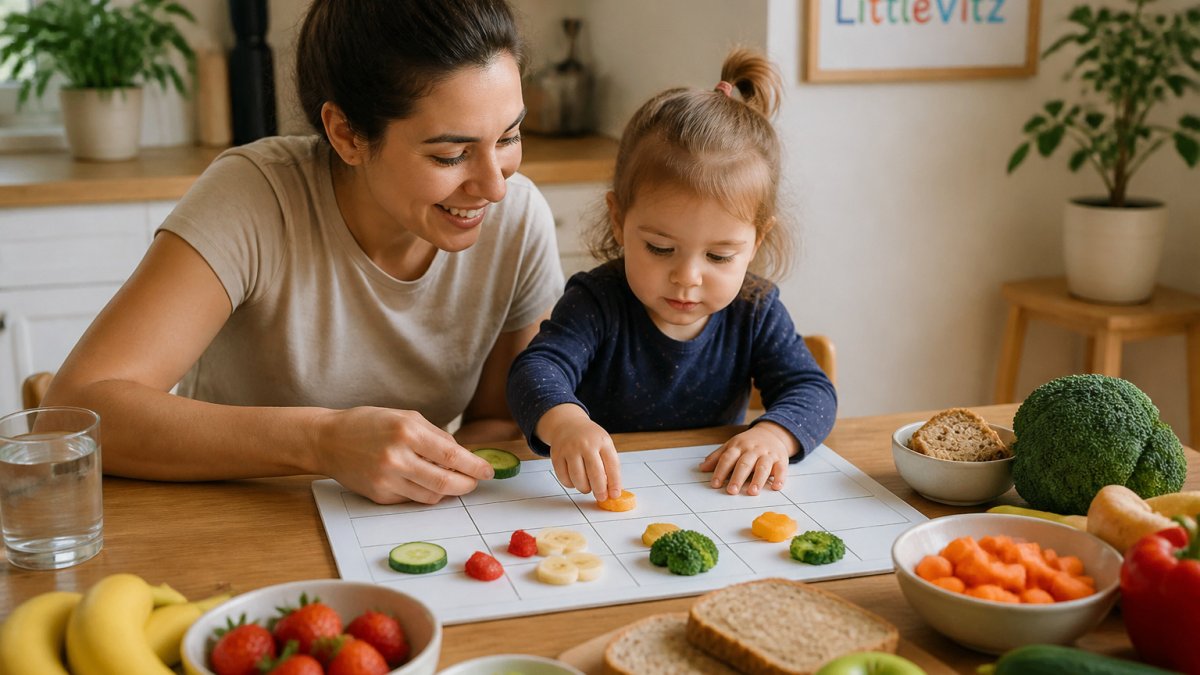
- Choose 3 breakfasts, such as porridge, wholegrain toast with egg, or yoghurt with fruit.
- Choose 3 lunches, such as bean wraps, pasta with vegetables, or a rice bowl.
- Choose 3 dinners, such as baked fish with potatoes and peas, or chicken and vegetable stew.
- Choose 2 snacks a day, from the list in Step 3.
- Write a shopping list that matches the plan, so you buy only what you will cook.
Cook in batches. A pot of vegetable soup or a tray of roasted vegetables can cover two or three meals. Plan one "fallback" meal, such as a simple omelette, for busy evenings.
Step 2: Spot Processed Foods Without Becoming Overly Restrictive
Not every packaged food is a problem. The aim is to notice the ones that are heavy in sugar, salt or fat and to choose better options most of the time. A useful way to think about it is a simple three-tier scale, because 'processed' covers everything from a bag of oats to a shaped chicken nugget.
- Minimally processed: fresh, frozen and plain tinned foods with little done to them, such as plain yoghurt, oats, rice, frozen peas, tinned beans and plain fish. These can form the backbone of the week.
- Moderately processed: foods with a few added ingredients that still resemble the original, such as wholegrain bread, cheese, pasta and plain tomato passata. These are fine in the everyday pattern.
- Heavily processed: foods with long ingredient lists, added sugar, salt or additives, and textures that are hard to recreate at home, such as shaped snacks, cereal bars, flavoured yoghurt pouches, processed meats and ready meals. These are the ones to keep occasional.
A Quick Check at the Shelf
You do not need to memorise additives. A few simple checks do most of the work:
- Look at the first three ingredients. If sugar, syrup or a refined starch appears early, it is worth a second look.
- Compare like with like. A plain yoghurt against a flavoured one, or a plain oatcake against a cereal bar, shows the difference quickly.
- Check the salt. Many breads, sauces and processed meats carry more salt than parents expect, and toddlers need very little.
The Realistic Swap List
The goal is not to ban every packet from the house. It is to swap the everyday heavily processed items for something just as convenient:
- Flavoured yoghurt pouches → plain yoghurt with mashed fruit
- Cereal bars → oatcakes with nut butter (if no allergy) or a banana
- Shaped snacks → toast fingers, cheese cubes or boiled egg slices
- Processed meat slices → leftover roast chicken or tinned tuna
A biscuit at a birthday party or a bought sandwich on a day out is part of a normal life. Focusing on the everyday pattern keeps mealtimes relaxed and helps your child feel safe with food.
The three tiers below sort common toddler foods by how much processing they have had, so you can see at a glance where each one sits.
| Tier | Examples from the article | How often |
|---|---|---|
| Minimally processed | Plain yoghurt, oats, rice, frozen peas, tinned beans, plain fish | Backbone of the week |
| Moderately processed | Wholegrain bread, cheese, pasta, plain tomato passata | Fine in everyday pattern |
| Heavily processed | Shaped snacks, cereal bars, flavoured yoghurt pouches, processed meats, ready meals | Keep occasional |
Step 3: Choose Healthy Snacks for Toddlers Without Packaged Shortcuts
Snacks are where many parents reach for packaged items, but simple snacks can be just as convenient. Keep these in your bag or fridge:
- Sliced fruit such as banana, pear or grapes cut in halves or quarters
- Cucumber, red pepper or carrot sticks with hummus
- Plain yoghurt or fortified soy yoghurt
- Wholegrain toast fingers or oatcakes with nut butter (if no allergy)
Watch for choking risks. Cut round foods such as grapes, cherry tomatoes and sausages into small pieces, and always supervise your child while they eat (the NHS).
Step 4: Introducing New Foods to Toddlers Without Pressure
Many toddlers reject new foods at first, and that is normal. Pressure, bribes and battles usually make it worse. A calmer approach works better:
- Serve the new food alongside a food your child already likes.
- Keep portions tiny, such as one pea or one small piece of pepper.
- Let your child touch, smell and lick the food without having to eat it.
- Model eating it yourself and make it look enjoyable.
If your child refuses lots of foods, you may find the ideas in Toddler Mealtime Power Struggles: 7 Ways to End Them helpful, particularly the advice on the division of responsibility, where you decide what and when to serve, and your child decides whether and how much to eat.
For children who mainly accept greens in a different form, our article on getting a picky eater to enjoy their greens offers practical, low-pressure ideas. If your child is very selective, Safe Foods for Picky Eaters: A Parent's Guide explains how to widen the list gently without becoming too strict.
Some toddlers eat only a few foods and find new textures very hard. If your child is gagging, refusing whole food groups, or losing weight, speak to your GP, health visitor or a registered dietitian for individual advice.
If you want extra support while you widen your child's diet, a nutritional powder is one option to consider. Kids Super Greens (£34.99) is a chocolate-flavoured powder that can be mixed into milk, smoothies or shakes as part of a daily routine.

Your Next Step: Starting a Toddler Meal Plan This Week
Start small. Pick three breakfasts, three lunches and three dinners from this guide, write a shopping list, and cook one batch this weekend. Add one new food to a meal you already know your child enjoys.
When you are ready to add extra nutrition alongside everyday meals, you can explore Kids Super Greens 2 Pack (£52.99) or the Kids Super Greens Trial Pouch (£12.00).


Frequently Asked Questions
What does a balanced diet look like for a toddler?
A balanced toddler diet includes a little of each main food group across the day: fruit and vegetables, starchy foods such as potatoes, bread, pasta and rice (wholegrain where possible), protein from eggs, fish, meat, beans or pulses, and dairy or fortified alternatives. Aim for variety within each group rather than perfection at every meal. Toddler portions are small, so offering two or three food groups at a meal, plus a snack, usually covers most needs. Water should be the main drink between meals.
How can I feed my toddler a balanced diet if they are a picky eater?
Keep offering a small amount of a food you want them to eat, alongside foods they already accept. Children often need to see a new food many times before they try it, so repeated exposure without pressure works better than bargaining. Serve meals family-style where possible, let your toddler choose between two healthy options, and avoid using sweets or treats as rewards. If food refusal is severe, or your child is losing weight or struggling to grow, speak to your GP or health visitor for individualised advice.
How do I plan balanced meals and snacks for a toddler?
Build each meal around a protein food, a starchy food and a vegetable or fruit, then add dairy or a fortified alternative where it fits. Plan three meals and two or three snacks a day, spaced a few hours apart, so your toddler arrives at mealtimes hungry enough to eat. Batch-cooking soups, stews and wholegrain pasta bakes saves time on busy days. Writing a simple weekly plan with a shopping list makes it far easier to avoid reaching for processed convenience foods.
How can I offer more variety to a toddler who refuses new foods?
Introduce one new food alongside a familiar favourite so your toddler is not faced with an entire unfamiliar plate. Vary textures and presentation, such as raw, roasted or mashed versions of the same vegetable, and let your child touch, smell or lick a food before eating it. Keep portions small so a refused food does not feel overwhelming. Stay calm and matter-of-fact if your child declines, and try again another day.
