

Table of Contents
- Common Nutrient Deficiencies in Toddlers
- How to Encourage Picky Eaters to Try New Foods
- Healthy Meal Ideas for Picky Toddlers
- Frequently Asked Questions
Last Updated: September 23, 2026
Common Nutrient Deficiencies in Toddlers
Nutritional gaps in toddlers diet are the shortfall between what a little one eats and what their growing body needs.
Toddlerhood is tricky: growth slows, appetites shrink, and the child who ate everything suddenly lives on pasta and air. That is normal, and exactly when gaps open up.
The nutrients parents ask about most: iron (brain and energy), zinc (growth, immunity, appetite), vitamin A (eyesight, immune defence), vitamin D (calcium absorption for bones and teeth), calcium (bones and teeth), fibre (comfortable digestion) and omega-3 fats (brain and eye development). Prioritizing these essential building blocks provides a foundation for long-term health, while integrating natural immune support helps toddlers navigate seasonal challenges more effectively.
If mealtimes feel like a daily battle, you are not alone. Small, steady changes close the gaps without tears.
How to Encourage Picky Eaters to Try New Foods
The best way to encourage a picky eater is to remove pressure: offer new foods alongside familiar ones, keep portions tiny, and expect to repeat the offer many times.
A routine that works: pair one safe food with one new food; keep new portions tiny (one pea, one slice); offer the same food again and again; eat together so they copy you; let them help (a toddler who washes the carrots is more likely to taste them); keep mealtimes calm and short (twenty minutes is plenty); and never bribe with pudding.

Picky eating and a genuine deficiency are not the same thing. A fussy phase is behavioural; a true gap shows up in growth, energy, mood or tummy troubles. If you are worried, speak to your health visitor or GP.
Healthy Meal Ideas for Picky Toddlers
Balanced toddler meals do not need to be fancy. Aim for a mix across the day: a protein, a starchy carbohydrate, a fruit or vegetable, and a dairy or fortified alternative.
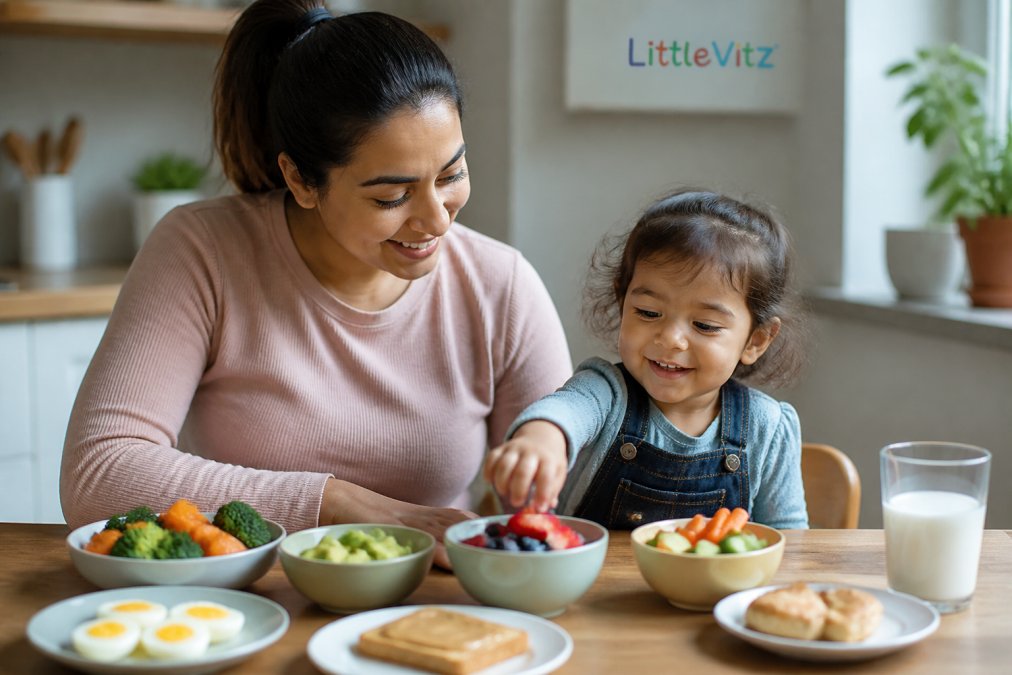
Simple meals that go down well: porridge with mashed banana or toast fingers with soft cheese; mini pitta pockets with shredded chicken and cucumber sticks; mild lentil or vegetable pasta, or fish fingers with peas and sweet potato mash; and snacks like yoghurt, soft fruit, oatcakes or grated cheese.
How a nutrient is absorbed matters as much as whether it is eaten. Iron from meat is taken up more easily than iron from plants, so pair beans or spinach with a little vitamin C, such as orange or tomato, this is called bioavailability.
Keep sugary drinks, crisps and added sugar occasional, they fill small tummies without adding much nutrition. Fortified cereals can help bridge gaps, but whole foods should still do most of the work.
When a child's diet is very limited, a supplement can help fill the space. LittleVitz Kids Super Greens is a chocolate-flavoured powder made with real greens, fruits, vitamins and minerals. It mixes into milk, smoothies or shakes, so it fits into a routine your child already knows. There is also a smaller trial pouch if you would rather test it first.
Frequently Asked Questions
What are the most common nutritional deficiencies in toddlers?
Iron, zinc, and vitamin A are among the most common nutritional gaps in toddlers. Iron supports brain development and energy, zinc helps immunity and growth, and vitamin A is important for vision and immune health. A varied diet with iron-rich foods like lentils, fortified cereals, and meat, plus fruits and vegetables, helps cover these needs. If you are concerned, speak to your health visitor or GP.
How can I tell if my toddler is getting enough vitamins?
Signs can include tiredness, frequent infections, poor appetite, or slow growth, but these can have many causes. A good indicator is whether your child eats from all food groups over a week, not just one day. If they avoid whole food groups or have a very limited diet, a supplement may help. Always check with your GP before starting any supplement for a toddler.
Are nutritional supplements necessary for healthy toddlers?
Not always. Toddlers who eat a wide variety of foods usually get what they need from meals. However, if your child is a picky eater, has sensory issues, or avoids entire food groups, a supplement can help bridge nutritional gaps in their diet. Choose one made for children, with no added sugar, and speak to your GP or health visitor if you are unsure.
Toddler mealtimes can feel like a losing battle, and the worry about whether they are getting enough is real. LittleVitz was made for exactly this, a chocolate-flavoured nutrition powder that helps turn daily veggie battles into a treat kids actually enjoy. With no added sugar, real greens and fruits, and a blend of vitamins and minerals, it slips easily into milk or a smoothie. Get started with LittleVitz and give your little one the nutrients they need, one happy sip at a time.