

Table of Contents
- Understanding Nutrition Needs When Your Child Eats a Limited Diet
- Safe Foods for Picky Eaters: Building Your Child's Foundation
- How to Introduce New Foods to Picky Eaters Without Pressure
- Spotting Signs of Nutrient Deficiency in Children
- Filling Nutritional Gaps With Smart Supplementation
- Creating Mealtime Routines That Reduce Stress and Support Growth
- When to Seek Professional Guidance
- Conclusion
Last Updated: August 21, 2026
Understanding Nutrition Needs When Your Child Eats a Limited Diet
When your child eats the same five foods on repeat, mealtimes can feel like a battle you're destined to lose. But here's what many parents don't realise: a limited diet doesn't automatically mean nutritional disaster. It means you need a smarter strategy.
Children with restricted eating patterns, whether due to sensory sensitivities, extreme pickiness, or genuine food aversions, can still meet their nutritional needs. The key is understanding what nutrients matter most, which foods pack the biggest nutritional punch, and how to bridge gaps strategically.
At LittleVitz, we understand the challenges parents face. The ones who succeed aren't the ones forcing vegetables into reluctant mouths. They're the ones who get strategic about nutrient density and find creative ways to add nutrition to foods their children actually enjoy.
Your child's body needs macronutrients (protein, carbohydrates, and healthy fats) to grow and function. They also need micronutrients, vitamins and minerals like iron, calcium, vitamin D, and zinc, for everything from bone development to immune function. When a child's diet is limited, you're essentially working with a narrower toolkit to deliver these essentials.
The good news? You don't need to cover every food group perfectly. You need to cover the nutritional bases that matter most for your child's age, growth rate, and current health status. That's where this guide comes in.
Safe Foods for Picky Eaters: Building Your Child's Foundation
Identifying nutrient-dense options your child will actually eat
Start by listing the foods your child reliably eats without resistance. Don't judge them, just document them. Chicken nuggets, pasta, bananas, yoghurt, bread, rice. Whatever they are, that's your foundation.
Now look at each safe food through a nutritional lens. What does it actually provide?
Chicken (including nuggets) delivers protein and B vitamins. Pasta provides carbohydrates and some B vitamins, especially if it's fortified. Bananas offer potassium, vitamin C, and fibre. Yoghurt supplies protein, calcium, and probiotics. Bread (particularly wholemeal) contributes fibre, B vitamins, and minerals.
The foods your child already accepts aren't nutritional dead ends, they're starting points. Your job is identifying which nutritional gaps exist and which safe foods already help fill them.
Making familiar foods work harder for nutrition
This is where strategy beats force. You're not introducing new foods yet, you're maximising the nutritional value of foods your child already accepts.
Fortified staples. If your child eats cereal, pasta, or bread, choose fortified versions. Many children's cereals contain added iron and vitamins. Wholemeal bread and brown rice provide more fibre and minerals than their refined counterparts. These swaps often go unnoticed.
Protein boosters. Add finely grated cheese to pasta. Stir a spoonful of nut butter into yoghurt (if allergies aren't a concern). Mix ground meat into pasta sauce. These additions increase protein without changing the dish fundamentally.
Invisible nutrition. Blend vegetables into familiar sauces, tomato sauce for pasta, creamy sauces for chicken. Pureed butternut squash or sweet potato mixed into pasta water adds nutrients and subtly changes the flavour without making it "different."
Healthy fats. Drizzle olive oil on familiar foods. Add a small amount of avocado to foods your child already enjoys. These fats support nutrient absorption and brain development.
The principle here is simple: work within your child's comfort zone while gradually increasing nutritional density. You're not trying to trick them, you're being resourceful with what they'll actually eat.
How to Introduce New Foods to Picky Eaters Without Pressure
The gradual exposure method
Food neophobia, the fear of new foods, is developmentally normal in young children. It peaks around age 2-3 and gradually improves (peer-reviewed research). Understanding this helps you approach new foods with patience instead of frustration.
The gradual exposure method works because it removes pressure and builds familiarity without expectation of consumption.
Step 1: Visual exposure. Place the new food on the table during meals without requiring your child to eat it. They simply see it. Do this repeatedly over several days or weeks.
Step 2: Proximity and touch. Encourage your child to touch the food, smell it, or play with it. No eating required. This builds sensory familiarity.
Step 3: Taste without swallowing. Suggest licking or tasting a tiny amount. Many children will spit it out. That's fine. The goal is exposure, not consumption.
Step 4: Small consumption. Once your child shows willingness, they might take a small bite. Celebrate this without pressure. One bite counts as success.
Step 5: Repeated exposure. Continue offering the food in low-pressure situations. Research suggests children need 10-15 exposures before accepting a new food (peer-reviewed research).
This method works because it respects your child's autonomy and removes the power struggle that often makes picky eating worse.
Sensory-friendly strategies for texture-sensitive children
Some children reject foods based entirely on texture. A child might happily eat crunchy foods but refuse anything soft, or vice versa. Understanding your child's sensory preferences helps you introduce new foods in formats they'll actually tolerate.
Texture mapping. Notice which textures your child accepts. Crunchy? Soft? Smooth? Chewy? Once you identify their preferences, seek new foods in similar textures. If your child likes crunchy, try different crunchy vegetables before soft ones.
Preparation matters. The same vegetable prepared differently can feel like a completely different food. Steamed broccoli feels mushy; roasted broccoli is crunchy. Offer options.
Mixed textures. Some children do better with foods that have varied texture within a single bite, like granola with yoghurt or toast with soft cheese. This provides sensory interest without requiring commitment to a single texture.
Temperature variation. Cold foods feel different from warm foods. A child who rejects warm mashed potato might accept cold potato salad. Use temperature as a tool.
Sensory-friendly feeding isn't about avoiding challenge, it's about meeting your child where they are whilst gradually expanding their comfort zone.
Spotting Signs of Nutrient Deficiency in Children
Knowing what to watch for helps you catch potential deficiencies early and take action before they impact your child's development.
Iron deficiency shows up as unusual tiredness, pale skin, or difficulty concentrating. Iron supports oxygen transport and cognitive function (the NIH). Children on very limited diets, especially those who don't eat red meat, fortified cereals, or leafy greens, are at higher risk.
Vitamin D deficiency affects bone development and immune function. Signs include muscle weakness, bone pain, or frequent infections. Limited sun exposure and restrictive diets increase risk, particularly in winter months.
Calcium deficiency impacts bone development and strength. If your child avoids dairy, they need alternative sources like fortified plant-based milk, leafy greens, or supplements.
Zinc deficiency affects growth, immune function, and wound healing. Signs include slow growth, frequent infections, or hair loss. Children eating limited protein sources are at risk.
Vitamin B12 deficiency is rare in children eating any animal products (meat, dairy, eggs), but possible in very restrictive diets. Signs include tiredness, pale skin, or neurological symptoms.
Rather than waiting for symptoms, many parents of children with limited diets benefit from periodic blood work to check nutrient levels. A simple conversation with your GP can clarify whether testing makes sense for your child.
Filling Nutritional Gaps With Smart Supplementation
Why a balanced approach matters
Supplements aren't a replacement for food, they're a strategic tool for filling specific gaps. The goal isn't to supplement your way around a limited diet; it's to use supplements to support adequate nutrition while you work on gradually expanding food acceptance.
A good children's supplement should contain essential vitamins and minerals your child's diet might lack. It should be age-appropriate, easy to administer, and ideally something your child will actually consume without resistance.
This is where many parents struggle. A supplement that tastes awful or has a texture your child rejects becomes another daily battle. You need something that actually works within your child's existing food preferences.
Choosing the right supplement for your child
When evaluating supplements, consider what your child's current diet provides and what gaps exist. A child eating chicken, pasta, and dairy probably needs iron, vitamin D, and maybe zinc. A child avoiding dairy needs calcium and possibly vitamin D.
Look for supplements that provide meaningful amounts of these nutrients without unnecessary additives. Avoid products with artificial colours, flavours, or excessive sugar, especially if your child's diet is already limited. You want the supplement to support nutrition, not add empty calories.
Powder supplements designed for children can be mixed into familiar foods or drinks, making them easier to administer than pills or gummies. A quality children's nutrition powder should taste good enough that your child accepts it willingly, not something you have to sneak into their food.
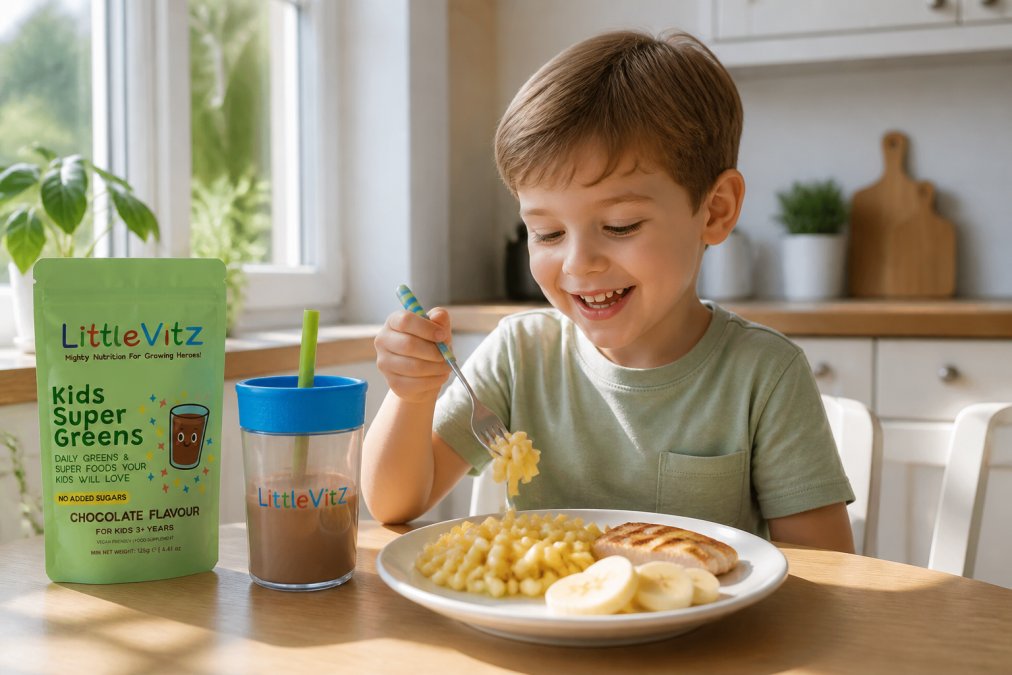
LittleVitz Kids Super Greens, for example, is a chocolate-flavoured powder designed specifically for picky eaters. It contains over 30 vitamins, minerals, and superfoods, including real greens, fruits, and essential nutrients, without added sugar. Because it tastes like a treat rather than medicine, children are more likely to accept it consistently. The powder can be mixed into milk, yoghurt, or familiar foods, making it practical for busy parents managing limited diets.

Starting with a trial pouch like the LittleVitz Kids Super Greens Trial & Travel Pouch (£12.00) lets you test whether your child will actually consume it before committing to a full-size product. This reduces waste and frustration. You can purchase the full-size LittleVitz Kids Super Greens for £34.99.
Creating Mealtime Routines That Reduce Stress and Support Growth
Mealtimes with a picky eater can feel chaotic. Structure actually reduces stress, both yours and your child's.
A predictable routine signals safety. Your child knows what to expect, which reduces anxiety around food. They know meals happen at certain times, in a certain place, with certain people. This consistency paradoxically makes children more willing to try new things because the overall environment feels secure.

Timing matters. Hungry children are more willing to eat. Avoid grazing between meals, which dulls appetite. Offer meals and snacks at consistent times so your child's body expects food at those moments.
Environment counts. Remove distractions during meals. No screens, minimal chaos. A calm environment helps children focus on eating and notice hunger and fullness cues.
Division of responsibility. You decide what foods are offered, when meals happen, and where eating takes place. Your child decides whether to eat and how much. This framework, sometimes called the Ellyn Satter approach, reduces pressure whilst maintaining structure.
Hydration support. Offer water regularly throughout the day. Dehydration can masquerade as hunger or affect mood and concentration. A child drinking adequate water is generally easier to feed and more willing to engage with mealtimes.
Physical activity. Children who move regularly have better appetites and sleep better. Both support healthy eating patterns. Aim for active play daily, it doesn't need to be structured exercise, just movement your child enjoys.
Sleep matters. Well-rested children eat better and are more willing to try new foods. Sleep deprivation increases food refusal and sensory sensitivity. Prioritise consistent bedtimes and adequate sleep for your child's age.
These routines aren't rigid rules, they're frameworks that reduce daily friction and create space for positive mealtime experiences.
When to Seek Professional Guidance
Most children with limited diets grow and develop normally, especially when parents take a strategic approach to nutrition. But certain situations warrant professional support.
Consult your GP or a registered dietitian if:
Your child's growth has slowed significantly compared to previous patterns. This might indicate inadequate calories or specific nutrient deficiencies affecting development.
You suspect nutrient deficiency based on symptoms (unusual tiredness, frequent infections, slow growth, or unusual behaviour changes). Blood work can clarify actual status versus parental concern.
Your child's diet is so restricted that even with supplementation, you're struggling to cover basic nutritional needs. A dietitian can help identify creative solutions specific to your child's preferences.
Food refusal is accompanied by other developmental delays, sensory processing difficulties, or anxiety that seems beyond typical picky eating. This might indicate ARFID (Avoidant/Restrictive Food Intake Disorder) or sensory processing differences requiring specialist support.
You're feeling overwhelmed or mealtimes have become genuinely distressing for your family. A professional can provide practical strategies and emotional support.
Your child has specific health conditions (allergies, digestive issues, growth concerns) that complicate nutrition planning.
A dietitian can assess your child's actual nutritional status, identify specific gaps, and create a plan tailored to your child's preferences and your family's situation. They can also help distinguish between normal picky eating and patterns requiring intervention.
Feeding a child with a limited diet requires patience, strategy, and sometimes a bit of creative problem-solving. But it's absolutely doable. By understanding your child's nutritional needs, maximising the foods they already accept, introducing new foods without pressure, and strategically supplementing where necessary, you can ensure your child gets the nutrition they need to grow and thrive.
The daily veggie battles don't have to define your mealtimes. With the right approach, and tools like LittleVitz Kids Super Greens to bridge nutritional gaps, you can transform feeding from a source of stress into something manageable. Your child's limited diet doesn't have to limit their nutrition. Start where you are, use what works, and build from there.

=== FAQ ANSWERS (audit these too, same rules) ===
[1] Q: What are the signs of nutrient deficiency in children with limited diets? A: Watch for persistent tiredness, frequent infections, poor concentration at school, slow growth, weak nails, or pale skin. If you notice any of these signs, keep a food diary for a week and discuss it with your GP or health visitor. They can arrange blood tests if needed. Many parents worry unnecessarily, a child eating a limited but consistent diet may be fine, but professional assessment gives you certainty.
[2] Q: How do I introduce new foods to picky eaters without causing battles? A: Start by placing the new food on your child's plate alongside safe foods they already enjoy, no pressure to eat it. Let them see you enjoying it first. Repeat this exposure over several weeks; children often need 10-15 exposures before accepting something new. Involve them in shopping or simple food prep. Never force or bribe, autonomy matters more than you might think. Sensory-sensitive children benefit from trying foods in different textures first (e.g., mashed before chunky).
[3] Q: Can nutritional supplements really help if my child only eats a handful of safe foods? A: Yes, when chosen carefully. A good supplement bridges genuine nutritional gaps without replacing food. Look for products with no added sugar and real whole-food ingredients rather than synthetic vitamins. LittleVitz Kids Super Greens, for example, combines over 30 vitamins, minerals and superfoods including real greens and fruits in a chocolate flavour kids actually enjoy. Supplements work best alongside the foods your child does eat, not instead of them.
[4] Q: What's the difference between a picky eater and a child with ARFID or sensory issues? A: Picky eaters are choosy but usually expand their diet over time and eat a reasonable variety. Children with ARFID (Avoidant/Restrictive Food Intake Disorder) have genuine anxiety around food and a genuinely limited diet that affects growth or nutrition. Sensory processing differences mean textures, tastes, or smells cause real discomfort. If your child's limited diet is linked to anxiety, distress, or it's affecting their growth, speak to your GP. They can refer you to a paediatric dietitian who specialises in feeding challenges.
Frequently Asked Questions
What are the signs of nutrient deficiency in children with limited diets?
Watch for persistent tiredness, frequent infections, poor concentration at school, slow growth, weak nails, or pale skin. If you notice any of these signs, keep a food diary for a week and discuss it with your GP or health visitor. They can arrange blood tests if needed. Many parents worry unnecessarily—a child eating a limited but consistent diet may be fine, but professional assessment gives you certainty.
How do I introduce new foods to picky eaters without causing battles?
Start by placing the new food on your child's plate alongside safe foods they already enjoy—no pressure to eat it. Let them see you enjoying it first. Repeat this exposure over several weeks; children often need 10-15 exposures before accepting something new. Involve them in shopping or simple food prep. Never force or bribe—autonomy matters more than you might think. Sensory-sensitive children benefit from trying foods in different textures first (e.g., mashed before chunky).
Can nutritional supplements really help if my child only eats a handful of safe foods?
Yes, when chosen carefully. A good supplement bridges genuine nutritional gaps without replacing food. Look for products with no added sugar and real whole-food ingredients rather than synthetic vitamins. LittleVitz Kids Super Greens, for example, combines over 30 vitamins, minerals and superfoods including real greens and fruits in a chocolate flavour kids actually enjoy. Supplements work best alongside the foods your child does eat, not instead of them.
What's the difference between a picky eater and a child with ARFID or sensory issues?
Picky eaters are choosy but usually expand their diet over time and eat a reasonable variety. Children with ARFID (Avoidant/Restrictive Food Intake Disorder) have genuine anxiety around food and a genuinely limited diet that affects growth or nutrition. Sensory processing differences mean textures, tastes, or smells cause real discomfort. If your child's limited diet is linked to anxiety, distress, or it's affecting their growth, speak to your GP. They can refer you to a paediatric dietitian who specialises in feeding challenges.