

Table of Contents
- Why Natural Superfood Supplements Matter for Toddlers
- Toddler Nutrition Requirements in the UK: What Your Child Actually Needs
- Essential Vitamins and Minerals for Healthy Growth and Development
- Best Vitamins for Picky Eaters: Making Nutrition Enjoyable
- How to Hide Vegetables in Smoothies and Other Meals
- Natural Superfood Supplements vs. Synthetic Options
- Recognising Signs Your Toddler Needs Nutritional Support
- Conclusion
Last Updated: August 27, 2026
Why Natural Superfood Supplements Matter for Toddlers
Getting your toddler to eat their greens feels like a daily battle. Most parents struggle with picky eaters, and the worry that your child isn't getting enough nutrients keeps you up at night. Natural superfood supplements for growing toddlers become genuinely useful here, not as a replacement for real food, but as a practical safety net when meals aren't happening the way you'd hoped.
Your toddler's body is growing at an incredible rate. Between ages one and five, children need specific micronutrients to support brain development, bone strength, and immune function (the NHS). Consistent nutritional gaps do add up, but the good news is that natural superfood supplements designed specifically for children make closing those gaps far easier than you might think.
At LittleVitz, we understand this struggle because we hear from parents every day about their nutrition worries. Rather than fighting over broccoli at dinner, you can mix a chocolate-flavoured nutrition powder into milk, a smoothie, or porridge, and your child gets the nutrient-dense support they need without the mealtime battle.
Toddler Nutrition Requirements in the UK: What Your Child Actually Needs
Your toddler needs a specific mix of nutrients to grow and thrive. Between ages one and four, their bodies are developing rapidly, bones are hardening, brains are forming neural connections, and immune systems are strengthening. The challenge is that toddlers often have unpredictable appetites and limited food acceptance, which makes hitting every nutritional target feel nearly impossible some weeks.
The key nutrients your child needs include iron for cognitive development and energy, calcium and vitamin D for bone health, omega-3 fatty acids for brain development, and probiotics for digestive health. Rather than memorising exact daily targets, think about it this way: if your child is eating a reasonably varied diet most days, they're likely getting close to what they need. The problem arises when their diet is genuinely limited, when they'll only eat pasta, chicken nuggets, and a few fruits. That's when a nutrient-dense supplement becomes valuable.
Essential Vitamins and Minerals for Healthy Growth and Development
Iron, calcium, and vitamin D: The foundation
Iron is essential for brain development and energy levels, and toddlers who don't eat much red meat or fortified cereals often fall short (the NIH). Calcium and vitamin D work together to build strong bones, vitamin D helps your child absorb the calcium they're consuming, so you need both.
If your child eats dairy regularly, they're likely getting enough calcium. If they don't (whether due to preference, allergy, or intolerance), you'll need to find it elsewhere: fortified plant-based milks, leafy greens, or a supplement. Vitamin D is trickier because it's naturally found in very few foods (the NHS). Most children benefit from a source, whether that's sunlight exposure, fortified milk, or a supplement.
Many toddlers with limited diets miss out on iron-rich foods like red meat, beans, and fortified cereals. If your child refuses these foods, their iron stores can gradually deplete. Signs include fatigue, difficulty concentrating, and pale skin, though these can indicate other issues too, so it's worth mentioning to your health visitor if you're concerned.
Omega-3 fatty acids for brain development
Omega-3 fatty acids (specifically DHA and EPA) are crucial for cognitive development and focus. The challenge is that the best natural sources, oily fish like salmon, mackerel, and sardines, are foods many toddlers refuse.
If your child won't eat fish, you have options. Flaxseeds, chia seeds, and walnuts contain ALA, a plant-based omega-3 that the body converts to DHA (though not very efficiently). Some supplements provide DHA directly from algae-based sources, which is helpful if your child is vegetarian or simply won't eat fish.
Probiotics and gut health for children
Probiotics are beneficial bacteria that support digestive health and, increasingly, research suggests they play a role in immune function. Toddlers with constipation, loose stools, or frequent infections sometimes benefit from probiotic support.
Look for products specifically formulated for young children, with age-appropriate CFU counts (colony-forming units, the measure of probiotic strength). Natural sources include yoghurt and fermented foods, though most toddlers won't eat much of these. A quality children's probiotic supplement can help, especially if your child has digestive issues or is recovering from antibiotics.
Best Vitamins for Picky Eaters: Making Nutrition Enjoyable
The best supplement for a picky eater is one they'll actually consume. Taste and texture matter enormously. Some children prefer liquids, others chewables. Some will accept powders mixed into food, others taste them immediately and reject the whole meal.
Chocolate-flavoured supplements work well for many children because chocolate is familiar and appealing. Unlike sugary vitamin gummies, a quality chocolate powder can deliver serious nutrition without the sugar hit. When you mix it into milk or a smoothie, it becomes something they recognise and accept.
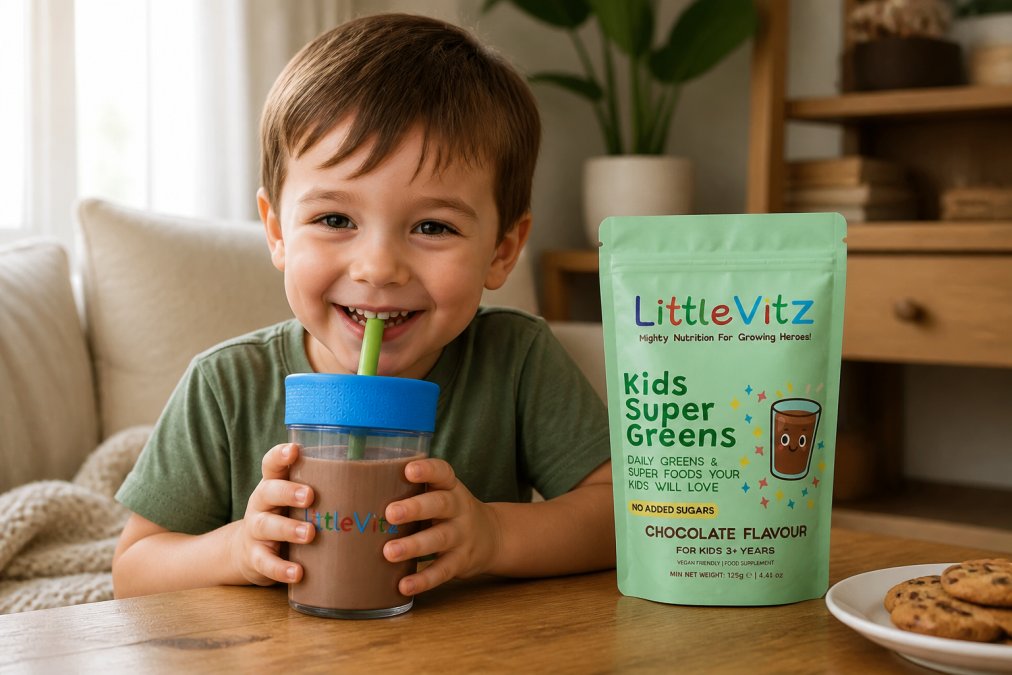
The LittleVitz Kids Super Greens powder is designed with picky eaters in mind. It's chocolate-flavoured, contains no added sugar, and mixes easily into milk, smoothies, or porridge. Because it's made with real greens, fruits, and over 30 vitamins and minerals, it delivers genuine nutritional support. For parents of children who eat a very limited diet, this fills real gaps without requiring negotiation at mealtimes.

How to Hide Vegetables in Smoothies and Other Meals
Blending techniques that mask texture and taste
The key to hiding vegetables in smoothies is balance. You need enough fruit to mask the vegetable taste and create a naturally sweet flavour, but not so much that you're serving your child a sugar bomb. A good ratio is roughly two parts fruit to one part vegetable or greens.
Start with fruits your child already enjoys: banana, strawberry, mango, or apple. These provide natural sweetness and creaminess. Then add your vegetables or greens gradually. Spinach is nearly invisible in a smoothie with berries. Courgette adds creaminess without much flavour. Carrot brings sweetness.

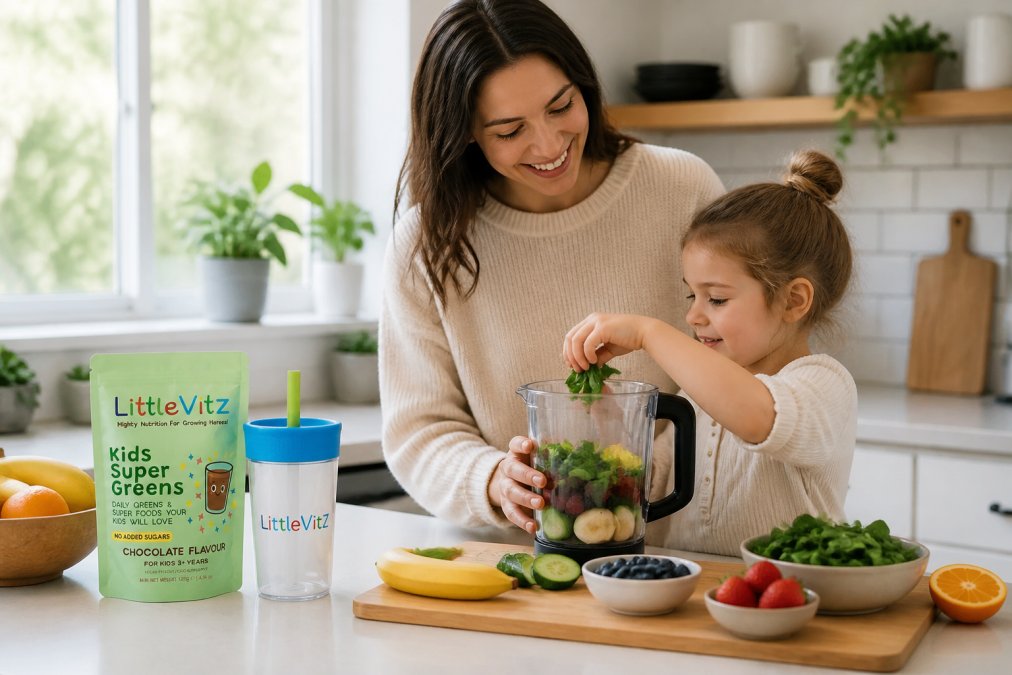
Frozen vegetables and fruits work better than fresh for smoothies, they create a thicker, creamier texture that feels more like a treat. A quality nutrition powder designed for children can amplify your smoothie's nutritional value without adding bulk or changing the taste significantly. LittleVitz Kids Super Greens mixes smoothly into fruit-based drinks, adding vitamins, minerals, and superfoods without making the smoothie taste 'healthy' in a way that puts children off.
Mixing superfoods into everyday foods
Vegetables hide well in foods with strong flavours and soft textures. Pasta sauces are obvious, but think beyond that: soups, curries, meatballs, cottage pie, and even pancake batter can all accommodate hidden vegetables. The texture matters, finely chopped or blended vegetables disappear, whilst chunky pieces your child can identify will likely be rejected.
Baked goods work surprisingly well. Courgette bread, carrot muffins, and sweet potato brownies are classics for a reason, the moisture from the vegetables keeps baked goods tender, and the sweetness masks the vegetable flavour. A practical strategy is to cook double portions of sauces and purée half of them. The purée goes into pasta, soups, and other dishes throughout the week.
Some parents add a nutrition powder to baked goods or yoghurt-based dishes. LittleVitz works well mixed into plain yoghurt with a drizzle of honey, or stirred into porridge with banana and berries. It adds nutrition without requiring your child to eat more food.
Natural Superfood Supplements vs. Synthetic Options
Natural supplements are made from whole-food sources, actual vegetables, fruits, and plants, whereas synthetic supplements are chemically manufactured versions of individual nutrients. For toddlers, the distinction matters.
Natural supplements tend to be better absorbed because they contain the nutrient alongside other compounds that aid absorption. Your child's body recognises them as food. Synthetic vitamins are pure isolated nutrients, which your body can absorb, but not always as efficiently. Additionally, natural supplements often contain beneficial compounds beyond the main nutrient: antioxidants, phytonutrients, and fibre that synthetic versions lack.
That said, some synthetic nutrients are necessary. Vitamin D, for example, is found naturally in very few foods, so supplementation is often the only practical option. The goal is balance: choose natural supplements where they're practical and effective, and don't worry about synthetic options where they're genuinely necessary.
Quality matters more than the natural/synthetic distinction. Look for supplements that are third-party tested and transparent about their ingredients. LittleVitz Kids Super Greens uses real greens, fruits, and vitamins to create a supplement that combines the best of both approaches, made with whole-food ingredients so your child gets the benefits of natural nutrition, but also carefully formulated to ensure consistent nutrient delivery and appropriate dosages for toddlers.
Recognising Signs Your Toddler Needs Nutritional Support
Some signs that your child might benefit from a nutritional supplement are fairly obvious: extreme pickiness that limits them to fewer than five foods, visible fatigue or difficulty concentrating, frequent infections, or slow growth.
Watch for pale or greyish skin, which can indicate anaemia from iron deficiency. Brittle nails, hair loss, or slow hair growth sometimes reflect nutritional gaps. Constipation is incredibly common in toddlers with limited diets, particularly if they eat a lot of processed foods and few vegetables or whole grains.
If your child has ARFID (avoidant/restrictive food intake disorder) or significant sensory food issues, they're at higher risk of nutritional gaps. Their 'safe foods' might be adequate in some nutrients but lacking in others. A supplement tailored to fill those specific gaps makes real sense.
The honest truth is that many toddlers with limited diets are probably fine nutritionally, children are resilient, and their bodies are excellent at prioritising nutrients where they're needed most. But some do develop deficiencies, and it's impossible to know which children those are without testing. If you're genuinely concerned, mention it to your health visitor. They can assess whether your child needs blood work or supplementation.
A quality natural superfood supplement designed for toddlers is a reasonable insurance policy. It's not a substitute for trying to expand your child's diet, but it's a practical way to ensure your child gets baseline nutrition whilst you work on the bigger picture.
Watching your child thrive matters more than anything. When picky eating or limited food acceptance makes it hard to meet their nutritional needs through food alone, a quality natural superfood supplement becomes genuinely valuable. LittleVitz Kids Super Greens supports healthy growth, focus, and immunity with real greens, fruits, and over 30 vitamins and minerals, no added sugar, just nutrition your child actually needs. Start with the Kids Super Greens Trial & Travel Pouch to see if it works for your family, or explore the full Kids Super Greens formula for ongoing support.
Nutrient |
Role in Development |
Natural Sources |
If Limited in Diet |
|---|---|---|---|
Iron |
Brain development, energy |
Red meat, beans, fortified cereals |
Supplement recommended |
Calcium |
Bone strength |
Dairy, fortified plant milks, leafy greens |
Supplement if avoiding dairy |
Vitamin D |
Bone health, immunity |
Sunlight, oily fish, fortified milk |
Supplement often needed |
Omega-3 (DHA) |
Brain development, focus |
Oily fish, algae, walnuts |
Plant sources or algae supplement |
Probiotics |
Digestive health, immunity |
Yoghurt, fermented foods |
Children's probiotic if needed |
Frequently Asked Questions
What are the signs my toddler might need a nutritional boost?
Common signs include persistent tiredness, frequent minor illnesses, slow growth compared to peers, difficulty concentrating, constipation, or a very limited diet due to food sensory issues. If your child eats mainly beige foods (pasta, bread, chicken) and refuses most vegetables, a nutrient-dense supplement can help bridge nutritional gaps. Always discuss concerns with your health visitor or GP, but many parents find that adding natural superfood supplements supports both energy and immunity when diet alone isn't meeting needs.
Are natural superfood supplements safe for toddlers?
Yes, when chosen carefully. Look for supplements specifically formulated for children with no added sugar and clean, recognisable ingredients. Natural superfood supplements like LittleVitz Kids Super Greens are designed with toddler safety in mind, containing real vegetables, fruits, and essential vitamins without artificial additives. Always check for allergen information and introduce any new supplement gradually. If your child has a known allergy or digestive sensitivity, discuss it with your GP before starting.
How do I know if a supplement actually tastes good enough that my child will drink it?
The best way is to try a smaller size first. LittleVitz offers a Trial & Travel Pouch (£12.00) with five servings, so you can test it before committing to a full container. Chocolate-flavoured powders tend to work well for picky eaters because they taste like a treat rather than medicine. Mix it into milk, smoothies, or yoghurt to make it more appealing. Many parents find that involving their child in mixing or choosing the drink helps too.
Can I mix superfood powder into foods without my child noticing?
Absolutely. A chocolate-flavoured powder blends seamlessly into milk, smoothies, yoghurt, porridge, and even chocolate-based desserts. The key is mixing it thoroughly to avoid a gritty texture that picky eaters might detect. Start with a small amount mixed into a familiar food, then gradually increase if your child accepts it. This approach works especially well for children with texture sensitivities who refuse anything obviously 'powdery'.