

Table of Contents
- Why Superfoods Matter for Picky Eaters
- How to Hide Vegetables in Smoothies and Drinks
- Nutritious Snacks for Fussy Eaters That Actually Work
- Simple Ways to Add Superfoods to Everyday Meals
Last Updated: August 21, 2026
Why Superfoods Matter for Picky Eaters
Getting your child to eat nutrient-dense foods is one of the biggest challenges parents face. Picky eating isn't about stubbornness, it's often about sensory sensitivity, texture preferences, or simply needing more exposure to new foods.
Superfoods are nutrient-dense whole foods packed with vitamins, minerals, and antioxidants that support healthy growth, focus, and immunity (the NIH). For fussy eaters with a limited 'safe food' list, adding these powerhouse ingredients becomes essential for bridging nutritional gaps.
How to Hide Vegetables in Smoothies and Drinks
Smoothies are a game-changer for parents of picky eaters. A chocolate smoothie masks vegetables beautifully whilst delivering serious nutrition.
The key is balance. Start with a base of milk or yoghurt, add one or two handfuls of leafy greens (spinach works brilliantly because it's mild), frozen fruit for natural sweetness, and a splash of vanilla extract or cocoa powder for flavour masking.
Here's a simple framework:
- Base: 200ml milk or yoghurt
- Greens: One small handful of spinach or kale
- Fruit: One banana or handful of frozen berries
- Flavour booster: Cocoa powder, vanilla, or nut butter
- Optional: A nutrition powder designed for children
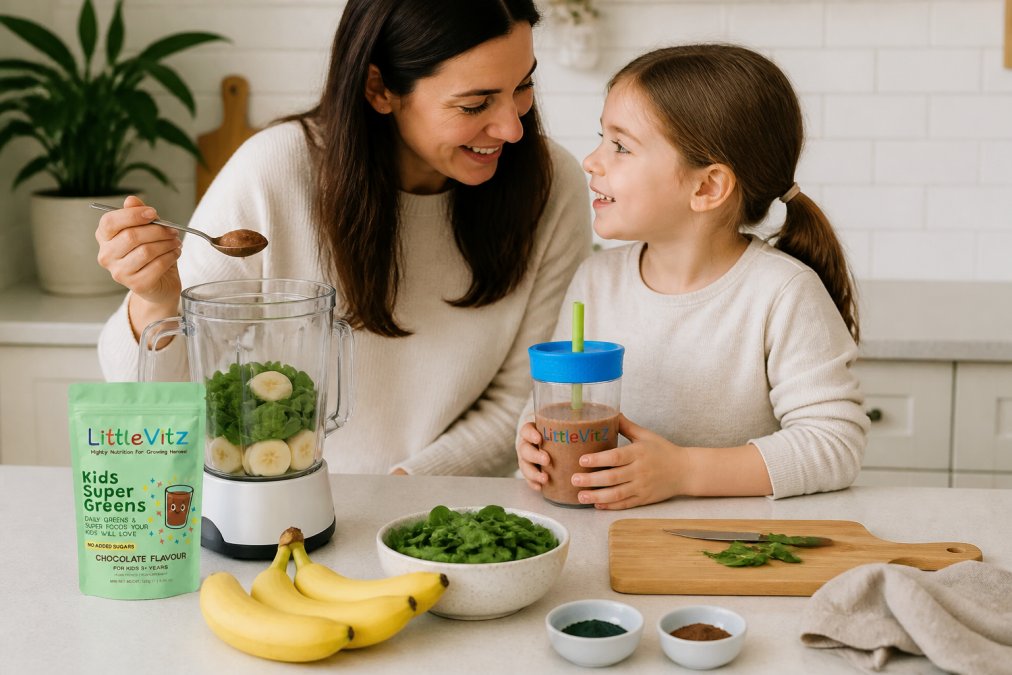
Blend thoroughly until completely smooth and serve cold, children often prefer cold drinks. A smooth, creamy texture is far more appealing to children with sensory sensitivities.
Nutritious Snacks for Fussy Eaters That Actually Work
Snacks are where you can slip in extra nutrition without the pressure of a full meal. Fussy eaters often accept snacks more readily because there's less expectation around them.
Think about what your child already enjoys. If they like yoghurt, add a sprinkle of ground flaxseeds. If they like crackers, pair them with hummus or nut butter.
Texture-friendly snack ideas:
- Fruit with a dip (yoghurt, nut butter, or cream cheese)
- Cheese and whole-grain crackers
- Yoghurt with ground nuts or seeds stirred through
- Banana with a spoonful of almond butter
- Vegetable sticks with a dip they actually enjoy
Involving your child in snack preparation increases acceptance. Even a young child can help choose fruit or arrange items on a plate, and this sense of ownership makes them more likely to eat what they've helped create.
Simple Ways to Add Superfoods to Everyday Meals
You don't need fancy recipes. The simplest approach is working superfoods into meals your child already accepts.
For pasta dishes, finely grate or puree vegetables into tomato-based sauces. For chicken nuggets or fish fingers, serve them alongside a nutrient-dense sauce made from blended vegetables. For rice or couscous, stir through finely diced vegetables or mix in a spoonful of vegetable puree.
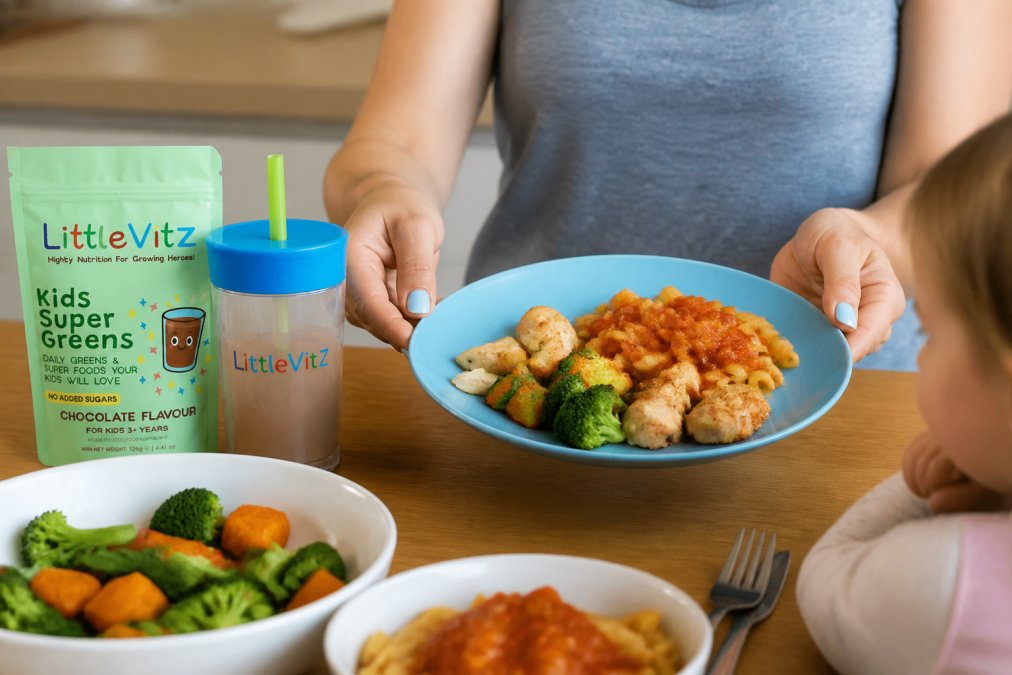
Children are more likely to accept foods they've seen repeatedly. Research suggests it can take 10-15 exposures before a child accepts a new food (peer-reviewed research). Keep offering small portions of nutrient-dense foods alongside their safe foods, without pressure.
Creating a positive mealtime environment matters too. Eat together when possible, model enjoying a variety of foods, and avoid making mealtimes a battle. When your child sees you enjoying vegetables, they're more likely to be curious about them.
For parents managing limited 'safe food' diets due to sensory issues or ARFID (Avoidant/Restrictive Food Intake Disorder), food exploration happens at a slower pace (peer-reviewed research). Working with a paediatric dietitian can help you identify safe foods that are also nutrient-dense and create a realistic plan for gradual expansion.
At LittleVitz, we understand the daily struggle of getting proper nutrition into your child when they're being fussy. Our chocolate-flavoured Kids Super Greens powder is designed specifically for this challenge, it contains over 30 vitamins, minerals, and superfoods including real greens and fruits, with no added sugar. Simply mix it into milk, smoothies, or yoghurt, and you've added serious nutrition to something your child will actually enjoy.

Frequently Asked Questions
How can I add superfoods to picky eater meals without them noticing?
Blend nutrient-dense superfoods into familiar foods your child already enjoys. Smoothies are ideal—mix greens, fruits, and a chocolate nutrition powder into milk or yoghurt. You can also stir superfoods into pasta sauces, mashed potatoes, or porridge. The key is starting small and building gradually. A product like Kids Super Greens blends seamlessly into chocolate milk, making it taste like a treat rather than medicine.
What are the best superfoods for fussy eaters?
Focus on nutrient-dense, mild-flavoured options: spinach, broccoli powder, sweet potato, carrots, and berries. These work well blended into smoothies or baked goods without overpowering taste. Fortified foods and whole foods combined—like chocolate-flavoured powders packed with real greens and vitamins—bridge nutritional gaps whilst keeping meals enjoyable. Start with one new food at a time to avoid overwhelming your child's palate.
Will my child actually drink a superfood smoothie, or will they refuse it like other 'healthy' drinks?
Children are more likely to accept superfoods when they taste genuinely good. A chocolate-flavoured smoothie feels like a treat rather than a health drink. Mix it with milk your child already enjoys, use a fun cup or straw, and involve them in making it—let them help pour or press the blender button. Positive reinforcement and making mealtime enjoyable matters as much as the ingredients themselves.