

Table of Contents
- Why Sugar-Free Matters for Growing Children
- Essential Vitamins and Minerals Your Child Needs
- Comparing Powder, Gummy, and Liquid Formats
- Best Kids Supplement for Picky Eaters
- How to Get Nutrients Into Picky Eaters Without the Battle
- What to Look for in High-Quality Ingredients
- Common Additives to Avoid in Kids' Supplements
- Conclusion
Last Updated: August 28, 2026
Why Sugar-Free Matters for Growing Children
Sugary supplements work against what your child actually needs. When kids consume added sugars through vitamins and powders, you're feeding them a sweet treat disguised as nutrition, which defeats the purpose entirely.
Growing children require consistent nutrient intake to support brain development, immune function, and physical growth. Sugar spikes can interfere with nutrient absorption and create energy crashes that leave kids irritable and unfocused. A sugar-free kids vitamin powder sidesteps this problem completely.
According to NHS guidance on children's nutrition, children aged 4-8 should consume no more than 30g of free sugars daily, yet many popular vitamin gummies contain 3-5g per serving (the NHS). That's before breakfast, snacks, or meals. A sugar-free alternative means you're not stealing that sugar allowance from actual food nutrition.
At LittleVitz, we created our chocolate-flavoured powder because parents wanted the convenience of a supplement without the guilt of added sugar. The result is a formula that tastes genuinely good, so kids actually ask for it, without any added sugar.
Essential Vitamins and Minerals Your Child Needs
Your child's growing body has specific nutritional demands that food alone often doesn't meet, particularly if they're a picky eater. Understanding which forms your child's body can actually use helps you evaluate any supplement.
Vitamin D is critical for bone development, immune function, and mood regulation. Many children in this climate have insufficient levels, especially during winter. A quality supplement should contain at least 10 micrograms daily (the NIH). Look for cholecalciferol (vitamin D3) rather than ergocalciferol (D2); D3 is more bioavailable and your child's body converts it more efficiently.
Iron supports cognitive development and prevents fatigue. Ferrous bisglycinate (iron bound to the amino acid glycine) is absorbed at roughly 25-30% efficiency, whilst basic ferrous sulphate sits around 5-10%. Your child's digestive system recognises chelated forms as food, not a foreign mineral.
B vitamins (particularly B12, folate, and B6) fuel energy production and support focus. Methylcobalamin (the active form of B12) is absorbed directly into cells, whereas cyanocobalamin requires conversion in your liver first. Folate should appear as methylfolate or folinic acid, not folic acid (the synthetic precursor that some children's bodies struggle to convert).
Calcium and magnesium work together for bone health and muscle function. Magnesium also supports sleep quality and emotional regulation. Magnesium glycinate and magnesium malate are absorbed far better than magnesium oxide, which often causes loose stools in children. Calcium citrate is more bioavailable than calcium carbonate.
Zinc is fundamental for immune support and wound healing. Zinc picolinate and zinc bisglycinate are absorbed more efficiently than zinc oxide or zinc gluconate. Your child's body can only absorb so much zinc at once; excessive amounts actually block copper absorption, so the form matters as much as the dose.
Omega-3 fatty acids (specifically DHA) directly support brain development and concentration. Look for DHA from algae oil (suitable for vegetarian families) or fish oil that's been third-party tested for heavy metals and freshness.
The best sugar-free kids vitamin powder includes these essentials in forms your child's body can actually use. When comparing two powders with similar nutrient lists, the one specifying chelated minerals, methylated B vitamins, and bioavailable forms will deliver real nutrition; the other may pass through largely unused.
Comparing Powder, Gummy, and Liquid Formats
Each format has genuine trade-offs. Understanding them helps you choose what works for your family's routine.
Powder supplements mix into milk, smoothies, or yoghurt, giving you flexibility in how your child consumes them. They're typically the most nutrient-dense format because you're not paying for gelling agents or stabilisers. The downside: some children resist the texture or taste, and mixing requires an extra step.
Gummy supplements are convenient and taste like treats, but most contain added sugars or artificial sweeteners. They're also less nutrient-dense, and children often consume more than the recommended dose because they taste like sweets.
Liquid supplements offer easy dosing and quick absorption, but they're often the most expensive option and frequently contain preservatives or artificial flavours.
For picky eaters specifically, powder wins because you control how it's delivered. Mix it into chocolate milk, blend it into a smoothie with fruit, or stir it into yoghurt. Your child gets the nutrition without the battle.
Best Kids Supplement for Picky Eaters
If your child lives on a limited diet of chicken nuggets, pasta, and toast, a supplement is essential. The question is finding one they'll actually consume.
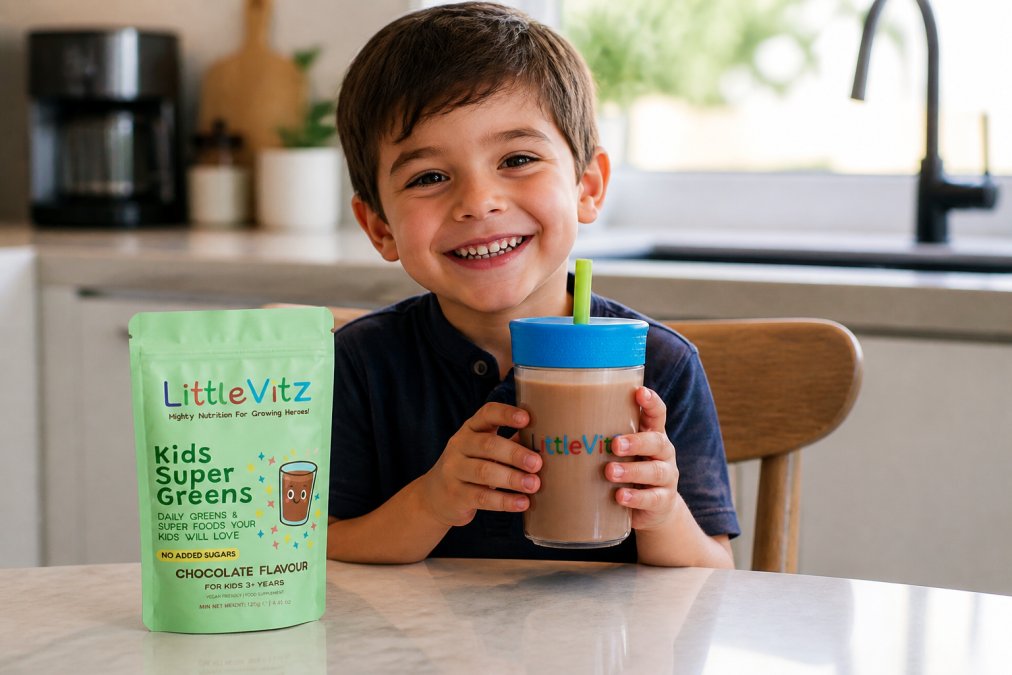
LittleVitz Kids Super Greens is designed precisely for this situation. It's a chocolate-flavoured powder that tastes genuinely good, not like a health product in disguise. The formula includes over 30 vitamins, minerals, and superfoods, real greens, real fruits, without any added sugar. It costs £34.99 for a full-size container, or you can try the Trial & Travel Pouch for £12.00 to test whether your child will accept it before committing.

What makes it work for picky eaters: the chocolate flavour is front and centre, so it doesn't taste like "health." You mix it into milk to create a chocolate drink, blend it into smoothies, or stir it into yoghurt. The powder dissolves smoothly without that gritty texture some children reject.
The nutritional profile supports growth, focus, and immunity, the three areas parents worry about most when their child's diet is restricted. It contains bioavailable minerals that your child's body can actually absorb.
How to Get Nutrients Into Picky Eaters Without the Battle
The secret isn't tricking your child, it's making nutrition taste good enough that they want it.
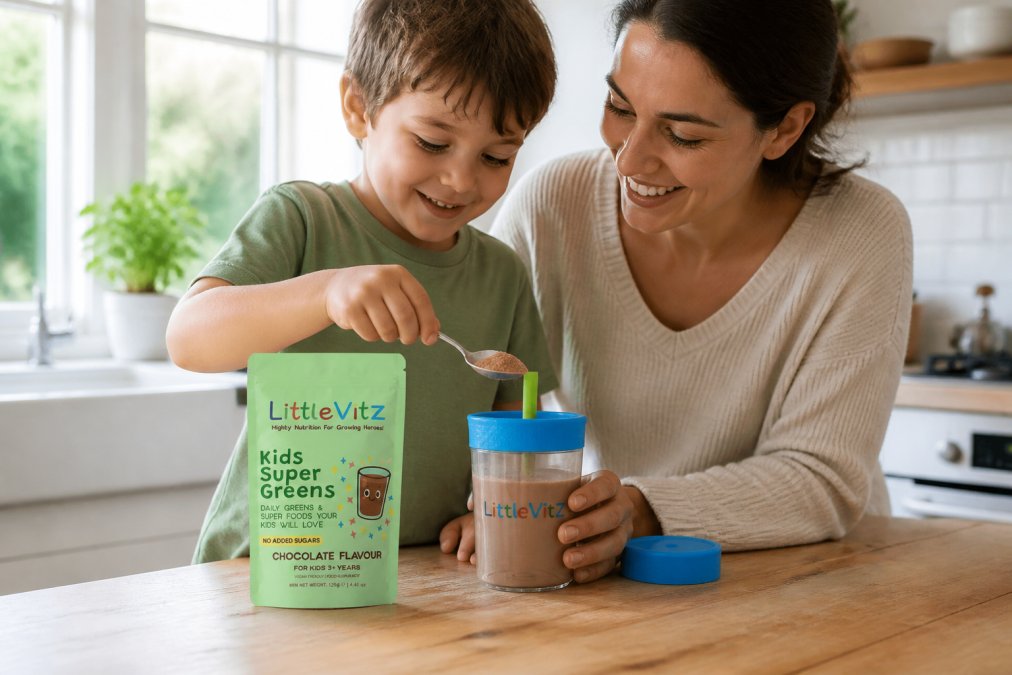
Start with familiarity. Mix the powder into foods your child already accepts. If they drink chocolate milk, that's your entry point. If they eat yoghurt, blend the powder in. You're not introducing something new; you're enhancing something they already like.
Make it their choice. Ask whether they want their chocolate milk "special" or their smoothie "extra creamy." Giving them agency reduces resistance dramatically. Children are far more likely to consume something they chose.
Keep portions small initially. Start with half a recommended scoop mixed into a full glass of milk. Let their palate adjust. After a week of half-portions, move to full portions.
Consistency matters more than perfection. One serving daily, every day, builds routine. Your child stops questioning it because it's simply part of breakfast or afternoon snack time.
Address texture concerns directly. If your child has sensory sensitivities, the powder needs to be completely dissolved. Use warm milk rather than cold, stir thoroughly, or use a blender.
Never present it as medicine. Avoid language like "this will make you healthy." Instead: "This is your special chocolate milk" or "This smoothie tastes like dessert."
What to Look for in High-Quality Ingredients
Not all vitamin powders are created equal. The ingredient list tells you whether you're getting genuine nutrition or marketing, and for families managing allergies, it's a safety document.
Bioavailability is non-negotiable. This means your child's body can actually absorb and use the nutrients. Look for chelated minerals (bound to amino acids), which your body recognises and absorbs efficiently. Forms like magnesium glycinate, zinc picolinate, and ferrous bisglycinate are absorbed far better than basic oxide or sulphate forms.
Real food sources matter. A powder that includes actual vegetable and fruit powders, not just "vegetable blend" or "proprietary formula," gives you transparency. Real greens powder and real fruit powders have nutritional profiles and phytonutrients that synthetic vitamins alone don't replicate.
Allergen transparency is essential. The label should clearly state whether the product contains or is manufactured in facilities with common allergens: tree nuts, peanuts, dairy, gluten, sesame, soy, and shellfish. Look for products that explicitly state "made in a dedicated nut-free facility" or carry third-party allergen certification. If the label is vague, contact the manufacturer directly and ask about their production protocols.
Avoid synthetic additives. Read the full ingredient list. Artificial colours, artificial flavours, and unnecessary fillers belong nowhere near your child's supplement. Natural flavourings and colours derived from actual foods are preferable.
Check for third-party testing. Reputable manufacturers have their products tested by independent labs to verify nutrient content matches the label. Look for certifications from bodies like the United Kingdom's Natural Products Association. Some manufacturers also conduct heavy-metal testing, which shows they're serious about safety.
Understand sweetening choices. If a powder is sweetened, identify exactly what sweetener is used. Xylitol and stevia are natural options with minimal glycemic impact. Some children experience digestive upset from sugar alcohols like xylitol, so stevia may be the better choice.
Packaging and storage stability matter. Powders in opaque, airtight containers with desiccant packs stay fresher longer and protect nutrients from degradation. Check whether resealable pouches are truly airtight or whether nutrients will oxidise after opening.
Common Additives to Avoid in Kids' Supplements
Some ingredients are used for manufacturing convenience, not nutrition.
Artificial colours (like tartrazine, sunset yellow, or allura red) are linked to hyperactivity in sensitive children. They serve no nutritional purpose. Natural alternatives exist; brands using artificial colours are cutting corners.
Artificial sweeteners deserve scrutiny. Aspartame, sucralose, and saccharin are synthetic chemicals your child's body doesn't recognise as food. Stevia and xylitol are natural alternatives, though xylitol is toxic to dogs if you have pets.
Excessive fillers like maltodextrin, cellulose, or silicon dioxide bulk up the powder without adding nutrition.
High fructose corn syrup occasionally appears in "natural" kids' supplements. It's completely unnecessary in a supplement designed to support health.
Artificial flavours can trigger sensory sensitivities. Natural flavourings derived from actual foods are better tolerated.
Preservatives like BHA, BHT, or sodium benzoate aren't necessary in powder form.
Hydrogenated oils have no place in children's nutrition. Any oil should be cold-pressed or expeller-pressed.
The simplest rule: if you can't pronounce an ingredient or don't recognise it as food, research it before giving it to your child.
Getting the right nutrients into your child doesn't require complicated routines or expensive supplements that taste awful. The best sugar-free kids vitamin powder should taste good enough that your child actually wants it, contain nutrients in forms their body can absorb, and support their growth, focus, and immunity without any added sugar.
LittleVitz Kids Super Greens does exactly this. It's chocolate-flavoured, includes over 30 vitamins and minerals plus real superfoods, and costs £34.99 for a full container. If you're unsure whether your child will accept it, the Trial & Travel Pouch at £12.00 lets you test it first. Start with a half-scoop mixed into their favourite milk or smoothie, keep it consistent, and let their palate adjust. Within a week, most children stop noticing the supplement and simply enjoy their special chocolate drink. That's when you know you've found something that actually works.

Frequently Asked Questions
Q: What is the best sugar-free kids vitamin powder available?
A: The best sugar-free kids vitamin powder combines nutrient density with palatability, something children will actually consume. Look for powders made with real greens, fruits, and essential vitamins without artificial sweeteners. A chocolate-flavoured powder designed specifically for picky eaters can be far more effective than unflavoured options, as children are more likely to accept it mixed into milk or smoothies. Bioavailability matters too: choose formulas where nutrients are absorbed well by growing bodies.
Q: How can I ensure my picky eater gets enough nutrients with a powder supplement?
A: Start by mixing the powder into foods and drinks your child already enjoys, chocolate milk, yoghurt, or smoothies work well. Use the recommended daily scoop size consistently rather than guessing amounts. Pair the supplement with whole foods whenever possible; the powder bridges gaps but shouldn't replace real nutrition. If your child has sensory processing issues, dissolve the powder thoroughly so no grittiness remains. Consistency matters more than perfection, a small daily amount your child accepts is better than skipping days.
Q: Are powdered vitamins better than gummies for children?
A: Powders offer distinct advantages for picky eaters: they're easier to hide in food, contain no added sugar (unlike many gummies), and often deliver higher nutrient density per serving. Gummies appeal to some children because they taste like sweets, but many contain artificial sweeteners or excess sugar. Liquids work for very young children but can be messier. The best format is whichever one your child will consistently consume, a sugar-free powder your child accepts is superior to a gummy they refuse.
Q: What does NHS guidance recommend for children's vitamin supplementation?
A: The NHS recommends that all children aged 6 months to 5 years receive a daily vitamin D supplement containing 10 micrograms. Children from 5 years onwards may not need routine supplements if they eat a balanced diet including fortified foods. However, children with restricted diets, food sensory issues, or limited sun exposure may benefit from broader micronutrient support. A sugar-free powder containing essential vitamins and minerals can help fill gaps safely, particularly for children whose diets are genuinely limited.
This article was written using GrandRanker