

Table of Contents
- Are Superfood Powders Safe for Toddlers?
- Nutritional Requirements for Toddlers and Where Gaps Appear
- What Makes a Superfood Powder Safe for Young Children
- Potential Risks and Ingredients to Avoid
- Whole Foods vs. Powdered Supplements: What Your Child Actually Needs
- How to Manage Picky Eating in Toddlers with Superfoods
- Finding the Best Kids Supplement for Picky Eaters
- When to Consult Your Paediatrician
- Frequently Asked Questions
Last Updated: September 2, 2026
Are Superfood Powders Safe for Toddlers?
When you're a parent of a picky eater, the daily battle over vegetables can feel exhausting. You've likely tried everything: hiding greens in pasta sauce, blending them into smoothies, even bribing with dessert. At LittleVitz, we understand this struggle intimately, we've built our entire approach around helping parents like you bridge nutritional gaps without the mealtime drama.
The question of whether superfood powders are safe for toddlers is one we hear constantly, and it deserves a thoughtful answer. The short version: yes, when chosen carefully, superfood powders can be a safe and convenient addition to your child's diet. But not all powders are created equal, and the details matter enormously.
The key is understanding what makes a powder genuinely safe, what red flags to watch for, and how to position it within your child's overall nutrition, not as a replacement for whole foods, but as a strategic tool for picky eaters who need support.
Nutritional Requirements for Toddlers and Where Gaps Appear
Toddlers aged 1-3 years have surprisingly specific nutritional needs (peer-reviewed research). They require adequate iron for brain development, calcium and vitamin D for bone growth, and a range of micronutrients including zinc, B vitamins, and vitamin A. Most toddlers need around 1,000-1,400 calories daily, depending on activity level and growth rate.
Here's where the challenge emerges: many picky eaters consume a limited range of foods, often lacking sufficient vegetables, fruits, and nutrient-dense options. A child who lives on chicken nuggets, pasta, and toast is almost certainly missing several essential micronutrients. This creates a genuine nutritional gap, not a minor concern, but something worth addressing.
The NHS recommends that children aged 1-3 receive a vitamin supplement containing vitamins A, D, and C as a matter of routine (the NHS). This official guidance acknowledges that even children eating a "normal" diet can benefit from supplementation. For picky eaters with genuinely restricted diets, the case for supplementation becomes even stronger.
Research into toddler nutrition shows that dietary intake becomes increasingly restricted during the picky eating phase, typically between ages 2-4 (peer-reviewed research). Children in this phase often reject entire food groups, creating measurable gaps in micronutrient consumption. A superfood powder formulated specifically for children can help fill these gaps, provided it's the right product.
What Makes a Superfood Powder Safe for Young Children
Safety for toddlers hinges on several specific factors. A truly child-safe powder isn't just a scaled-down version of an adult product, it requires careful formulation, rigorous testing, and transparent ingredient sourcing.
Third-party testing and heavy metal screening
This is non-negotiable. Heavy metals like lead, cadmium, and arsenic can accumulate in plants, particularly in powdered greens. For a developing child, even trace amounts matter more than they would for an adult. Any reputable children's superfood powder should carry third-party testing certification confirming heavy metal levels are below safety thresholds.
Look for products tested by independent laboratories, not just manufacturer claims. The testing certificate should be publicly available or provided upon request. This transparency signals confidence in the product's safety profile.
Vitamin K content is another important consideration. Whilst vitamin K is essential for bone health and blood clotting, children taking certain medications (rare, but possible) may need to monitor intake. A quality powder will disclose its vitamin K content clearly, allowing your GP or paediatrician to assess any interactions.
Clean label and allergen transparency
A clean label means no artificial sweeteners, no added sugars, and no artificial colours or flavourings. For toddlers, this matters because their digestive systems are still developing, and unnecessary additives can trigger sensitivities or digestive upset.
Allergen transparency is equally critical. The powder should clearly state whether it contains or was processed in facilities handling: peanuts, tree nuts, milk, soya, sesame, and shellfish. Cross-contamination is a real risk in manufacturing, so look for products made in dedicated facilities or with rigorous allergen protocols.
Many parents worry about hidden ingredients. A genuinely transparent product will list every ingredient by name, not vague terms like "proprietary blend" or "natural flavours." You should be able to research each ingredient and understand why it's included.
Potential Risks and Ingredients to Avoid
Certain ingredients have no place in a toddler's superfood powder. High caffeine content is an obvious one, some green powders contain matcha or other caffeinated ingredients unsuitable for young children. Your toddler doesn't need caffeine, and it can interfere with sleep and cause jitteriness.
Stevia and other artificial sweeteners are often added to mask the taste of greens. Whilst regulatory bodies have deemed them safe in small quantities, many parents prefer to avoid them for young children. Natural sweetness from fruit powders is preferable if sweetening is necessary.
Certain herbs and botanical extracts can be problematic. Whilst turmeric and ginger are generally safe in small amounts, some herbal ingredients haven't been adequately studied in toddlers. Stick with simple, well-known ingredients: vegetable powders, fruit powders, recognised vitamins and minerals.
Added sugars are perhaps the most common culprit. Even "healthy" kids' supplements sometimes contain more sugar than a biscuit. This defeats the purpose of adding nutrition and contributes to tooth decay and unhealthy eating patterns. A truly safe superfood powder for toddlers contains zero added sugar.
Digestive upset is possible if a powder is introduced too quickly or in excessive quantities. Some children experience mild constipation or loose stools when first consuming greens powder, particularly if their normal diet lacks fibre. Start with a small amount, perhaps a quarter teaspoon mixed into milk, and gradually increase over a week or two.
Whole Foods vs. Powdered Supplements: What Your Child Actually Needs
This is where honest conversation matters. A superfood powder is genuinely useful, but it's not a substitute for whole foods, it's a supplement to fill gaps when whole foods aren't happening.
Whole foods offer advantages a powder cannot replicate: fibre, texture variety that supports sensory development, and the psychological benefit of learning to eat real vegetables. A child who eats even a small amount of actual broccoli is developing better eating habits than one who only consumes greens via powder.
That said, a child eating nothing but chicken nuggets and pasta, supplemented with a quality superfood powder, is nutritionally better off than one with the same limited diet and no supplementation. The powder isn't perfect, but it's better than the alternative.
The bioavailability question, whether nutrients in powdered form are absorbed as effectively as those in whole foods, is worth considering. Generally, nutrients in powders are absorbed reasonably well, though whole foods offer additional compounds (polyphenols, phytonutrients) that powders may not capture. This reinforces the principle: powder as supplement, not replacement.
For children with genuine ARFID (Avoidant/Restrictive Food Intake Disorder) or severe sensory sensitivities, a superfood powder can be genuinely life-changing. These children may physically struggle with texture, taste, or smell of whole vegetables. A smooth, chocolate-flavoured powder they can drink might be the only way to get any vegetables into their diet at all.
How to Manage Picky Eating in Toddlers with Superfoods
The most effective strategy is positioning the powder as a treat, not a health lecture. Toddlers respond poorly to "this is good for you" messaging, they respond to "this tastes nice."

Start by mixing the powder into foods your child already enjoys. Chocolate flavour works particularly well because it's naturally appealing to toddlers and masks the taste of greens effectively. Mix it into milk, yoghurt, or a smoothie with banana and strawberry. The goal is making it delicious first, nutritious second.
Involve your child in the process where possible. Even a 2-year-old can help "pour" (with your hands guiding) or stir. This builds investment in the final product and makes them more likely to try it.
Keep portions small initially. A toddler's stomach is tiny, they don't need large quantities. A few tablespoons of a nutrient-dense powder mixed into their regular milk or smoothie is sufficient.
Consistency matters more than perfection. If your child has the powder three times weekly, that's meaningful. It doesn't need to be daily, and forcing it daily creates resistance. Better to offer it regularly without pressure than to turn it into a battle.
Watch for digestive changes in the first week or two. Some children experience mild constipation as their system adjusts to increased nutrient intake. Ensure adequate water intake and don't be alarmed by minor changes, they typically resolve quickly.
Finding the Best Kids Supplement for Picky Eaters
When evaluating options, several criteria matter. First, look for a product specifically formulated for children, not an adult powder in a smaller container. Children's formulations account for smaller bodies, developing digestive systems, and age-appropriate nutrient levels.
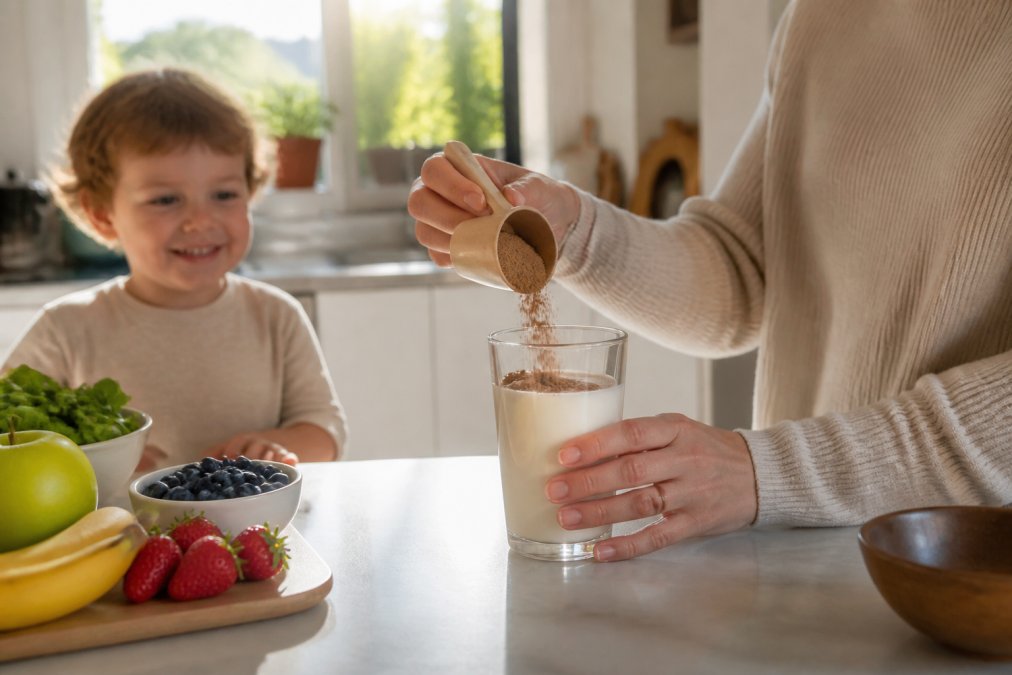
Taste is genuinely important, a supplement your child refuses is worthless. Chocolate is the safest bet for picky eaters because it's universally appealing and masks vegetable flavours effectively. Avoid berry or green-flavoured powders unless your child already enjoys those tastes.
Ingredient count matters less than ingredient quality. A powder with 20 superfoods is only valuable if each ingredient is genuinely beneficial and properly dosed. Five carefully chosen, high-quality ingredients are superior to 20 mediocre ones.
Price varies considerably, but the cheapest option isn't always the best value. A powder at £30-35 per month that your child actually consumes is better value than a £15 powder they refuse. Consider cost per serving and whether you'll realistically use the entire container.
LittleVitz Kids Super Greens is specifically designed with this philosophy. It's formulated for toddlers and young children, contains no added sugar, uses real greens and fruits rather than synthetic ingredients, and comes in a chocolate flavour that picky eaters actually enjoy. The formula includes over 30 vitamins, minerals, and superfoods, each chosen for relevance to children's nutritional needs. At £34.99 for a month's supply, it's positioned as a premium product, reflecting the care in formulation and testing rather than aggressive marketing.

For families wanting to trial before committing, the Kids Super Greens Trial & Travel Pouch at £12.00 offers five servings, enough to assess whether your child enjoys it and whether it fits your routine.
When to Consult Your Paediatrician
Before introducing any new supplement, a conversation with your GP or health visitor is wise. This is particularly important if your child has any of the following: known allergies or intolerances, digestive issues, is taking medication, or has any developmental concerns.
Your paediatrician can assess whether supplementation is genuinely necessary for your child, advise on appropriate dosing, and flag any potential interactions. They can also rule out underlying causes of poor appetite or restricted eating that might warrant investigation.
Some children have genuine medical reasons to avoid certain ingredients. A paediatrician can identify these and help you choose an appropriate product. For most children, a quality superfood powder poses minimal risk, but individual circumstances vary.
If your child experiences any adverse reactions, persistent digestive upset, allergic symptoms, or behavioural changes, stop the supplement and contact your GP. Adverse reactions are rare, but they're worth taking seriously.
Are superfood powders safe for toddlers? The evidence supports yes, when you choose carefully, introduce thoughtfully, and position them as a supplement rather than a cure-all. The real challenge isn't safety; it's finding a product your child will actually consume and that genuinely fits your family's routine.
LittleVitz Kids Super Greens was created specifically for this challenge. With no added sugar, real greens and fruits, and a chocolate flavour toddlers love, it transforms the daily nutrition struggle into something manageable. Whether your child is a committed chicken nugget enthusiast or simply going through a picky phase, a quality superfood powder can bridge nutritional gaps without the mealtime battles.

Frequently Asked Questions
Are superfood powders safe for toddlers to consume daily?
When chosen carefully, superfood powders designed specifically for children can be safe for daily use. The key is selecting formulas third-party tested for heavy metals, free from artificial sweeteners, and made with whole-food ingredients. Always check the ingredient list and consult your paediatrician before introducing any new supplement, especially if your child has existing digestive issues or allergies. Most quality children's formulas are designed for regular use as part of a balanced diet.
What should parents look for in a nutritional supplement for picky eaters?
Look for supplements that taste genuinely appealing to children, with no artificial flavours or added sugars. Check for third-party testing certification, a clean label with recognisable ingredients, and formulations that include real vegetables and fruits rather than just synthetic vitamins. The best kids supplement for picky eaters should be easy to mix into foods they already enjoy—milk, yoghurt, or smoothies—without changing the taste dramatically. Consider starting with a trial pouch to test whether your child will actually consume it.
Can superfood powders replace whole fruits and vegetables in a child's diet?
No. Superfood powders should complement, not replace, whole foods. While they help fill nutritional gaps and support immunity and focus, whole fruits and vegetables provide fibre, texture variety, and phytonutrients that powders cannot fully replicate. Think of them as a bridge tool for picky eaters—helping you deliver nutrients whilst you continue building tolerance for whole foods. A balanced approach combines real foods with supplements when dietary intake is genuinely limited.
Are there specific ingredients in superfood powders that toddlers should avoid?
Yes. Avoid powders containing artificial sweeteners (aspartame, sucralose), high added sugars, artificial colours, and unnecessary fillers. Check for common allergens like tree nuts, dairy, and sesame if your child has sensitivities. Some powders contain excessive vitamin K, which can interfere with certain medications, so disclose the supplement to your paediatrician. Also avoid products without third-party testing, as they may contain undisclosed heavy metals or contaminants that pose toxicity risks to developing children.