

Table of Contents
- What Makes a Nutritional Powder Actually Taste Good to Kids?
- The Best Kids Supplement for Picky Eaters
- How to Introduce Supplements to Children Without the Fuss
- Benefits of Superfood Powders for Kids' Growth and Immunity
Last Updated: August 21, 2026
What Makes a Nutritional Powder Actually Taste Good to Kids?
Getting children to consume nutritional powder that actually tastes good is the difference between a supplement that sits in the cupboard and one that becomes part of their daily routine. Most parents discover this the hard way: you buy something marketed as "kid-friendly," mix it with milk, and your child refuses it entirely.
The reality is that taste matters more than any marketing claim. A genuinely good-tasting nutritional powder needs to balance sweetness without artificial sweeteners, deliver a flavour profile children enjoy, and mix smoothly without that gritty, chalky texture that makes kids gag. What separates powders that work from those gathering dust is whether they taste like a treat rather than medicine.
The Best Kids Supplement for Picky Eaters 💪
For children who eat a limited range of foods, a well-formulated nutritional powder becomes essential. LittleVitz Kids Super Greens stands out because it's designed specifically around what picky eaters will actually consume.

The chocolate flavour delivers genuine chocolate taste that children recognise and enjoy, rather than tasting like ground vegetables. The formula includes real greens, fruits, and over 30 vitamins and minerals, but the flavour masks any bitterness that typically turns kids away (as outlined in general guidance on food labelling and supplements). No added sugar means it won't spike blood glucose or create a sugar-dependent palate. LittleVitz mixes smoothly into milk or yoghurt without leaving powdery residue.
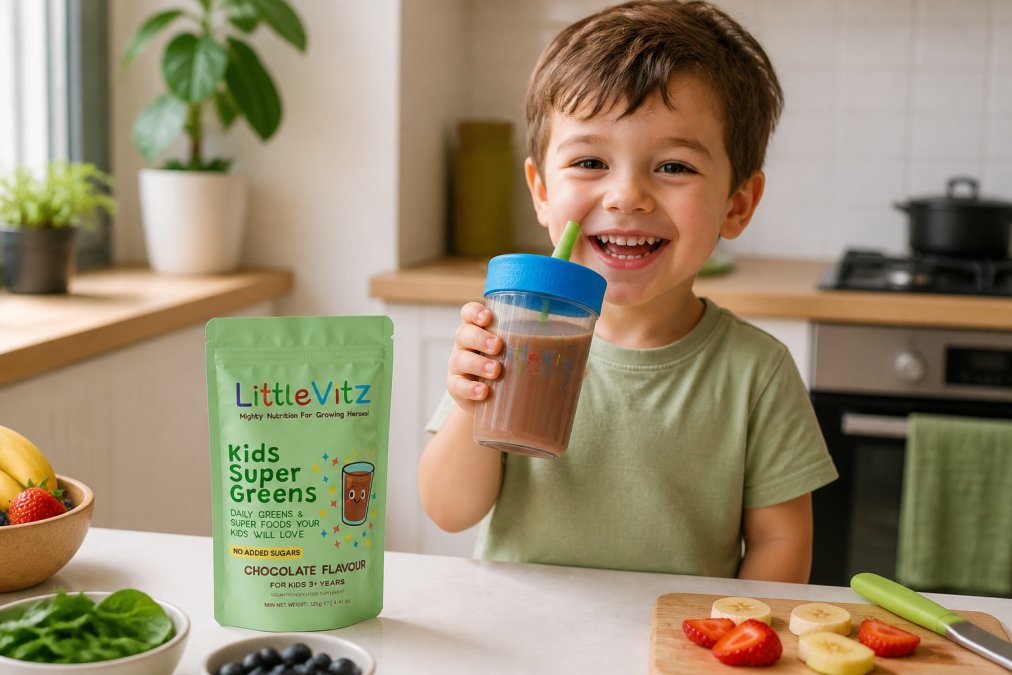
For families wanting to test it first, the Trial & Travel Pouch offers five servings, which is enough to confirm whether your child will accept it before committing to a larger purchase.
How to Introduce Supplements to Children Without the Fuss
The method you use to introduce a nutritional powder matters as much as the powder itself. Start by mixing the powder into foods they already eat and enjoy, porridge, yoghurt, smoothie bowls, and pancake batter are ideal vehicles because the powder blends invisibly. Once they've consumed it successfully several times without knowing, you can gradually introduce it more openly.
For children with texture sensitivities, blending is essential. A smoothie hides the powder completely and creates a familiar, pleasant texture. Cold milk works well too, the powder dissolves quickly and tastes like chocolate milk, which most children accept readily.
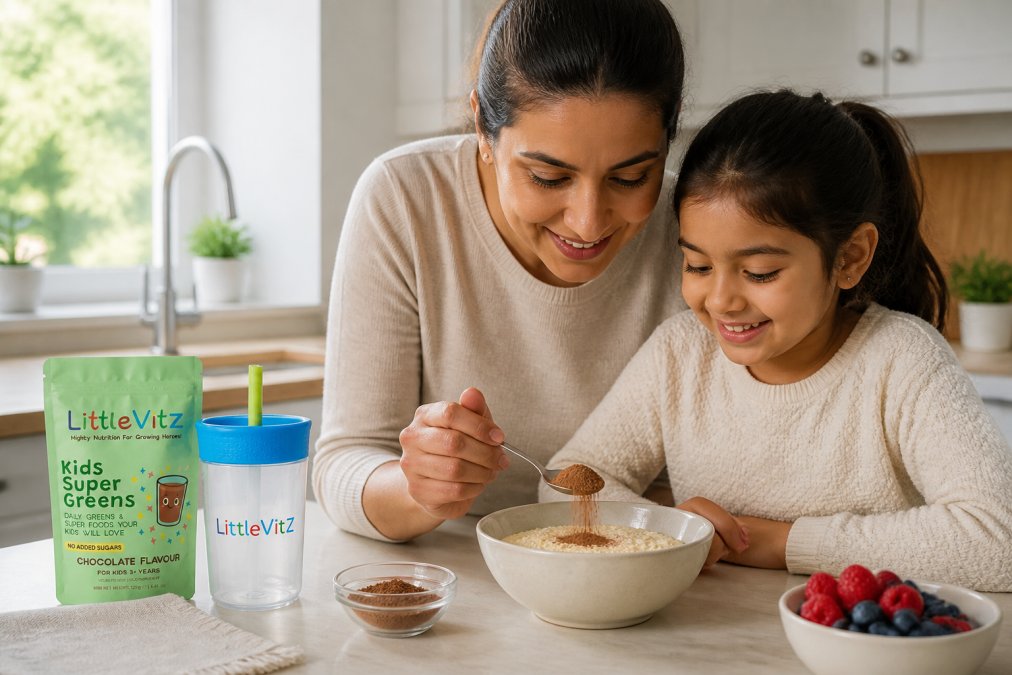
Introduce it at the same time each day, perhaps with breakfast or as an afternoon snack. Daily repetition normalises the supplement rather than making it feel like a special addition.
Benefits of Superfood Powders for Kids' Growth and Immunity
A well-formulated nutritional powder with real greens, fruits, and essential vitamins supports physical growth, cognitive function, and immune resilience. Growing bodies require consistent micronutrient intake, calcium for bone development, iron for oxygen transport, zinc for immune function, and B vitamins for energy and brain development (as highlighted in various paediatric nutrition guidelines). Most picky eaters fall short on these nutrients because they avoid the foods that contain them. A multinutrient powder bridges that gap, delivering what their diet is missing.
The immune support component is particularly valuable during school years, when children are exposed to more germs and viruses. Vitamins like C, D, and zinc help maintain immune function without relying on sugary vitamin gummies ([EXTERNAL_LINK: peer-reviewed research on vitamins and immune function | ncbi.nlm.nih.gov]). Parents often notice that children who were previously lethargic or struggling to focus at school show marked improvement once their nutritional intake becomes adequate.
Frequently Asked Questions
Q: Are nutritional powders safe for children to consume daily?
A: Yes, when chosen carefully. Look for powders made with whole-food ingredients, no artificial sweeteners, and formulated specifically for children. A quality nutritional powder like Kids Super Greens provides essential vitamins, minerals, and superfoods that support growing bodies. Always check the ingredient list for allergens and consult your health visitor if your child has digestive sensitivities or allergies.
Q: What should I look for in a nutritional supplement for picky eaters?
A: Taste is everything with picky eaters. Choose a powder with a flavour children actually enjoy—chocolate is often a winner. Check that it's sugar-free but doesn't rely on artificial sweeteners, contains real fruit and vegetable ingredients, and mixes smoothly without a gritty texture. Look for formulas designed to support growth, immunity, and focus, and ensure there are no hidden additives or fillers.
Q: Can nutritional powders replace whole foods in a child's diet?
A: No, nutritional powders are a supplement, not a replacement. They're designed to bridge nutritional gaps when children struggle with whole foods—particularly helpful for picky eaters who refuse vegetables. Use them alongside a balanced diet of real fruits, vegetables, and proteins. Think of them as nutritional support that makes it easier to ensure your child gets essential vitamins and minerals alongside their regular meals.