

Table of Contents
- Why Smoothies Work for Picky Eaters
- Best Vegetables for Toddler Smoothies
- Masking Vegetable Taste in Drinks
- Smoothie Recipes for Picky Eaters
- Nutritional Benefits of Hidden Veggies
- Common Mistakes to Avoid When Making Vegetable Smoothies
- Making the Habit Stick: Prep-Ahead Strategies
- Frequently Asked Questions
Last Updated: September 1, 2026
Why Smoothies Work for Picky Eaters
Smoothies are one of the most effective ways to get nutrient-dense foods into a child who refuses vegetables. They're quick to make, naturally sweet from fruit, and they mask the taste and texture of vegetables brilliantly. When you blend leafy greens and cruciferous vegetables into a smooth drink, your child gets the nutrition without the battle.

The beauty of smoothies is that they feel like a treat rather than a health intervention. A chocolate-coloured smoothie tastes like a milkshake. A berry-based blend tastes like a fruity drink. Your toddler doesn't think they're drinking vegetables, they think they're having something delicious. This psychological shift is what makes how to hide vegetables in toddler smoothies so powerful for parents managing fussy eating habits.
At LittleVitz, we've worked with parents who've turned the daily veggie battle into a non-issue using smoothies. The trick isn't just blending vegetables together, it's understanding which vegetables disappear best, how to pair them with fruit, and how to build a routine that actually sticks.
Best Vegetables for Toddler Smoothies
Not all vegetables work equally well in smoothies. The vegetables that work best are those that blend smoothly, don't overpower the taste, and add genuine nutritional value.
Leafy greens that disappear
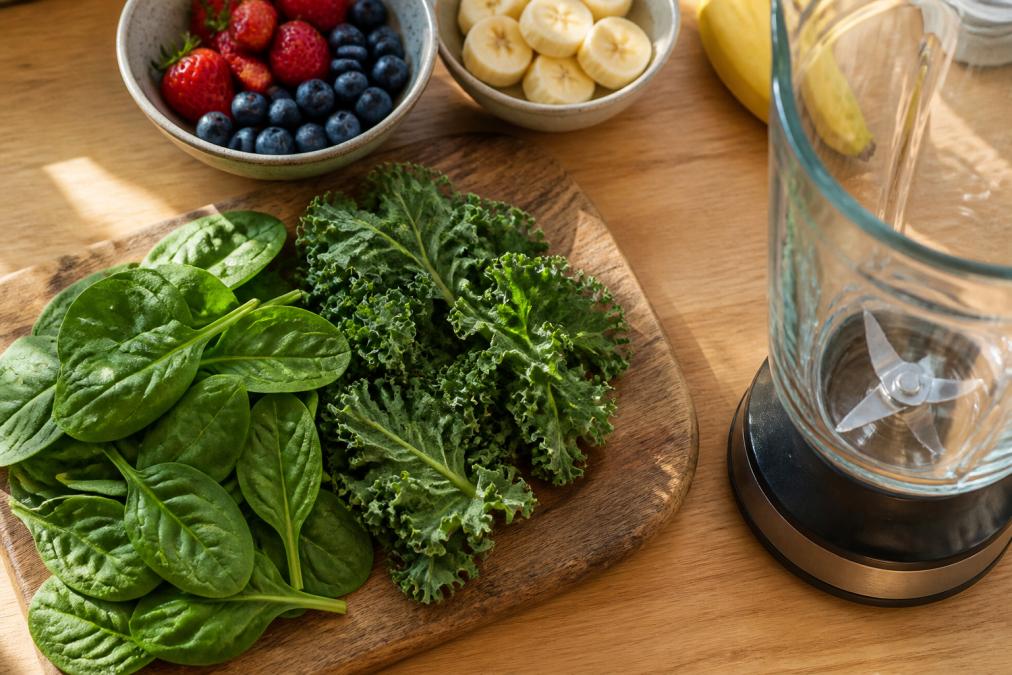
Leafy greens are the foundation of vegetable smoothies for picky eaters. Spinach and kale blend into liquid completely with no grittiness or visible flecks. A small handful of spinach in a berry smoothie is virtually undetectable. Spinach is milder than kale and works brilliantly with most fruit combinations. Start with just a small handful, roughly a child's fist, and increase gradually as your toddler gets used to the drink. Kale is earthier, so it pairs best with sweeter fruits like mango, pineapple, or banana. Both are packed with iron, calcium, and vitamins that support healthy growth and focus.
The key with leafy greens is freshness. Fresh greens blend smoothly and taste clean.
Cruciferous vegetables and natural sweetness
Broccoli, cauliflower, and courgette work beautifully when you understand how to balance them. Raw broccoli can create a gritty texture, but frozen broccoli florets blend into a silky texture and the cold mellows the flavour. Courgette is one of the most underrated vegetables for smoothies. It's mild, blends into liquid seamlessly, and adds volume without strong taste. A small slice disappears completely into a berry or tropical smoothie.
Cauliflower is sweeter than broccoli and works well in vanilla or banana smoothies. It adds creaminess and blends invisibly. All cruciferous vegetables are nutrient powerhouses that support immunity, digestion, and healthy development. Start with tiny amounts and increase slowly.
Masking Vegetable Taste in Drinks
The difference between a smoothie your child loves and one they refuse comes down to taste balance and texture.
Fruit and vegetable pairings that work
The golden rule is that fruit should always outweigh vegetables by volume. A good starting ratio is three parts fruit to one part vegetable. This makes the smoothie genuinely tasty so they want to drink it again.
Berry smoothies are the easiest entry point. Strawberries, blueberries, and raspberries are naturally sweet and their flavour masks mild vegetables like spinach or courgette. A simple combination of frozen berries, banana, and a small handful of spinach creates a purple smoothie that tastes like berries, not vegetables.
Tropical smoothies work brilliantly for masking stronger vegetables. Mango, pineapple, and banana are intensely sweet and completely overpower broccoli, cauliflower, or kale. Apple-based smoothies are underrated too. Apples pair beautifully with courgette, spinach, or cauliflower.
Chocolate is the secret weapon for children with extreme vegetable aversion. A chocolate smoothie with banana, milk, and a handful of spinach tastes like chocolate. The spinach is completely invisible. LittleVitz Kids Super Greens is chocolate-flavoured and specifically designed to blend into milk or smoothies without any vegetal taste. It contains real greens, fruits, and vitamins, so you're adding genuine nutrition without the battle of hiding whole vegetables.

Texture modifications for sensory sensitivity
Some children refuse smoothies because of texture, not taste. A thick, grainy smoothie feels wrong in their mouth. The texture needs to be smooth, creamy, and pleasant.
A high-powered blender creates a silkier texture than a standard blender. Frozen fruit creates a thicker, creamier smoothie than fresh fruit, which is particularly helpful for children with sensory issues. Your liquid choice matters enormously. Milk creates a creamier smoothie than water or juice. Whole milk is thicker than semi-skimmed. Some children prefer yoghurt-based smoothies because the tang and creaminess feel more substantial.
For children with extreme texture sensitivity, start with very smooth combinations: banana, milk, and frozen berries. Blend until completely smooth with no visible seeds or graininess. Once they're comfortable, gradually add vegetables that blend invisibly, like spinach or courgette.
Smoothie Recipes for Picky Eaters
The best smoothie recipe is one your child will actually drink. These are starting points; adjust fruit ratios, sweetness, and vegetable amounts based on what works for your child.
Step-by-step blending instructions
The Basic Berry Smoothie (serves 1 child, 5 minutes):
- Add 150ml milk to your blender
- Add one small banana, sliced
- Add a small handful of frozen berries (about 100g)
- Add a small handful of fresh spinach (roughly 20g)
- Blend on high for 30-45 seconds until completely smooth
- Pour into a cup with a straw
The spinach is completely invisible. Start with this ratio and increase the spinach gradually each week.
The Tropical Green Smoothie (serves 1 child, 5 minutes):
- Add 150ml milk to your blender
- Add one small banana, sliced
- Add 100g frozen mango chunks
- Add 50g frozen pineapple
- Add one small floret of frozen broccoli
- Blend on high for 45 seconds until completely smooth
- Pour and serve immediately
The tropical fruit completely masks the broccoli. Your child tastes mango and pineapple.
The Chocolate Power Smoothie (serves 1 child, 5 minutes):
- Add 150ml milk to your blender
- Add one small banana, sliced
- Add 1-2 tablespoons of cocoa powder or chocolate powder
- Add a small handful of frozen spinach (about 20g)
- Add 1 tablespoon of natural nut butter (optional, adds creaminess)
- Blend on high for 30 seconds until completely smooth
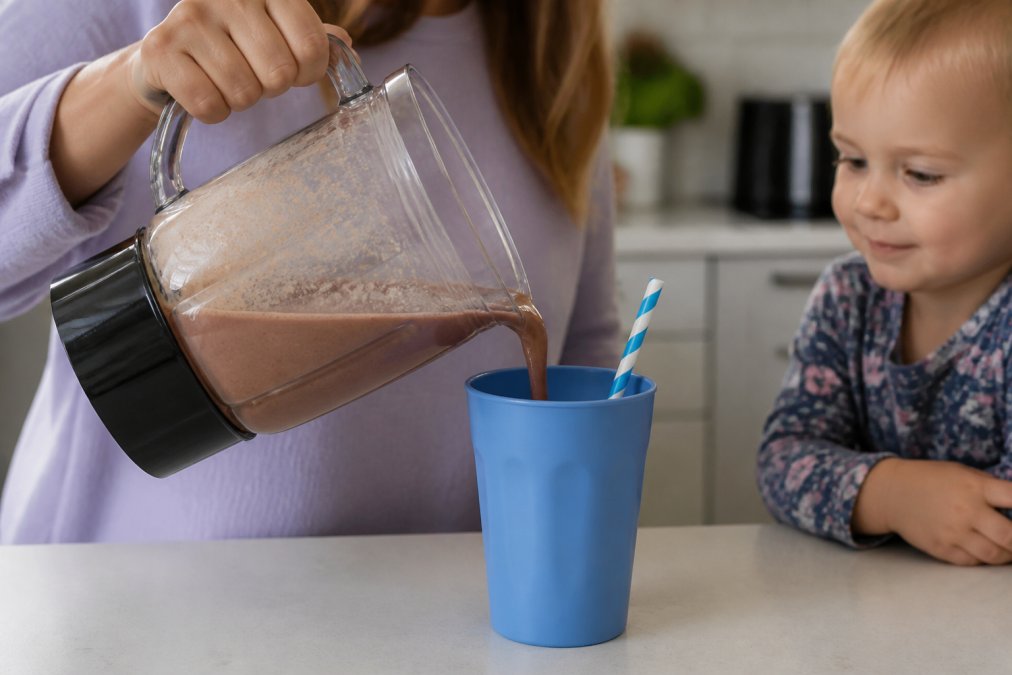
- Pour into a special cup
This tastes like a chocolate milkshake. The spinach is completely invisible. You can use one scoop of LittleVitz Kids Super Greens instead of cocoa powder for over 30 vitamins, minerals, and superfoods with no added sugar.
Freezing vegetables for smoothies
Frozen vegetables blend better than fresh vegetables. They create a creamier texture, are easier on your blender, and actually taste better because freezing concentrates flavour. Frozen broccoli, cauliflower, and spinach are your best options.
You can buy pre-frozen vegetables from any supermarket, or freeze fresh vegetables yourself. To freeze: wash and dry thoroughly, spread on a baking tray in a single layer, freeze for 2-3 hours until solid, then transfer to a freezer bag. Frozen vegetables keep for 3-4 months. Store them in clearly labelled freezer bags so you can grab them quickly. A single bag of frozen spinach or broccoli will last weeks since you only need small amounts per smoothie.
Nutritional Benefits of Hidden Veggies
When you successfully get vegetables into your child's diet through smoothies, you're supporting their physical and mental development.
Micronutrients and vitamin absorption
Vegetables are the richest source of micronutrients that support everything from immune function to brain development. Spinach is packed with iron, which supports healthy blood and cognitive development (peer-reviewed research). Broccoli contains sulforaphane, a compound that supports immunity (peer-reviewed research). Courgette provides potassium for heart health.
Blending breaks down cell walls, which actually improves nutrient absorption. Your child's digestive system can access the nutrients more easily than from whole vegetables. Adding fat (milk, nut butter, or yoghurt) further improves absorption of fat-soluble vitamins like vitamins A, D, E, and K.
Fibre intake and digestive support
Vegetables are the primary source of dietary fibre, which supports digestive health and prevents constipation, a common issue in children with limited diets. Fibre also supports healthy blood sugar regulation and feeds beneficial gut bacteria that support immunity and mood.
A single smoothie with vegetables, fruit, and milk can provide 3-5 grams of fibre (the NIH). For a child eating mostly refined carbohydrates, this is a significant addition to their daily fibre intake. The fibre in smoothies is easier to tolerate than whole vegetables for children with digestive sensitivity.
Common Mistakes to Avoid When Making Vegetable Smoothies
Using too many vegetables. A smoothie that's 50% vegetables tastes like vegetables. Keep vegetables to roughly 20-25% of the total volume. Fruit should dominate the flavour.
Using raw broccoli or cauliflower. Raw cruciferous vegetables create a gritty texture and taste strongly of sulphur. Always freeze them first.
Not blending long enough. If your smoothie has visible vegetable bits or graininess, you haven't blended long enough. Blend for at least 45 seconds on high speed.
Adding too much liquid. A thin, watery smoothie feels suspicious to children. Use just enough milk to blend the ingredients, roughly 150ml for a child-sized smoothie.
Changing the recipe constantly. Children with limited diets need consistency. Pick two or three smoothie recipes your child will drink, and repeat them regularly. Once they're comfortable, gradually introduce new variations.
Assuming one failed smoothie means smoothies don't work. Some children reject smoothies the first time because the texture is unfamiliar. Offer the same smoothie 5-10 times before deciding your child won't drink it.
Making the Habit Stick: Prep-Ahead Strategies
Getting your child to drink one vegetable smoothie is an achievement. Making it a sustainable daily habit is what actually changes their nutrition.
Prep your ingredients on Sunday. Wash and portion your vegetables and fruit into freezer bags. Label them by smoothie type: "Berry Smoothie Kit," "Tropical Smoothie Kit." On a busy morning, you grab one kit, add milk, and blend.
Use frozen fruit and vegetables exclusively. Fresh produce requires washing, chopping, and storage. Frozen produce is pre-portioned, lasts for months, and blends better. Buy frozen berries, mango, broccoli, and spinach in bulk.
Create a consistent time and routine. Make smoothies at the same time every day. Consistency helps children accept the smoothie as part of their routine.
Use the same cup and presentation. Children with limited diets find comfort in consistency. Use the same cup, the same straw, the same location.
Involve your child in the process. Let them push the blender button, pour the milk (with supervision), or choose between two smoothie options. Involvement builds ownership and acceptance.
Track what works. Keep a simple note of which smoothies your child drinks enthusiastically and which ones they reject. Over time, you'll have 3-4 reliable recipes.
Consider adding nutritional support. If your child is drinking smoothies but you're still concerned about nutritional gaps, LittleVitz Kids Super Greens is specifically designed for this situation. One scoop mixed into a chocolate smoothie adds over 30 vitamins, minerals, and superfoods, real greens, fruits, and essential nutrients, without changing the taste or texture your child already accepts. It's no added sugar, so it fits into a health-conscious routine.
Getting vegetables into your picky eater isn't about forcing them to eat salad. It's about finding methods that work within their preferences and building sustainable habits. Smoothies work because they taste good, they're quick, and they deliver genuine nutrition. Start with simple berry smoothies, build consistency into your routine, and gradually introduce new vegetables as your child becomes comfortable. A child drinking one vegetable smoothie daily is getting more nutrition than a child eating no vegetables at all. That's a genuine win worth celebrating.
Frequently Asked Questions
What are the best vegetables to hide in smoothies for toddlers?
Leafy greens like spinach and kale disappear completely when blended, whilst milder vegetables such as courgette add nutrients without strong flavours. Cruciferous vegetables like broccoli and cauliflower work well when paired with sweet fruits. Frozen versions work just as well and help create a thicker, ice-cream-like texture that many children prefer.
How do I make a smoothie taste good with vegetables for a picky eater?
Pair vegetables with fruits that have strong natural sweetness: bananas, berries, mango, and dates mask vegetable flavours effectively. Use a 2:1 fruit-to-vegetable ratio initially, then gradually increase vegetables as your child's palate adjusts. Chocolate-flavoured additions can help disguise green or earthy tastes. Add a small amount of nut butter or yoghurt for creaminess, which also helps bind flavours together. Frozen produce creates a milkshake-like consistency that feels more like a treat than a health drink.
Can I use frozen vegetables in toddler smoothies?
Yes, frozen vegetables are excellent for smoothies and often more convenient than fresh. They're picked at peak ripeness and frozen immediately, so they retain their micronutrients and fibre. Frozen produce also creates a thicker, colder smoothie that feels indulgent—more like a pudding than a drink. There's no need to thaw them beforehand; add them straight from the freezer to your blender. This method also helps with portion control and budget-friendly bulk prep, as you can buy larger quantities and store them for weeks.
Are hidden vegetable smoothies actually healthy for toddlers?
When made properly, yes. Blended vegetables retain their fibre, vitamins, and minerals, though some vitamin C can be lost during blending. The key is combining vegetables with whole fruits, not juices, to preserve fibre intake and avoid excess sugar. Avoid adding honey or refined sugars—natural fruit sweetness is sufficient. A well-balanced smoothie with leafy greens, cruciferous vegetables, protein (yoghurt or nut butter), and whole fruits provides genuine nutritional benefit. However, smoothies should complement whole foods, not replace them entirely.