

Table of Contents
- Why Parents Search for Orgain Alternatives
- What Makes the Best Nutrition Drink for Picky Toddlers
- Nutritional Requirements for Toddlers: What Your Child Actually Needs
- How to Manage Picky Eating in Toddlers Without Battles
- LittleVitz Kids Super Greens: A Chocolate-Flavoured Alternative
- Key Ingredients to Look for (and Avoid) in Toddler Supplements
- Making the Switch: Practical Tips for Success
- Frequently Asked Questions
Last Updated: August 25, 2026
Why Parents Search for Orgain Alternatives
You're standing in the supermarket aisle, scanning nutrition drinks for toddlers. Orgain is everywhere, the packaging looks professional, and the marketing promises all the right things. But then you see the price, or you remember your child spat it out last time, or you wonder if there's something better suited to your family's needs.
The truth is, finding the best Orgain alternative for toddlers isn't about settling for "second best", it's about finding what actually works for YOUR child. Some toddlers thrive on plant-based options. Others need the protein density of dairy-based formulas. Some have sensory sensitivities that make thick, chalky drinks a non-starter. And some parents simply want a product that tastes genuinely good without added sugar or artificial ingredients.
At LittleVitz, we've spent time understanding why parents search for alternatives. It's rarely because Orgain is "bad", it's because parents are looking for something that matches their child's unique needs, their budget, or their values around ingredients. Maybe your child has a sensitive stomach. Maybe you're tired of the artificial sweetener aftertaste. Maybe you want something that actually tastes like chocolate, not a vitamin supplement pretending to be chocolate.
Below, we'll walk you through what makes a truly great nutrition drink for picky toddlers, what your child actually needs nutritionally, and several solid alternatives, including why LittleVitz Kids Super Greens has become a trusted choice for parents navigating the same challenges you are.
What Makes the Best Nutrition Drink for Picky Toddlers
A good nutrition drink for a picky eater isn't just about cramming in vitamins. It's about solving a real problem: your child needs nutrients, but won't eat the foods that naturally contain them.
The best nutrition drink for picky toddlers needs to taste genuinely good, not "good for a supplement," but actually appealing to a child's palate. It should deliver real nutritional value without relying on added sugars or artificial sweeteners to mask the taste, and it needs to be easy to mix and serve for busy mornings.
Texture matters more than most guides acknowledge. A drink that's too thick feels medicinal; too thin and it tastes watered-down. The sweet spot is something that feels like a treat, a proper chocolate milk or smoothie consistency, rather than something your child can tell is "good for them."
Ingredient transparency is critical. Parents increasingly want to know exactly what's in the drink their child consumes daily. Are the greens and fruits real, or just flavouring compounds? For children with sensory processing issues or ARFID (Avoidant/Restrictive Food Intake Disorder), knowing the exact ingredient list can be the difference between acceptance and rejection.
Finally, the best products for picky eaters don't feel like a battle. They feel like a win, a moment where your child actually wants something nutritious.
Nutritional Requirements for Toddlers: What Your Child Actually Needs
Before evaluating alternatives, it helps to understand what your toddler's body actually requires. This isn't about hitting some arbitrary "100% of daily requirements", it's about understanding the gaps in their diet and whether a supplement genuinely bridges them.
Toddlers aged 1-3 need roughly 1,000-1,400 calories per day, depending on activity level and size (the CDC). Within that, they need adequate protein (about 13-14 grams daily), healthy fats for brain development, and a range of micronutrients (the NIH). The big ones are calcium (for bone development), iron (for cognitive function and energy), vitamin D (especially important in winter months), and vitamin C (for immune support).
Many toddlers' diets are quite limited. If your child lives on chicken, pasta, bread, and milk, they're getting decent protein and calcium, but missing micronutrients found in vegetables, fruits, and whole grains. That's where a nutritional supplement can genuinely help, not as a meal replacement, but as a safety net for missing nutrients.
A nutrition drink isn't meant to be a primary food source. It's meant to fill specific gaps. If your child eats a reasonably balanced diet most days, they might not need a supplement at all. But if mealtimes are a constant battle and their intake is genuinely limited, a nutrient-dense drink can provide real peace of mind.
How to Manage Picky Eating in Toddlers Without Battles
Most parenting advice tells you to "keep offering" foods your child rejects, as if persistence alone will change their mind. Sometimes that works. Often, it just turns mealtimes into a power struggle that leaves everyone frustrated.
Managing picky eating without daily battles starts with understanding that your toddler's preferences are real to them, even if they seem arbitrary to you. A child who refuses all vegetables isn't being difficult; they genuinely perceive flavours and textures differently than you do.
Instead, try these approaches:
Separate nutrition from control. Stop framing mealtimes as "you need to eat your vegetables." Offer a variety of foods with no pressure to finish anything. When your child feels they have choice and control, they're often more willing to try new things.
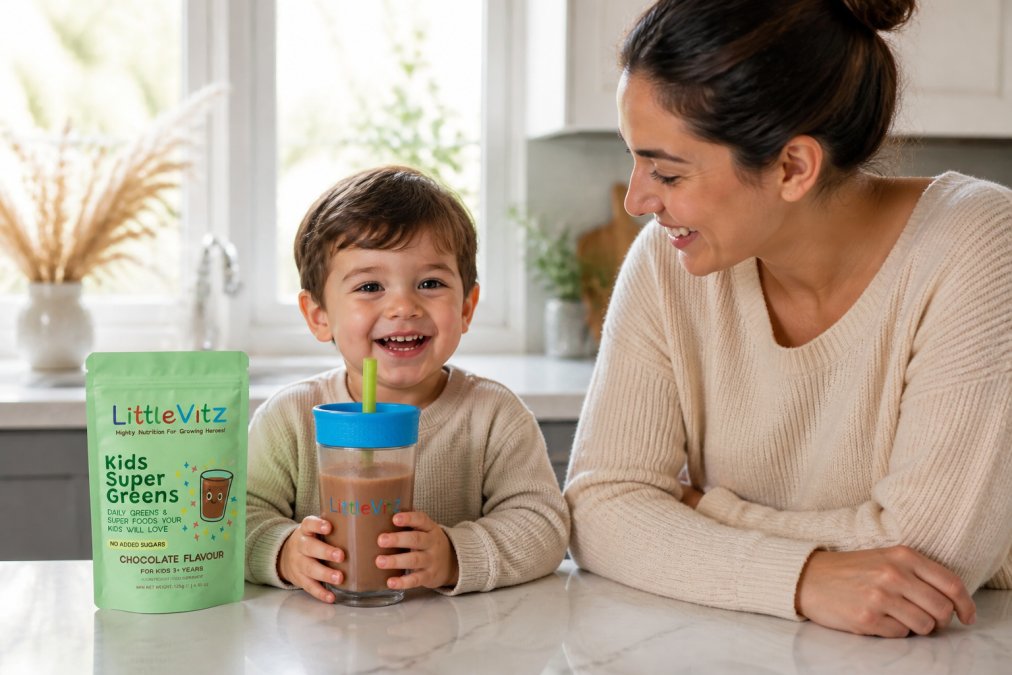
Use "bridge foods." If your child won't eat raw vegetables but will drink a chocolate smoothie, that's not a failure, that's a bridge. You're still delivering nutrients. LittleVitz Kids Super Greens, for example, works as a bridge for many families: it tastes like chocolate (which most toddlers enjoy), but delivers the greens and micronutrients their diet is missing.

Stop the "clean plate" mentality. Pressure to finish food is linked to overeating and disconnection from hunger cues later in life. Let your child decide when they're full.
Make mealtimes social, not nutritional. Eat together and talk about other things. When food isn't the focus of the interaction, children are often more relaxed and willing to try things.
Accept that some days will be "chicken nugget days." Consistency matters more than perfection. If your child eats reasonably well most days, occasional limited days aren't a nutritional disaster.
The real win isn't forcing your child to eat vegetables. It's finding ways to deliver the nutrients they need without turning every meal into a negotiation.
LittleVitz Kids Super Greens: A Chocolate-Flavoured Alternative
If you're looking for a best Orgain alternative for toddlers, LittleVitz Kids Super Greens deserves serious consideration, especially if your child's main objection to other supplements is the taste.
LittleVitz Kids Super Greens is a chocolate-flavoured nutrition powder designed specifically for picky eaters. It contains over 30 vitamins, minerals, and superfoods including real greens, fruits, and essential nutrients. Critically, it contains no added sugar, something that sets it apart from many competitors that rely on sweetness to mask ingredient flavours.
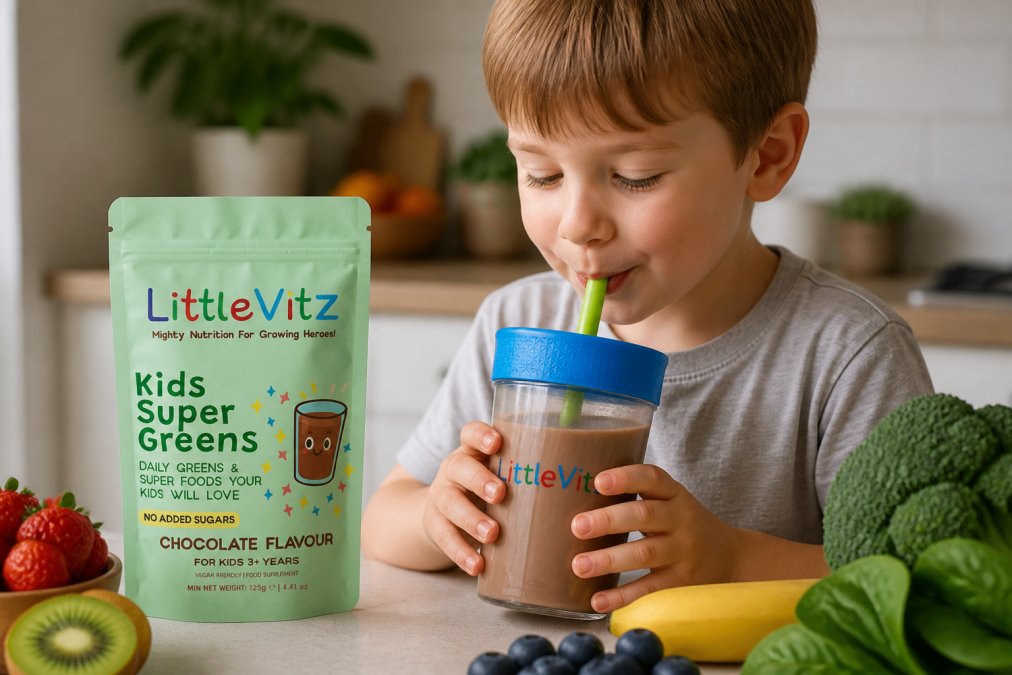
The formula is designed to mix easily into milk, smoothies, or shakes, which means you can adapt it to your child's preferences. Some children prefer it as a thick chocolate milk. Others like it blended into a smoothie with banana and berries. The flexibility matters, especially for children with texture sensitivities.
What makes it genuinely different:
Real ingredients matter. The formula includes actual vegetable and fruit powders, not just vitamin compounds.
No artificial sweeteners. Many popular toddler supplements use artificial sweeteners like sucralose or aspartame. LittleVitz uses a different approach, relying on the natural sweetness of the ingredients themselves. For parents concerned about artificial additives, this is a meaningful distinction.
Designed for picky eaters. The chocolate flavour isn't an afterthought, it's the primary flavour profile. It tastes like chocolate milk, which means it doesn't feel like medicine. For children with sensory sensitivities or ARFID, this "doesn't taste like a supplement" quality can be the difference between acceptance and rejection.
Practical serving size. One serving provides meaningful nutrition without requiring your child to consume a huge volume of liquid. For toddlers with limited capacity, this matters.
The Trial & Travel Pouch is a sensible starting point if you want to test whether your child will actually drink it before committing to a full tub.
Key Ingredients to Look for (and Avoid) in Toddler Supplements
When evaluating any nutrition drink, knowing what to look for in the ingredient list is essential.
Ingredients to seek out:
Real fruit and vegetable powders deliver actual nutrients and fibre. Look for names you recognise: spinach powder, broccoli powder, apple powder, carrot powder. These are real foods, just dehydrated.
Probiotics support digestive health, which matters if your child experiences constipation or digestive sensitivity. Common probiotic strains include Lactobacillus and Bifidobacterium.
Essential vitamins and minerals should be present in meaningful amounts. Vitamin D is particularly important for toddlers, as deficiency is common, especially in winter months (peer-reviewed research). Iron supports cognitive development and energy. Calcium and magnesium support bone health and sleep quality.
Plant-based proteins like pea protein or rice protein are gentle on developing digestive systems and suitable for children with dairy sensitivities.
Ingredients to question or avoid:
Added sugars should be minimal or absent. If the ingredient list includes "sugar," "cane juice," or "honey," check the nutrition label for total sugar content. Many toddler supplements contain 5-10 grams of added sugar per serving, equivalent to a small sweet.
Artificial sweeteners like aspartame, sucralose, or acesulfame K are controversial. Some parents avoid them entirely on principle. Others accept them as safe but prefer to minimise exposure.
Gums and thickeners like xanthan gum or guar gum are common in powdered supplements and help with texture. They're generally recognised as safe, but some children with sensitive digestive systems react to them.
Seed oils like sunflower oil or soybean oil are sometimes added for texture or mouthfeel. Many parents prefer products that use more traditional fat sources or none at all.
Glyphosate residues are a concern for some parents, particularly in products made with conventional (non-organic) grains or legumes. Organic certification reduces this risk.
The ingredient list is your window into what you're actually feeding your child. If you can't pronounce something and can't find a reasonable explanation for why it's there, it's fair to question whether you need it.
Making the Switch: Practical Tips for Success
If you've decided to try a best Orgain alternative for toddlers or any new nutrition drink, the transition matters. A sudden switch can trigger rejection, especially from children with sensory sensitivities.
Start with a small amount. Don't introduce a full serving immediately. Mix a small amount (perhaps a quarter of a serving) into a familiar food or drink. Chocolate smoothies with banana are a classic; the banana's sweetness and texture mask the new ingredient.
Let your child see you enjoying it. If you're willing to drink it yourself (or at least pretend to), your child is more likely to see it as something positive rather than something being forced on them.
Offer choice. "Would you like your chocolate powder in milk or in a smoothie?" gives your child agency, which increases buy-in.
Be patient with texture. If your child usually drinks thin milk and you're introducing a thicker chocolate drink, the texture change alone might trigger rejection. You can adjust the ratio of powder to liquid to make it thinner initially, then gradually thicken it over a few weeks.
Pair it with something they already love. If your child loves bananas, blend the powder into banana smoothies. If they love berries, use berries as the smoothie base. You're enhancing something they already accept.
Don't make it a battle. If your child rejects it after a fair trial (at least 3-5 exposures), don't push. Forced consumption creates negative associations. You can try again in a few weeks or months; children's preferences change.
Track any changes. If you're using a nutrition drink to address specific concerns (energy levels, digestion, immune support), notice whether you see improvements over 2-4 weeks. Sometimes the benefit is subtle, fewer colds, better digestion, more consistent energy, but it's worth tracking.
The goal isn't to force your child to drink something they hate. It's to find a nutrition solution that genuinely works for your family's situation and your child's preferences.
Finding the right nutrition drink for your picky toddler is about matching the product to your child's actual needs, not just picking the most recognisable brand. LittleVitz Kids Super Greens has become a trusted choice for parents navigating similar challenges because it delivers real nutrition in a form children actually want to consume. The chocolate flavour, real ingredients, and absence of added sugar address the exact frustrations parents mention most often. Start with the Trial & Travel Pouch to test whether it's a fit for your family, it's a low-risk way to see whether this could be your answer to the daily nutrition battle.

Frequently Asked Questions
Q: Is an Orgain alternative safe for my toddler if they have a sensitive stomach?
A: Safety depends on the specific ingredients. Look for products free from common allergens (dairy, soy, gluten) and check that they contain no artificial sweeteners or colours. LittleVitz Kids Super Greens uses whole food ingredients without added sugar, making it a gentle option for digestive-sensitive children. Always introduce any new supplement slowly and watch for any reactions. If your child has diagnosed allergies or digestive conditions, consult your GP before switching products.
Q: How much nutritional powder do I actually need to give my toddler daily?
A: Most toddler nutrition powders, including LittleVitz Kids Super Greens, require just one scoop mixed into milk, a smoothie, or yoghurt daily. A single serving delivers vitamins, minerals, and superfoods without being a meal replacement. Start with half a scoop to let your child adjust to the taste, then move to a full serving. One pouch typically lasts several weeks, making it a simple daily routine rather than a complicated commitment.
Q: What's the difference between an Orgain alternative and a standard multivitamin for toddlers?
A: Nutrition powders like Orgain alternatives blend whole food ingredients (greens, fruits, vegetables) with added vitamins and minerals, creating a more nutrient-dense product than basic multivitamins. They're designed to taste pleasant and mix easily into everyday foods, making them practical for picky eaters. Standard multivitamins are smaller and more portable but lack the whole food base. An alternative like LittleVitz offers the best of both: convenience, taste, and nutritional density without added sugar.
Q: Will my child actually drink a chocolate powder if they refuse most 'healthy' foods?
A: Many parents are surprised because chocolate-flavoured powders taste like a treat, not medicine. LittleVitz Kids Super Greens mixes smoothly into milk, making it indistinguishable from regular chocolate milk. The key is not calling it a supplement—just offer it as a delicious drink. For children with extreme texture sensitivities, mix it into yoghurt or blend it into smoothies with fruit. Start with a small amount mixed into a familiar favourite food to build confidence.