

Table of Contents
- Understanding Food Texture Sensitivity in Children
- How to Introduce New Foods to a Picky Eater
- When to Seek Help for Picky Eating
- A note on what to avoid
- Frequently Asked Questions
Last Updated: October 6, 2026
Understanding Food Texture Sensitivity in Children
If your child turns away from anything soft, lumpy or mixed, you are not alone. Food texture sensitivity is one of the most common reasons kids refuse healthy food textures, and it is rarely about stubbornness, it is something you can work with, gently and at your child's pace.
Food texture sensitivity is when a child reacts strongly to how a food feels in their mouth, not just how it tastes. The brain reads certain textures as overwhelming or unsafe, so the body says no before your child can think about it. Some children are simply born more sensitive to touch, sound and texture, sensory processing differences that often show up at mealtimes first.
How to Introduce New Foods to a Picky Eater
The goal is not a bite today, it is making a new food feel boring and safe. This is gradual exposure, and it works far better than rewards or persuasion.
- Put it on the table, not the plate. No expectation, just visibility.
- Touch it together. Poke, squish, sniff, no eating required.
- Move it closer over days. Table, plate, lips, lick.
- Offer one new texture at a time. Mixing new with familiar can backfire.
- Keep a safe food on every plate.
- Repeat. Some children need ten or more calm exposures before a taste.
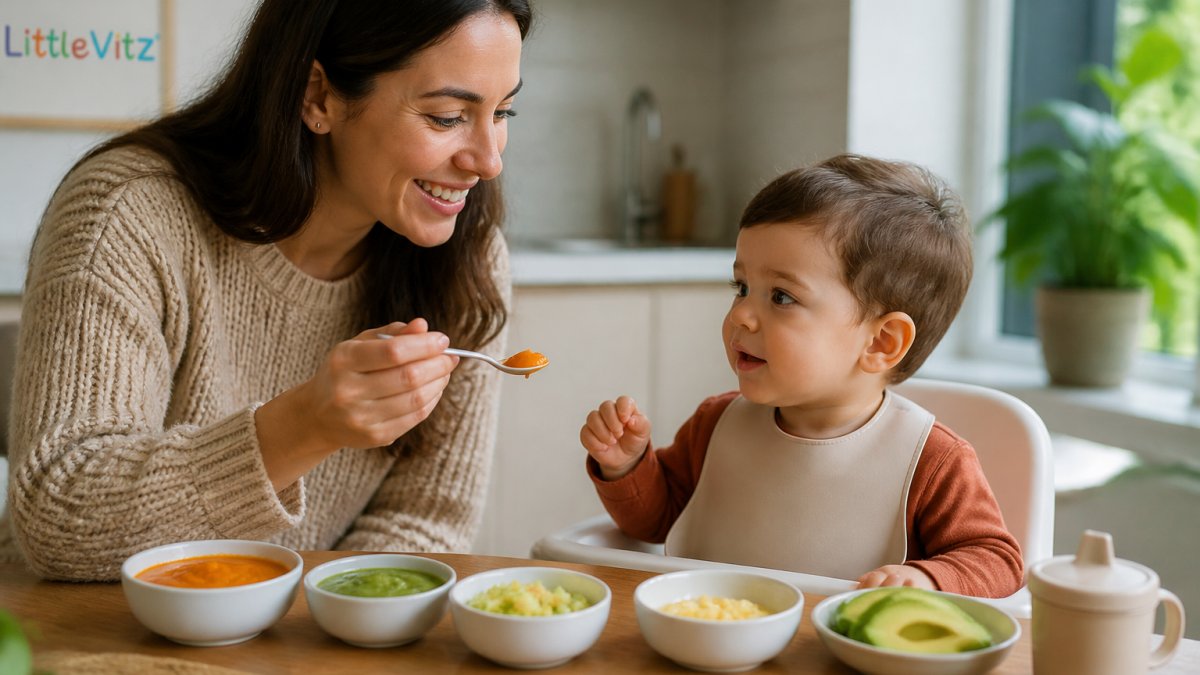
What is food chaining for picky eaters?
Food chaining means linking a new food to one your child already likes. If they eat plain pasta, try pasta with a little sauce, then a different shape, then a new topping, each step small enough to feel safe.
Texture stages by age
| Age | Typical texture | Signs of readiness |
|---|---|---|
| 6-9 months | Smooth purees | Sits well, opens mouth for spoon |
| 9-12 months | Mashed, soft lumps | Chews soft pieces, picks up food |
| 12-18 months | Chopped soft foods | Uses fingers well, tries more variety |
| 18 months-3 years | Family foods, cut small | Chews most textures, self-feeds |
| 3 years+ | Full range | Manages crunchy and mixed textures |
If your child is stuck at an earlier stage than their age suggests, that is a clue, not a failure.
When to Seek Help for Picky Eating
Picky eating is normal in toddlers; a feeding difficulty is different and deserves a proper look.
Ask for help if your child eats fewer than 10 to 15 different foods, drops foods and never picks them back up, gags or struggles with chewy or mixed textures, refuses all solids past 12 months, loses weight, avoids whole food groups, or shows distress at mealtimes most days. A speech and language therapist or occupational therapist can assess chewing and swallowing, and your GP can refer you, early support helps most.
Distinguishing sensory aversion from a chewing or swallowing problem matters. If food comes back out, or your child coughs or gags on textures they should manage, that points to a physical feeding skill issue rather than a sensory one. Both are treatable, but the path is different.
Nutrition when accepted foods are limited
When the safe list is short, nutritional gaps appear, and a daily top-up can take the pressure off the plate. Keep offering iron-rich foods in accepted textures, add healthy fats like olive oil or nut butter, and offer milk or water between meals rather than during.

At LittleVitz, we made Kids Super Greens for exactly this moment. It is a chocolate-flavoured powder with over 30 vitamins, minerals and superfoods, made with real greens and fruits and no added sugar. Stir it into milk or a smoothie and it disappears, no texture battle required.
For parents who want to try it first, there is a trial and travel pouch with five servings. And if your child notices powdery bits, the milk frothing wand whisks it smooth in seconds.
A note on what to avoid
Some common habits make texture sensitivity worse: bribing with pudding or screens, hiding new foods inside safe ones, commenting on how little they ate, or making a separate meal every time. The aim is calm, repeated, low-pressure exposure, that is what changes the pattern.
Frequently Asked Questions
Why do some children dislike certain food textures?
Children may dislike certain food textures due to sensory processing differences, where their brain interprets touch, taste, or smell signals more intensely. Foods that are mushy, slippery, or mixed can feel unpredictable or overwhelming. Some children also have delays in oral-motor skills, making chewing and swallowing harder. It is rarely about stubbornness; it is often a genuine sensory or physical response.
Can food texture sensitivity improve as a child grows?
Yes, many children gradually become more comfortable with different textures as their sensory processing and oral-motor skills develop. However, progress is not automatic. Gentle, repeated exposure without pressure helps. If a child continues to refuse most textures beyond age three or four, or if their diet is shrinking, it is worth speaking to a health visitor or GP.
How can I introduce new textures without pressuring my child?
Start by offering new textures alongside familiar favourites, without expecting them to eat. Let your child touch, smell, or lick the food first. Try food chaining: build on a preferred food by changing one small thing at a time, like moving from smooth yoghurt to yoghurt with tiny fruit pieces. Keep mealtimes calm and praise any interaction, not just eating.
Mealtimes with a texture-sensitive child can feel relentless, and the worry about nutrition never quite switches off. LittleVitz is here for that gap: a chocolate-flavoured powder with over 30 vitamins, minerals and superfoods, no added sugar, and a taste kids actually ask for. Mix it into milk or a smoothie, and let the plate stay pressure-free. Get started with LittleVitz and take the daily nutrition worry off your shoulders.