

Table of Contents
- Why Natural Immunity Support Matters for Growing Children
- Foods to Boost Child Immunity: What to Put on the Plate
- How to Improve Child Focus Naturally Alongside Immune Health
- Sleep, Screens and Circadian Rhythm: The Overlooked Immunity Levers
- Hydration, Movement and Everyday Immune Defence
- Sensory-Friendly and Age-Specific Ways to Support Natural Immunity
- A Simple Daily Routine for Natural Immunity Support
- Conclusion
- Frequently Asked Questions
Last Updated: September 21, 2026
Why Natural Immunity Support Matters for Growing Children
Building a natural immunity boost for kids starts long before the first sneeze of the season. It comes down to everyday habits: what lands on the plate, how much they sleep, how they move, and how they feel. This guide from LittleVitz walks through the practical levers parents can actually pull, especially if you're navigating a fussy eater or a child with a limited diet. Environmental sensitivities often complicate these foundational health efforts, making it essential to integrate consistent allergy relief for kids into your seasonal wellness strategy.
A child's immune system is still developing, which is why consistent nourishment matters more than any single "superfood". The good news? Small, repeatable changes tend to work better than dramatic overhauls. Below, we'll show you exactly how to build those habits without turning mealtimes into a battleground.
Foods to Boost Child Immunity: What to Put on the Plate
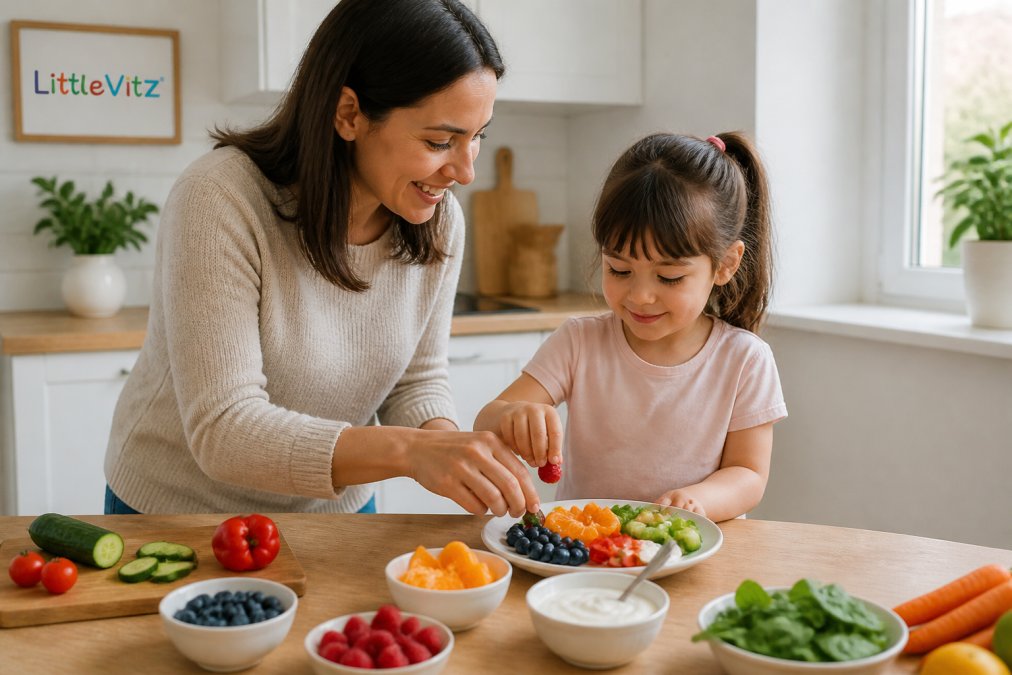
The most reliable foods to boost child immunity are nutrient-dense whole foods: colourful fruit and vegetables, lean protein, whole grains and healthy fats. Variety matters more than volume, since different foods supply different micronutrients, and a child who eats the same five foods on rotation will slowly drift into gaps even if every one of those foods is healthy.
Nutrient-Dense Basics: Vitamin C, Zinc and Vitamin D
Vitamin C, zinc and vitamin D are the three nutrients parents ask about most, and for good reason. Vitamin C supports immune defence and helps the body absorb iron; zinc contributes to normal immune function; vitamin D plays a role in immune response and is hard to get from food alone in darker months.
You'll find vitamin C in citrus, berries, peppers and broccoli. Zinc turns up in meat, beans, chickpeas and fortified cereals. Vitamin D is trickier: oily fish, eggs and fortified foods help, and the NHS advises a daily vitamin D supplement for children throughout the year. For the current recommended amounts, check the NHS vitamin D guidance for children directly.
A useful rule of thumb is to aim for a fruit or vegetable at every meal and one at snack time, rather than chasing a specific gram target.
Gut Health, Probiotics and the Microbiome
A healthy gut microbiome supports immune function, and diet shapes it more than anything else. Fibre from fruit, vegetables and whole grains feeds beneficial bacteria, while fermented foods like yogurt and kefir add probiotics. If your child has digestive issues or constipation, a GP can help rule out anything that needs attention before you change their diet.
Age-Specific Portions: Toddlers, School-Age and Pre-Teens
Generic advice falls apart the moment you try to apply it to a two-year-old and a ten-year-old at the same table. Needs shift with age, and so does the strategy for getting food in.
- Toddlers (1-3): small, frequent offerings work better than three big meals. A toddler's stomach is roughly the size of their fist, so a few tablespoons of vegetables at each sitting is a realistic portion, not a failure. Keep offering rejected foods without pressure, it can take ten or more exposures before a new food is accepted.
- School-age children (4-10): this is where involvement pays off. Children in this band are far more likely to eat something they helped choose, wash or assemble. Aim for a fruit or vegetable at every meal and let them pick which one at least once a day.
- Pre-teens (11+): appetite and independence both rise, and so does the pull of convenience food. Iron and zinc needs increase, particularly once periods begin, so keep red meat, beans, lentils and fortified cereals in rotation. Pre-teens respond well to the "why", explaining that iron affects energy and focus lands better than a rule.
How to Improve Child Focus Naturally Alongside Immune Health
Learning how to improve child focus naturally overlaps heavily with immunity support, because the same foundations feed both. Iron, omega-3 fatty acids and steady blood sugar all influence concentration, and a child running low on any of them will struggle to sit still and learn.
Sleep, Screens and Circadian Rhythm: The Overlooked Immunity Levers
Sleep is where most parents lose the immunity battle without realising it. During sleep, the body repairs tissue and regulates the immune response, and a child who is short on sleep is more vulnerable to seasonal illness.
Hydration, Movement and Everyday Immune Defence
Water and daily movement are the two cheapest immune supports available, and both are easy to overlook. Hydration keeps mucous membranes in the nose and throat working properly, which matters for trapping and clearing respiratory pathogens, while physical activity supports circulation and cellular health, and, in children, it also supports the sleep that does much of the immune repair work.
Kids Super Greens - 25 Servings →
How Much Water Children Actually Need
Aim for water as the default drink and offer it regularly rather than waiting for thirst. Children often don't recognise thirst until they're already mildly dehydrated, so a glass with every meal and one with each snack is a simple, reliable pattern.
Movement: What Counts and How Much
For movement, children don't need structured exercise: running, climbing, dancing and playground time all count. The goal is daily activity, not a training programme.
The Overlooked Link: Movement, Sleep and Immunity
Movement and sleep are not separate levers, they feed each other. Children who are active during the day tend to fall asleep faster and sleep more deeply, and deep sleep is when the body does much of its immune regulation. A child who is sedentary, screens all evening and goes to bed late is stacking three immune drags at once.
| Daily Habit | What It Supports | Simple Target |
|---|---|---|
| Water | Hydration, respiratory health | Offer with every meal and snack |
| Active play | Circulation, cellular health, sleep | Around 60 minutes a day, any intensity |
| Sleep routine | Immune response, circadian rhythm | Consistent bedtime, screens off an hour before |
| Colourful plate | Micronutrients, gut microbiome | Variety over volume |
Sensory-Friendly and Age-Specific Ways to Support Natural Immunity
Children with sensory issues or a limited "safe food" list need a different approach, and generic advice rarely helps. Forcing new textures tends to backfire, so the aim is to work with what your child already accepts.
Bridging Gaps for Picky Eaters and Limited Diets
When a child eats from a narrow list, gaps appear quietly over months, not days. A daily nutrition powder is one way to bridge them without a mealtime fight, and it's far easier than persuading a reluctant eater to try a new vegetable every night. Keep offering variety, but treat the powder as a safety net rather than a replacement for food.
A Simple Daily Routine for Natural Immunity Support
A workable routine beats an ambitious one you abandon by Wednesday. Here's what a steady day can look like:
- Morning: a fortified breakfast with fruit, plus water
- Midday: a balanced lunch with a protein, a vegetable and a whole grain
- Afternoon: active play outdoors, water rather than juice
- Evening: a family meal, then screens off an hour before bed
- Daily: a vitamin D supplement, and a nutrition powder if gaps are a concern
Conclusion
The hardest part of supporting your child's immunity isn't knowing what to do, it's doing it every single day when mealtimes are already a struggle. LittleVitz exists for exactly that gap: a chocolate-flavoured powder with no added sugar, made with real greens, fruits, vitamins and minerals. It supports healthy growth, focus and immunity, and turns the daily veggie battle into a treat.
Frequently Asked Questions
What is a good natural immunity boost for kids?
A combination of sleep, movement, hydration and nutrient-dense food does more than any single ingredient. Aim for around 10 hours of sleep for younger children, outdoor play most days, and meals built around vitamin C, zinc, vitamin D and lean protein. For picky eaters who refuse greens, a chocolate-flavoured greens powder mixed into milk or a smoothie can help bridge the gap without a daily battle.
Which foods boost child immunity most effectively?
Foods to boost child immunity include citrus fruit, berries, kiwi, red pepper, yogurt, eggs, beans, lentils, oats, nuts and oily fish. These supply vitamin C, zinc, iron, omega-3 fatty acids and probiotics. Variety matters more than volume. Try offering one immune-supporting food alongside a familiar favourite at each meal rather than a plate of entirely new items.
How does sleep affect a child's natural immunity?
Sleep is when the body releases cytokines, proteins that help fight infection and inflammation. Children who consistently get less sleep than they need tend to catch more seasonal illness. Keep a consistent bedtime, dim screens an hour before bed, and keep bedrooms cool and dark. A predictable wind-down routine supports circadian rhythm and gives the immune system its best window to repair.
Can a supplement help if my child is a picky eater?
A supplement can help fill gaps, but it works best alongside food, not instead of it. LittleVitz Kids Super Greens is a chocolate-flavoured powder made with real greens, fruits, vitamins and minerals, and no added sugar. It mixes into milk, smoothies or shakes. The trial pouch at £12.00 offers five servings to test whether your child accepts the taste before committing to the 25-serving tub at £34.99.