

Table of Contents
- Why Greens and Constipation Go Hand in Hand for Picky Eaters
- High Fibre Foods for Constipated Toddlers That Most Fussy Eaters Will Actually Eat
- How to Hide Vegetables in Meals for Picky Eaters Without the Mealtime Standoff
- The Step-by-Step Exposure Hierarchy: Building Up to Greens Slowly
- Nutritional Support for Fussy Eaters When Fibre Alone Isn't Enough
- Hydration, Whole Foods and the Green Smoothie Trap
- Meal Planning for Busy Parents: One Week of Gentle Gut-Friendly Meals
- Conclusion: Small Wins Beat Clean Plates
- Frequently Asked Questions
Last Updated: October 3, 2026
Why Greens and Constipation Go Hand in Hand for Picky Eaters
If your child lives on beige food and hasn't pooed properly in days, those two things are almost certainly connected.
At LittleVitz, we hear from parents every week who are stuck in this exact loop. The child is constipated, so they feel full and cranky, so they eat even less, so the constipation gets worse. It is a miserable cycle for everyone.
The good news? You do not need a miracle. You need small, steady changes to fibre, fluids and routine. Below, we will show you exactly how to make greens enjoyable for picky eaters, even when their diet is down to a handful of safe foods.
High Fibre Foods for Constipated Toddlers That Most Fussy Eaters Will Actually Eat
The best high fibre foods for constipated toddlers are the ones your child will actually swallow. That usually means familiar textures with fibre built in, not a plate of steamed broccoli.
Start with these gentle, kid-friendly options:
- Pear, with the skin on - soft, sweet, and rich in soluble fibre
- Porridge oats - warm, creamy, and easy to accept
- Sweet potato mash - naturally sweet and smooth
- Baked beans, mashed - familiar and full of fibre
- Wholegrain toast fingers - a simple swap from white bread
- Peas blended into pasta sauce - invisible but effective
- Berries - small, sweet, and easy to snack on
- Flaxseed or chia stirred into yoghurt - no taste, big fibre hit
Serve one new fibre source alongside two foods you know they already like. No pressure, no commentary. Just let it sit on the plate.
Soluble vs Insoluble Fibre: What Each One Does for Stool Consistency
Soluble fibre dissolves in water and forms a gel. It softens hard stools and feeds the good bacteria in the gut. You will find it in oats, pears, apples, carrots and beans.
Insoluble fibre does not dissolve. It adds bulk to stool and helps it move through the bowel faster. It lives in wholegrains, nuts, seeds, and the skins of fruit and veg.
Most children need both, but if your child is badly constipated, soluble fibre is usually the gentler starting point. Too much insoluble fibre too quickly can actually make things worse.
How to Hide Vegetables in Meals for Picky Eaters Without the Mealtime Standoff
Learning how to hide vegetables in meals for picky eaters works best when you stop treating it as a trick and start treating it as a bridge. Hiding is not deception.
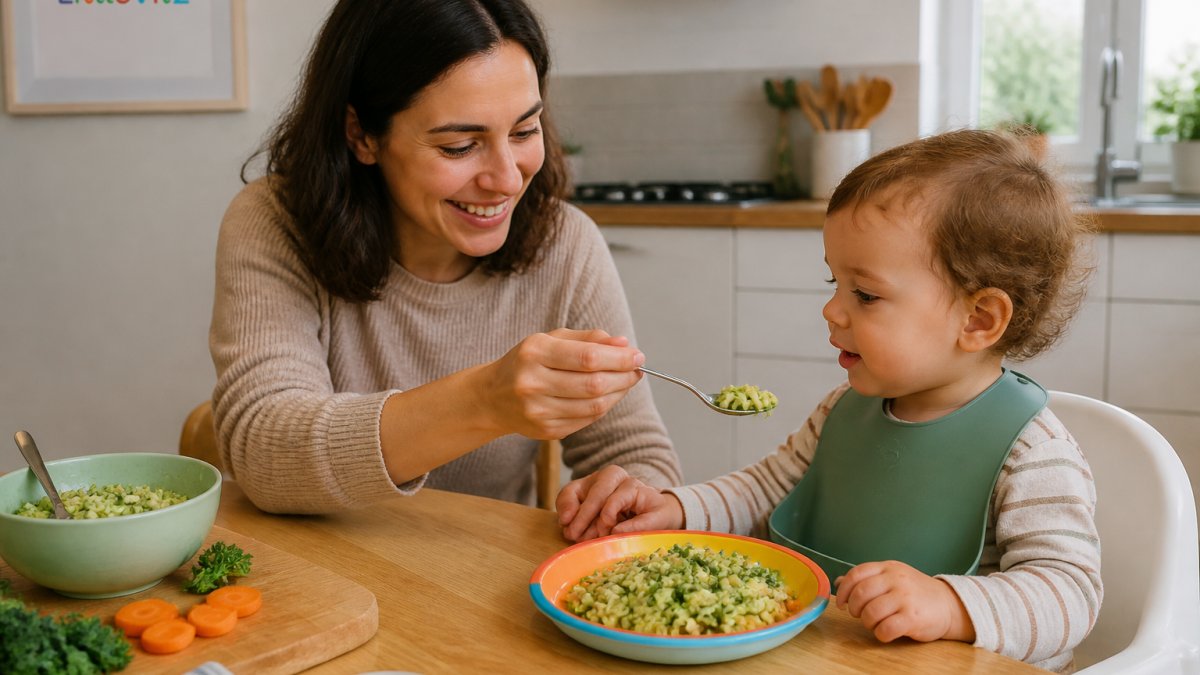
Here is what actually works in practice:
- Blend, do not chop. Smooth purees disappear into sauces, soups and mince.
- Match the colour. Cauliflower and courgette hide well in white sauce. Spinach vanishes in pesto.
- Grate into familiar dishes. Carrot and courgette grate neatly into bolognese and muffins.
- Use strong flavours as cover. Cheese, tomato and mild curry mask most veg.
- Keep the texture consistent. A lump is what gives the game away.
A common mistake is hiding veg so well that the child never learns to accept it. Use hiding to protect nutrition, but keep offering visible greens on the side too. That is how tolerance grows.
Sensory-Friendly Prep: Textures That Slip Past a Sensitive Eater
For children with texture sensitivity, how a food feels matters more than how it tastes. Many will accept a vegetable in one form and reject it in another, and that is not stubbornness. It is sensory processing at work. Transitioning toward smoother textures can bridge this gap, and incorporating fermented vegetable drinks offers a way to introduce complex nutrients while bypassing the challenging crunch that often triggers a sensory aversion.
Try these sensory-friendly prep methods:
- Smooth purees for children who reject anything lumpy
- Crisp roasted strips for children who need crunch and resist mush
- Cold vs warm - some children accept a veg cold that they refuse hot
- Sauces over chunks - a cheese sauce carries flavour without the texture
- Deconstructed plates - keep foods separate so nothing touches
The Step-by-Step Exposure Hierarchy: Building Up to Greens Slowly
An exposure hierarchy is a step-by-step plan that moves your child from tolerating a green on the plate to actually eating it. It works because it removes the pressure that causes food aversion to harden.
Work through these stages, staying on each one for as long as your child needs:
- Sight - the green sits on the table, untouched, no comment
- Proximity - the green moves onto their plate, still separate
- Touch - they are allowed to poke, squish or move it
- Smell - they bring it near their face and sniff
- Lick - a tiny taste on the lips, no swallowing required
- Bite - one small bite, and they can spit it out if they want
- Eat - a full bite swallowed, then praise, not a reward
This can take weeks, and that is completely normal. Food chaining, where you bridge from a safe food to a similar new one, works well alongside it.
Nutritional Support for Fussy Eaters When Fibre Alone Isn't Enough
Sometimes fibre and patience are not enough, especially when a child's safe food list is very short. That is where nutritional support for fussy eaters comes in, and it is not a cop-out. It is a bridge.
If your child is living on a narrow diet, they may be missing key micronutrients alongside fibre. A supplement can help fill those gaps while you keep working on acceptance.
This is where our Kids Super Greens comes in. It is a chocolate-flavoured powder made with real greens, fruits, vitamins and minerals, with no added sugar.

For parents easing in, the Kids Super Greens Trial & Travel Pouch gives you a five-serving tester before you commit to a full tub.
Hydration, Whole Foods and the Green Smoothie Trap
Fibre without water is a recipe for a harder stool, not an easier one. As you add fibre, you must add fluids.
The LittleVitz Kids Cup makes this easier. It is a lightweight, BPA-free cup with a straw, which many children find simpler to sip from than an open cup.
Now, the green smoothie trap. Smoothies sound like the perfect fix, you can pack spinach, avocado, and pear into one sweet drink and feel like you have won. But many children burn out on them fast.
There are three reasons green smoothies often fail:
- Flavour fatigue. The same taste every day becomes boring, then aversive. Children are wired to notice novelty, and a daily green drink stops being novel quickly.
- Texture inconsistency. A smoothie that is slightly too thick, too cold, or too grainy one morning can put a child off the entire category. Unlike a solid food, there is no way to eat around the part they dislike.
- The 'health food' association. If a child senses that a drink is a vehicle for something they have already refused, they may reject it on principle, even if it tastes fine.
Instead of relying on smoothies, rotate your approach so greens appear in different forms across the week:
- Smoothie one day, porridge the next. Grated pear or courgette stirred into porridge is less likely to trigger refusal than a green drink.
- Chocolate greens milk on a busy morning. This is a familiar flavour in a familiar format, which lowers the sensory barrier.
- Veg-packed pasta sauce for dinner. Blended spinach or courgette in a tomato sauce is a different texture and a different meal context.
- Fruit and yoghurt as a snack. Not every fibre source needs to be green. Pears, berries, and flaxseed all count.
- Baked goods. Muffins or oat bars with grated carrot or courgette are portable, familiar, and do not look like a health food.
Whole foods, minimally processed, should still do most of the work. Supplements and smoothies are support acts, not the headline. If your child will eat a pear, a bowl of porridge, and a few peas, you are already doing well.
Meal Planning for Busy Parents: One Week of Gentle Gut-Friendly Meals
Meal planning removes the daily decision fatigue and keeps fibre steady, which is what a sluggish gut needs. Here is a gentle week you can adapt:
| Day | Breakfast | Lunch | Dinner |
|---|---|---|---|
| Mon | Porridge with grated pear | Wholegrain toast fingers | Pasta with hidden courgette |
| Tue | Yoghurt with berries | Bean and cheese wrap | Sweet potato mash with peas |
| Wed | Chocolate greens milk | Hummus and veg sticks | Mince with grated carrot |
| Thu | Oat pancakes | Soup with blended veg | Rice with hidden spinach |
| Fri | Porridge with chia | Cheese toastie | Fish with mashed potato |
| Sat | Yoghurt with flaxseed | Pasta salad | Mild veg curry |
| Sun | Oat smoothie | Wholegrain sandwich | Roast with soft veg |
Keep portions small and familiar. Add one new item per meal at most.
Conclusion: Small Wins Beat Clean Plates
If you take one thing from this guide, let it be this: you are not aiming for a clean plate. You are aiming for one more green, one more sip of water, one more soft poo. Those small wins stack up, and they matter far more than a perfect dinner.
If your child is stuck on a narrow diet and you want to protect their nutritional intake while you work on the eating, LittleVitz can help. Pair it with the Milk Frothing Wand for a smooth sip, or start with the Trial & Travel Pouch to see how your child takes to it.

Get started with LittleVitz and turn the daily veggie battle into a treat they actually ask for.
Frequently Asked Questions
What is the link between picky eating and childhood constipation?
Children who stick to a narrow set of safe foods often miss out on dietary fibre, which adds bulk to stool and helps it move through the digestive tract. When fibre and fluid intake drop, stools become hard and painful to pass, so a child holds on, which makes the next bowel movement harder still. The result is a loop where fussy eating feeds constipation and discomfort feeds more fussy eating. Breaking it usually means adding gentle fibre and fluid together, not pushing a plate of greens.
How can I increase fibre intake for a child with constipation without a battle?
Start with small swaps rather than new foods. Blend a spoonful of cooked carrot or courgette into a pasta sauce, offer porridge with grated pear, or add a few soft peas to a favourite rice dish. Keep portions tiny so texture changes go unnoticed, and pair every fibre addition with water or milk. If your child has a very limited diet, a greens powder mixed into milk can top up fibre and micronutrients without any mealtime pressure.
Can nutritional supplements help children with limited diets?
A supplement will not replace food, but it can help bridge gaps when a child eats only a handful of safe foods. LittleVitz Kids Super Greens is a chocolate-flavoured powder made with vegetables, fruits, vitamins and minerals that mixes into milk, smoothies or shakes, so it fits a routine your child already accepts. It contains no added sugar and is designed as a convenient addition to daily meals. If your child has a medical condition or takes medication, check with your GP first.
Are there hidden ways to serve greens to fussy eaters?
Yes, and the trick is matching the texture to what your child already trusts. Spinach blitzed into a tomato sauce disappears completely. Grated courgette melts into bolognese. Frozen peas blended into a soup thicken it without changing the taste much. For children with texture sensitivity, smooth is usually safer than chunky. Serve the dish in a familiar bowl, keep the portion small, and avoid announcing that it contains greens.