

Table of Contents
- Why Picky Eaters Are More Likely to Be Low in Iron
- Signs of Iron Deficiency in Toddlers: What to Watch For
- Iron-Rich Foods for Picky Eaters (That They'll Actually Eat)
- How to Increase Iron Intake in Children: A Practical Guide
- When to See Your GP About Iron Levels
- Iron Supplements for Children: Safety and Dosage
- Frequently Asked Questions
Last Updated: September 28, 2026
Why Picky Eaters Are More Likely to Be Low in Iron
Is iron deficiency common in picky eaters? Yes, and asking whether is iron deficiency common in picky eaters is exactly the right question, because it's far more common than most parents realise. Iron is a nutritional deficiency that shows up most often in children with selective eating habits, because the foods kids refuse (meat, beans, dark greens) are usually the ones packed with iron.
At LittleVitz, we hear from parents every week stuck in the same loop: the foods their child will eat are rarely the foods that build healthy serum ferritin levels, with real consequences for cognitive development, energy and mood.
And it's not just about what's on the plate, it's a feedback loop that keeps picky eating and low iron feeding each other.
The Iron-Appetite Feedback Loop
Low iron can actually make a child eat less. It sounds backwards, but it runs in both directions, and that's what makes it so stubborn.
Here's the mechanism in plain terms. Iron is needed to make haemoglobin, which carries oxygen around the body. When iron stores drop, haemoglobin drops too, and tissues, including the gut and brain, get less oxygen.
So the loop looks like this:
- A picky eater avoids iron-rich foods.
- Iron stores fall, and haemoglobin with them.
- Low iron dampens appetite and interest in food.
- The child eats less and refuses more.
- Iron intake drops further, and the loop tightens.
Why Picky Eaters Sit at the Centre of the Loop
Not every child who avoids broccoli becomes anaemic, and not every child with low iron is a fussy eater, but the overlap is significant, for a few reasons.
What This Means for Parents
The takeaway isn't to panic about every refused bite. It's to recognise that picky eating and low iron can quietly reinforce each other, and that breaking the cycle sometimes means checking iron levels rather than doubling down on mealtime pressure. If your child has been a selective eater for months, seems tired or pale, or has lost interest in food they used to enjoy, ask your GP about a blood test.
Signs of Iron Deficiency in Toddlers: What to Watch For
The clearest signs of iron deficiency in toddlers are tiredness, pale skin and a short fuse. They're easy to miss because they creep in slowly and look like normal toddler behaviour.
Watch for:
- Fatigue that doesn't lift after a good night's sleep
- Pallor, especially in the lips, gums and nail beds
- Emotional regulation struggles, more meltdowns than usual
- Poor appetite regulation and less interest in food
- Slower growth cycles than expected
Behavioural Changes You Might Miss
Iron plays a direct role in cognitive development and behaviour. Parents often describe a child who is "just grumpy" or "always tired" when the real issue is iron deficiency anemia.
Iron-Rich Foods for Picky Eaters (That They'll Actually Eat)
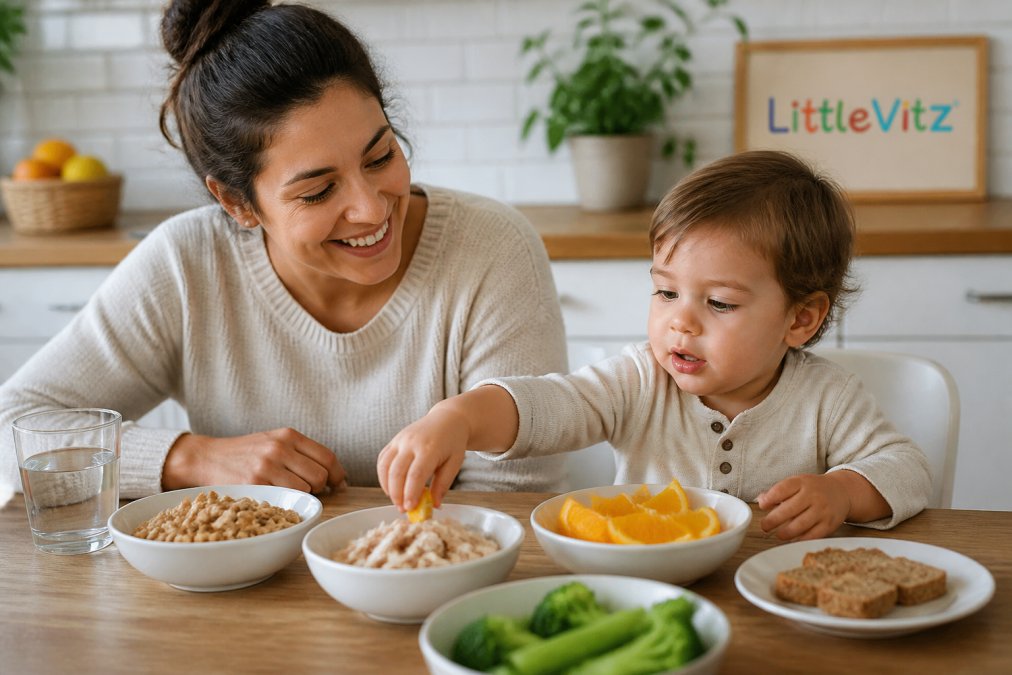
Try these:
- Shredded chicken or beef in a favourite sauce
- Iron-fortified foods like breakfast cereal
- Scrambled eggs with a splash of orange juice
- Baked beans on toast
- Smoothies with spinach blended in (they won't taste it)
Sensory-Friendly Iron Strategies
Texture and smell often matter more than taste to a selective eating child, a food can be refused purely for how it feels, not how it tastes.
Try these sensory-friendly moves:
- Serve iron-rich foods in familiar shapes and textures
- Blend greens into sauces your child already trusts
- Keep new foods next to safe foods, never instead of them
- Offer small amounts, no pressure
How to Increase Iron Intake in Children: A Practical Guide
Knowing how to increase iron intake in children comes down to two things: what you serve and what you serve it with. Absorption matters as much as the iron itself, lentils with a glass of milk deliver far less usable iron than the same lentils with a squeeze of orange.
Iron Absorption: What Helps and What Hinders
Bioavailability is the amount of iron your child's body can actually use. Some foods boost it, others block it, and getting this right can matter more than simply adding more iron-rich foods.
| Helps Absorption | Hinders Absorption |
|---|---|
| Vitamin C (citrus, peppers, strawberries, kiwi) | Calcium (milk, cheese, yoghurt) |
| Meat, fish and poultry (boost non-heme iron too) | Tea and coffee (tannins) |
| Soaked, sprouted or fermented beans and lentils | High-fibre bran cereals (phytates) |
| Onion, garlic and certain herbs | Large doses of calcium supplements |
A Practical Pairing Guide
Rather than memorising rules, it helps to think in pairs. Here are some combinations that work well for fussy eaters:
-
Fortified cereal + strawberries. A classic breakfast that pairs non-heme iron with vitamin C.
-
Baked beans on toast + a small glass of orange juice. Beans are iron-rich; the juice does the absorption work.
-
Shredded chicken or beef + tomato-based sauce. Heme iron plus vitamin C, in a format most kids accept.
-
Scrambled eggs + chopped red pepper. Eggs are modest in iron but easy to accept; the pepper boosts absorption from the rest of the meal.
-
Smoothie with spinach + mango or orange. Blending hides the greens; the fruit provides the vitamin C.
-
Hummus + red pepper strips. A snack that quietly does both jobs.
-
Iron-rich meal + a large glass of milk. Move the milk to snack time.
-
Iron-rich meal + tea. Save tea for well away from meals.
-
Iron-rich meal + a calcium supplement. Separate them by a couple of hours if your GP has recommended calcium.
Step-by-Step: Building an Iron-Friendly Day
- Anchor each meal with one iron source. It doesn't have to be red meat, fortified cereal, beans, eggs, hummus or a greens powder all count.
- Add a vitamin C partner. Fruit, peppers, tomatoes or a small juice.
- Keep dairy to snacks. Milk, cheese and yoghurt are great foods, just not alongside iron-rich meals.
- Offer iron-rich snacks between meals. Hummus, nut butters (if age-appropriate), fortified cereal bars, or dried fruit.
- Repeat foods often, without pressure. It can take many exposures before a new food is accepted. Keep offering alongside safe foods, never instead of them.
- Watch the milk total. For children aged one to three, aim for roughly 350-400ml of cow's milk a day, and no more.
When Diet Alone Isn't Enough
Some children, particularly those with very restricted diets, sensory aversions or underlying gut conditions, won't hit their iron needs through food alone, however cleverly you pair things. That's not a failure of your cooking; it's a signal to talk to your GP about a blood test and, if needed, a supplement.
When to See Your GP About Iron Levels
See your GP if your child shows signs of iron deficiency for more than a few weeks, or eats a very limited range of foods. Pediatric screening is straightforward and worth asking for.
Bring a list of:
- What your child actually eats in a typical week
- Any fatigue, pallor or mood changes you've noticed
- How much milk or dairy they drink daily
Iron Supplements for Children: Safety and Dosage
Supplementation should only start after a clinical diagnosis and a conversation with your GP. Iron is a trace element, and too much is harmful, so dosage matters (the NHS).
Frequently Asked Questions
Can a restricted diet lead to anaemia in toddlers?
Yes. Toddlers who eat a limited range of foods, especially if they avoid meat, beans, and fortified cereals, are at higher risk of iron deficiency anaemia. Iron is essential for making haemoglobin, which carries oxygen around the body. Without enough iron-rich foods, their stores can drop. If your child's diet is very restricted, speak to your GP about a blood test to check their serum ferritin and haemoglobin levels.
How can I tell if my child's picky eating is affecting their health?
Look for persistent tiredness, pale skin (especially around the lips and eyelids), irritability, and difficulty concentrating. These can be signs of iron deficiency in toddlers. You might also notice they get out of breath easily or seem less interested in play. If you spot these signs alongside a limited diet, it's worth asking your GP for a check-up. A simple blood test can confirm whether iron levels are low.
What are the best iron-rich foods for picky eaters who refuse meat?
For meat-refusing children, try fortified breakfast cereals, baked beans, lentils blended into pasta sauce, and scrambled eggs. Nut butters on toast also work well. Pair these with vitamin C sources like orange segments or strawberries to boost absorption. If your child has sensory issues, offer these foods in familiar textures, such as smoothies or dips. A chocolate-flavoured nutritional powder can also help bridge gaps without a mealtime battle.
How much iron does a growing child need daily?
Picky eaters often fall short because they may avoid key sources like red meat, beans, and fortified cereals. If you're worried, focus on adding one iron-rich food at each meal. Always check with your GP or health visitor before starting any supplement.