

Table of Contents
- What Makes a Chocolate Powder Healthy for Daily Use?
- Our Review: LittleVitz Kids Super Greens as a Healthy Chocolate Powder
- How to Boost Child Focus Naturally with a Daily Chocolate Drink
- Reading the Label: What to Look For and What to Avoid
- Pros and Cons of Using a Nutritional Chocolate Powder
- Simple Ways to Add It to Your Child's Daily Routine
- Conclusion
- Frequently Asked Questions
Last Updated: September 5, 2026
Finding a genuinely healthy chocolate powder for daily nutrition often feels like searching for a unicorn. Most options marketed to kids are packed with added sugar, artificial sweeteners, or ingredients you cannot pronounce. This guide will help you understand what to look for when choosing one for your family.
What Makes a Chocolate Powder Healthy for Daily Use?
A truly healthy chocolate powder is defined by what it excludes and what it packs in. The gold standard starts with no added sugar, setting it apart from commercial chocolate drinks that can contain several teaspoons per serving.
Look for a powder delivering a broad spectrum of micronutrients, including magnesium, iron, and dietary fibre, alongside antioxidants like flavonoids and polyphenols. These compounds support heart health, cognitive function, and a resilient immune system.
Here is what separates a genuinely healthy option from an overpriced cocoa mix:
- No added sugar or artificial sweeteners, natural sweetness should come from whole food sources
- Real greens and fruits, not just a synthetic vitamin blend
- A diverse vitamin and mineral profile, supporting daily growth and development
- Clean, recognisable ingredients, nothing you need a chemistry degree to understand
The Nutritional Mechanics That Actually Matter
Understanding why certain nutrients appear in high-quality powders helps you make smarter choices:
The Cocoa vs. Cacao Distinction
Cocoa and cacao are often used interchangeably, but they represent different processing stages with real nutritional consequences. Raw cacao is cold-pressed from unroasted beans, preserving more flavonoids. Cocoa is roasted at higher temperatures, which can degrade some of these compounds.
However, raw cacao is not automatically superior (peer-reviewed research). It has a bitter flavour many children reject, and roasting can actually improve the bioavailability of certain antioxidants. What matters more is whether the powder is alkalised ("Dutch-processed"), as alkalisation can strip away up to 80% of the flavanols.
When you read a label, look for "non-alkalised" or "natural cocoa powder" rather than "cocoa processed with alkali." This single distinction can make the difference between a drink that delivers meaningful antioxidant support and one that is essentially just chocolate-flavoured water.
The Heavy Metal Consideration
Heavy metal contamination rarely appears in marketing materials but deserves your attention. Cocoa plants readily absorb cadmium and lead from the soil, and independent testing has found measurable levels in many commercial chocolate products. While occasional consumption poses minimal risk, daily consumption means cumulative exposure matters.
When evaluating a powder for daily use, look for brands that publish their testing results or at minimum state their compliance with EU contamination limits. This is not scaremongering, it is simply a matter of choosing a product from a company that takes quality control seriously.
The Bioavailability Factor: Getting More From Every Scoop
The nutrients in your chocolate powder are only useful if your child's body can actually absorb them. Several simple pairing strategies can significantly improve uptake:
Our Review: LittleVitz Kids Super Greens as a Healthy Chocolate Powder
When we set out to create a healthy chocolate powder children would actually drink, we knew the formula had to win on both nutrition and taste. LittleVitz Kids Super Greens delivers over 30 vitamins, minerals, and superfoods in a chocolate flavour that genuinely tastes like a treat.

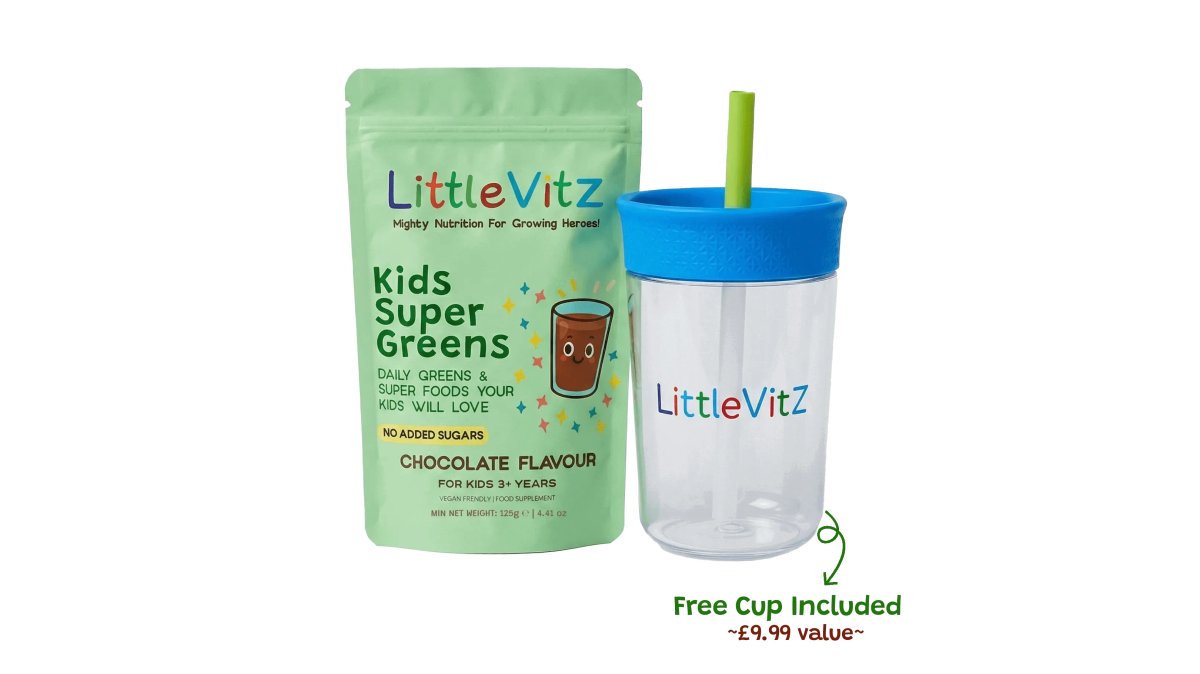
Nutritional Profile and Key Ingredients
The formula supports healthy growth, focus, and immunity, with a nutritional foundation from whole food sources that work synergistically with added vitamins and minerals.
Taste, Texture, and Mixability
The critical test for any children's supplement is whether a child will actually consume it. LittleVitz Kids Super Greens mixes easily into milk, smoothies, or shakes with a smooth, chocolatey taste that masks the greens completely. The silky texture matters enormously for children with sensory sensitivities.
For parents worried about another refused supplement, the LittleVitz Milk Frothing Wand is a game-changer. It whisks the powder into milk for a perfectly smooth, frothy drink that feels like a café treat rather than a health supplement.

How to Boost Child Focus Naturally with a Daily Chocolate Drink
Parents often ask us how to boost child focus naturally without medication or sugary energy drinks. The answer lies in consistent, nutrient-dense nutrition that supports cognitive function over time, providing steady energy without the crashes associated with refined sugar.
Iron and magnesium play essential roles in brain function, while complex carbohydrates and protein help maintain stable blood sugar levels throughout the school day.
A simple daily protocol looks like this:
- Mix one scoop of Kids Super Greens into 200ml of milk or a smoothie
- Serve at breakfast for steady morning energy
- Pair with a protein source like eggs or yoghurt for satiety
- Keep the routine consistent, the benefits compound over weeks
Reading the Label: What to Look For and What to Avoid
Learning to read a nutrition label is the single most valuable skill for choosing a healthy chocolate powder. Many products use clever marketing language like "natural" or "wholesome" while hiding problematic ingredients further down the list. Always check the sugar content per serving first.

Here is a quick reference for decoding labels:
| Label Claim | What It Really Means | What To Do |
|---|---|---|
| "No added sugar" | No sucrose or syrups added | Check for artificial sweeteners instead |
| "Natural flavours" | Often contains chemical additives | Look for real food sources |
| "With vitamins and minerals" | Could be synthetic or whole food | Check the source and diversity |
| "Kids love it" | Usually means high sugar | Verify the nutrition panel yourself |
| "Superfood blend" | Vague term, varies wildly | Look for named ingredients like spinach or kale |
Watch out for hidden additives like artificial colours, sweeteners such as sucralose or aspartame, and inflammatory vegetable oils, as these can negate nutritional benefits and may contribute to digestive upset.
The Ingredient List Tells the Real Story
The nutrition panel tells you what is in the product, but the ingredient list tells you where it came from. Ingredients are listed in descending order by weight, so the first three to five items make up the bulk of what you are consuming. If a powder lists "maltodextrin" or "glucose syrup" before any recognisable food, the base is refined carbohydrate rather than nutrition.
The Serving Size Trap
Manufacturers choose their own serving size, and this is where many parents get misled. A product might appear to have reasonable sugar content per serving, but if the serving size is 10 g when a realistic portion is 25 g, the numbers are meaningless.
The Sugar Maths Parents Need to Know
The UK government recommends free sugars make up no more than 5% of daily energy intake, roughly 19 g per day for children aged 4-6 and about 24 g for ages 7-10 (gov.uk). A single serving of many commercial chocolate drinks contains 15-20 g of sugar, nearly the entire daily allowance before breakfast.
A genuinely healthy chocolate powder should contain no more than 5 g of sugar per serving, ideally none at all. If the product relies on whole food sources like dates or banana powder for sweetness, the sugar will be naturally lower and accompanied by fibre.
The "Healthy-Washing" Checklist
Beyond the basics, here is a checklist that will help you spot products that merely look healthy:
The Ethical Sourcing Angle
For families committed to daily consumption, cocoa sourcing deserves attention. The cocoa industry has well-documented issues with child labour and unfair farmer compensation, particularly in West Africa. Choosing a powder with Fairtrade certification or from a company that publishes its sourcing practices aligns your family's daily habit with your values.
Pros and Cons of Using a Nutritional Chocolate Powder
Adding a nutritional chocolate powder to your child's daily routine comes with genuine trade-offs. On the positive side, these powders offer a practical solution for parents of picky eaters, children with sensory issues, or those with limited safe foods, providing a concentrated source of nutrients that might otherwise be missing.
Many parents report improvements in digestion, energy levels, and even mood when they replace sugary chocolate drinks with a nutrient-dense alternative. The psychological win matters too, turning a battleground into something your child looks forward to.
However, there are legitimate considerations to weigh:
- Cost per serving, quality nutrition powders cost more than a jar of supermarket chocolate mix
- Routine commitment, consistency is required to see meaningful benefits
- Taste adjustment, some children may need a few tries to accept a less sugary flavour
- Digestive adaptation, the introduction of greens and fiber can cause temporary changes
Simple Ways to Add It to Your Child's Daily Routine
Integrating a healthy chocolate powder into your family's routine does not need to feel like another chore. The key is finding entry points that feel natural rather than medicinal. Start with chocolate milk at breakfast, then experiment once your child accepts the flavour.
Here are several parent-tested approaches:
- Chocolate milk swap, replace supermarket chocolate milk with Kids Super Greens mixed into fresh milk
- Smoothie booster, add a scoop to your usual fruit smoothie recipe
- Baking addition, stir into pancake batter or homemade brownie mix
- Yoghurt swirl, blend into Greek yoghurt with a little honey for a healthier dessert
Try the Kids Super Greens Trial & Travel Pouch at £12.00 for five servings to test acceptance before committing to the full tub at £34.99. This low-risk approach lets your child try the flavour without investing in a full month's supply.
Conclusion
Choosing a healthy chocolate powder comes down to reading labels honestly, prioritising whole food ingredients, and finding a flavour your child will actually accept. LittleVitz Kids Super Greens checks every box, with no added sugar, over 30 vitamins and minerals, and 20+ superfoods in a chocolate taste children genuinely love.
Start with the trial pouch to see if it passes the taste test in your house, then build the routine from there. Buy Super Greens and turn nutrition from a daily struggle into a treat your child actually requests.
Frequently Asked Questions
Is it safe to give children chocolate powder every day?
Yes, when you choose a product designed for daily use. A healthy chocolate powder for daily nutrition should have no added sugar and contain beneficial ingredients rather than just flavourings. LittleVitz Kids Super Greens, for example, is free from added sugar and includes over 30 vitamins, minerals and superfoods. Always check the serving size on the label and stick to the recommended amount to avoid overloading your child with any single nutrient.
What should I look for in a healthy chocolate protein powder for kids?
Look for a powder with no added sugar or artificial sweeteners, a short ingredient list you recognise, and a good mix of vitamins and minerals. The best chocolate nutrition powder for kids should also contain real food ingredients like greens and fruits for extra nutritional value. Check that it is free from artificial colours and flavours. If your child has allergies, verify the allergen information on the packaging before buying.
How does cacao powder differ from standard chocolate milk powder?
Cacao powder is made from raw, cold-pressed cacao beans and retains more antioxidants and minerals like magnesium and iron. Standard chocolate milk powder is usually highly processed, contains added sugar, and has fewer of the beneficial compounds found in cacao. For a healthy chocolate powder for daily nutrition, cacao or a blend that uses real cacao is generally a better choice. It provides a richer chocolate taste with less sugar and more nutritional benefits.
Can chocolate-flavoured nutrition powders help with picky eating?
They can help bridge nutritional gaps, but they are not a replacement for a varied diet. Many parents find that a chocolate-flavoured powder is one of the easiest ways to get picky eaters to consume greens and essential vitamins. The chocolate taste masks the flavour of vegetables, making it more appealing. Mix it into milk or a smoothie to create a treat that feels special while quietly adding nutrients to their day.
This article was written using GrandRanker