

Table of Contents
- Why Swapping Sugary Snacks Matters for Your Child
- Quick Comparison: Sugary Snacks vs Healthy Alternatives
- Easy Healthy Alternatives to Sugary Snacks Kids Will Love
- How to Hide Vegetables in Smoothies Without the Fuss
- Low Sugar Snack Ideas for School Lunchboxes
- Budget-Friendly Snack Planning and Sensory-Friendly Textures
- Conclusion
- Frequently Asked Questions
Last Updated: September 18, 2026
Why Swapping Sugary Snacks Matters for Your Child
Most parents know the afternoon sugar rush all too well: the burst of energy, the crash twenty minutes later, and the meltdown that follows. That cycle is why so many families look for healthy alternatives to sugary snacks for kids. This guide walks through practical swaps that work, without turning snack time into a battleground.
Quick Comparison: Sugary Snacks vs Healthy Alternatives
The table below shows how common sugary snacks stack up against simple swaps.
| Sugary Snack | Healthier Swap | Why It Works |
|---|---|---|
| Fizzy drinks and juice cartons | Water with fruit slices | Cuts added sugar, keeps hydration |
| Chocolate biscuits | Oatcakes with nut butter | Fibre-rich, slower energy release |
| Sweets and gummies | Frozen grapes or berries | Natural sugars, no additives |
| Crisps | Roasted chickpeas | Protein-packed, crunchy |
| Cereal bars | Homemade oat bites | Lower sugar, no preservatives |
Understanding Sugar Content and Energy Spikes
Sugar content on a label rarely tells the whole story. A snack can say "no added sugar" and still contain concentrated fruit syrups that hit the bloodstream quickly. What matters is the fibre, protein and fat alongside any natural sugars, because these slow digestion and support steadier blood sugar regulation. When a snack is mostly refined sugar, children get a fast high followed by a low that leaves them hungry, irritable and craving more.
Easy Healthy Alternatives to Sugary Snacks Kids Will Love
The best swaps are the ones your child will actually eat, so start with familiar textures and flavours before branching out. Fresh produce, dairy and wholegrain options cover most of what a growing child needs.
Fresh Fruit and Vegetable Snacks
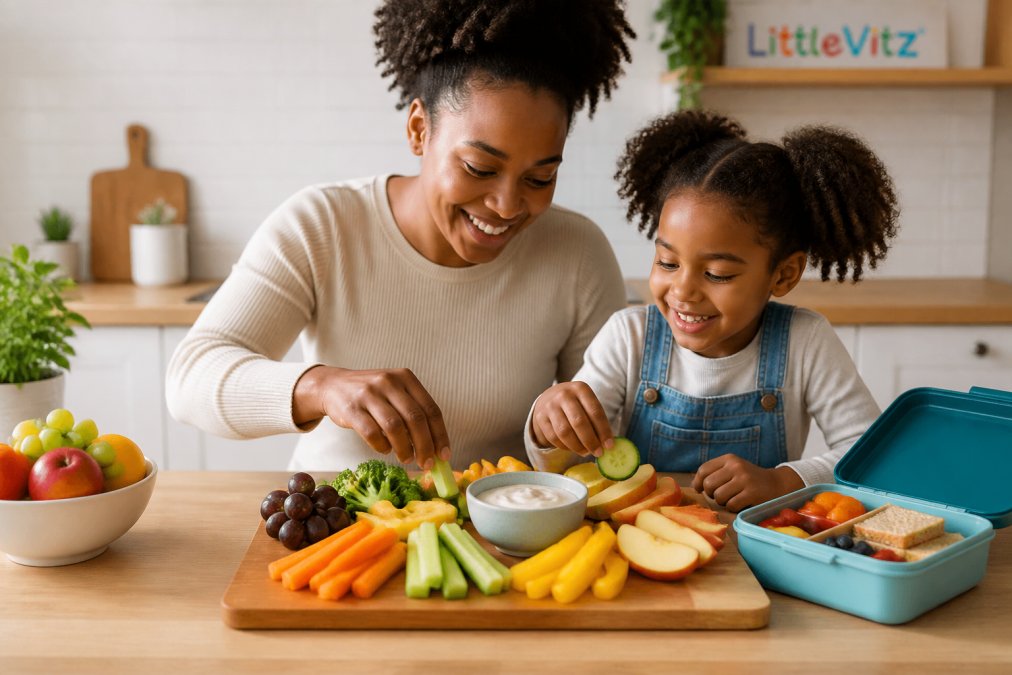
Fresh produce should be your first stop. It's naturally sweet, full of vitamins and minerals, and needs almost no preparation. Try apple slices with cinnamon, cucumber and pepper sticks, cherry tomatoes, or frozen banana chunks that taste like ice lollies.
Dairy-Based and Whole Grain Options
Dairy brings protein and healthy fats, which help children feel full for longer. Plain yogurt with berries, cheese cubes or cottage cheese all work well. Choose plain over flavoured, since fruit yogurts often hide a surprising amount of sugar.
Healthy Dips and Spreads
Dips turn ordinary vegetables into something children want to eat. Hummus, tzatziki, mashed avocado and a yogurt and herb dip take minutes to make and keep well in the fridge.
How to Hide Vegetables in Smoothies Without the Fuss
Hiding vegetables in smoothies comes down to three things: colour, texture and sweetness. A smoothie is the easiest place to sneak in greens because the blender removes every trace of texture, and fruit masks the taste almost completely. Start with a base of milk or plain yogurt, add a handful of fruit, then introduce vegetables gradually. Spinach, courgette, cauliflower and cooked carrot blend smoothly without changing the flavour much.
- Keep the colour appealing: berries and banana hide greens better than pale fruits
- Add vegetables slowly: start with a small handful and build up over a week
- Use frozen produce: it blends smoother and lasts longer
- Serve it cold: children prefer smoothies straight from the fridge
Low Sugar Snack Ideas for School Lunchboxes
A lunchbox snack has to clear three hurdles at once: taste good cold, survive a morning in a bag without going soggy or unsafe, and comply with your school's food policy. Most generic swap lists ignore the third hurdle, which is why so many parents pack something healthy only to have it sent home uneaten, or flagged.
- Veggie sticks with a small pot of hummus, pack the dip separately so the vegetables stay crisp
- Cheese cubes or a mini cheese portion, a good source of protein and calcium, and naturally low in sugar
- Plain oatcakes or wholemeal crackers, check the label for added sugar, which hides in some flavoured varieties
- Fresh fruit: grapes, apple slices, berries or a small banana, quarter grapes lengthways for younger children
- Plain yogurt in a leak-proof pot, add a few berries yourself rather than buying fruit-flavoured pots
- A hard-boiled egg, filling, portable and nut-free
- Homemade oat bites, batch-bake on a Sunday and they'll last the week in an airtight tin
School-Safe Snack Policies and Allergen Awareness
Nut and sesame bans are now common in primary schools, and some settings restrict certain snacks by age group to reduce choking risk. Whole grapes, large cherry tomatoes and chunks of hard raw carrot should be quartered lengthways for younger children. If your child has a diagnosed allergy, the school will usually ask for a written plan and may require prescribed medication on site, arrange this before term starts.
A few practical habits make compliance easier:
- Read every label, every time. Recipes change, and a snack that was nut-free last term may not be now.
- Watch for hidden allergens. Sesame appears in hummus and tahini; some cereal bars contain traces of nuts even when they don't list them as an ingredient.
- Keep a copy of your school's policy on your phone. It saves guesswork on rushed mornings.
- Label the lunchbox clearly with your child's name and any allergy information the school has asked you to display.
Keeping Snacks Fresh and Appealing Until Lunchtime
A snack that's soggy by noon won't get eaten, however nutritious it is. A few tweaks make a real difference:
Kids Super Greens - 25 Servings →
- Use an insulated bag with a small ice pack for dairy, eggs and dips
- Keep wet and dry foods separate, a compartment lunchbox does this well
- Cut fruit fresh in the morning or toss apple slices in lemon juice to stop browning
- Avoid strong-smelling snacks if your child is sensitive to odours in a shared dining hall
Portion Sizes That Actually Fill a Child Up
Portion size matters as much as food choice. Too small and a child is hungry by mid-afternoon; too large and it spoils their appetite for dinner. As a rough guide, a snack should fit comfortably in one hand for younger children and two cupped hands for older ones. Pairing a carbohydrate with a protein or healthy fat, oatcakes with cheese, apple with nut-free seed butter, keeps energy steadier.
Budget-Friendly Snack Planning and Sensory-Friendly Textures
Two things stop parents from sticking with healthy swaps: cost and refusal. In real households they're tangled together, you can't afford to keep buying snacks your child won't eat, and you can't afford to keep experimenting blindly. Getting both right is what makes the swaps last.
Planning Snacks That Cost Less Per Serving
Buying individual snack packets is convenient, but the cost adds up fast. A bag of oats, a large tub of plain yogurt and a tray of seasonal vegetables will cover several days of snacks for a fraction of the price of pre-portioned equivalents. Think in cost-per-serving rather than cost-per-item.
- Buy produce in season. Root vegetables, apples and pears are cheapest in autumn and winter; berries and stone fruit in summer.
- Frozen counts. Frozen berries, peas and spinach are just as nutritious as fresh, cost less out of season, and don't go off.
- Batch-prepare on one day. A Sunday afternoon spent making a tray of oat bites, a tub of hummus and a batch of vegetable sticks sets you up for the week.
- Buy own-brand plain staples. Plain oats, plain yogurt and plain crackers are usually identical to branded versions at a lower price.
- Use leftovers. A spoonful of cooked vegetables can go into a dip; a banana going brown is perfect for baking.
- Invest in a compartment lunchbox. It reduces the need for cling film and small packets, and it makes portion control easier at the same time.
Sensory-Friendly Snacks: Why Texture Matters More Than Taste
For children with sensory sensitivities or a very narrow list of safe foods, texture is often the real barrier, not flavour. A child who refuses a strawberry might happily eat it frozen, blended into a smoothie, or sliced thinly. The food hasn't changed; the sensory experience has. Some children accept only crunchy foods; others only smooth. Some refuse anything mixed, like a dip with visible flecks of herb; others reject food that's too cold or too wet.
- Crunchy: plain crackers, cucumber sticks, apple slices, rice cakes
- Smooth: plain yogurt, hummus, fruit purée, mashed avocado
- Dry: oatcakes, plain cereal, toast fingers
- Cold and firm: cheese cubes, frozen berries, frozen banana chunks
- Soft and warm: porridge, scrambled egg, soft-cooked vegetable sticks
A few principles make this easier:
- Keep the safe food on the plate. Always include at least one food you know your child will eat, alongside anything new.
- Change one thing at a time. Same food, different shape or temperature, not a new food in a new form.
- Don't pressure or bargain. Pressure tends to reduce acceptance over time, even when it works in the moment.
- Repeat without expectation. A food may need to appear many times before it's tried, and that's normal.
Sugar-Free Beverage Pairings
What children drink alongside a snack matters as much as the snack itself. Water is the best default, and a slice of orange or a few berries makes it feel special without adding sugar. Milk, including dairy-free alternatives with no added sugar, pairs well with most snacks and adds protein. Squash and juice, even "no added sugar" versions, are best kept as occasional treats, they still contain natural sugars and acids that affect teeth.
Conclusion
The gap between what children need and what they'll happily eat can feel impossible some days. Small, consistent swaps do more than a complete overhaul, and every vegetable your child accepts, in any form, is progress.
Frequently Asked Questions
What are some healthy snacks without sugar for kids?
Try apple slices with peanut butter, carrot sticks with hummus, cheese cubes, plain yogurt with berries, or wholegrain crackers with mashed avocado. These options provide fibre, protein, and healthy fats without added sugar. For a fuss-free boost, a chocolate-flavoured greens powder like LittleVitz Kids Super Greens can be mixed into milk or a smoothie, giving vitamins and minerals without added sugar.
How can I reduce my child's sugar intake without causing a fuss?
Make gradual swaps rather than removing treats altogether. Replace sugary cereal with wholegrain options, offer fruit instead of sweets, and keep healthy snacks visible. Involve your child in choosing and preparing snacks, which builds ownership. For picky eaters, hiding vegetables in smoothies or using a no-added-sugar nutrition powder in milk can bridge gaps quietly. Consistency and patience matter more than perfection.
Are there quick, no-prep healthy snacks for school lunchboxes?
Yes. Mini cheese portions, small pots of plain yogurt, pre-cut vegetable sticks, whole fruit, and plain rice cakes are all no-prep. Check your school's snack policy for allergen rules. For an extra nutritional top-up, a trial pouch of LittleVitz Kids Super Greens can be mixed into a drink at home before school, so lunchtime stays simple and low-sugar.
How do I hide vegetables in smoothies so my child won't notice?
Use mild-flavoured vegetables like spinach, courgette, or cauliflower, and blend them with strong-tasting fruits such as banana, mango, or berries. A splash of milk or yogurt smooths the texture. Start with small amounts and increase gradually. A chocolate-flavoured greens powder can mask any remaining veggie taste while adding vitamins and minerals, making the smoothie a treat rather than a chore.