

Table of Contents
- How the Immune System Develops in Young Children
- Immune Boosting Foods for Picky Eaters
- How to Improve Child Gut Health Naturally
- Vitamin D Requirements for Children UK
- Sleep, Movement and Stress: The Everyday Basics
- Seasonal Protocols and Everyday Hygiene That Cut Illness
- Filling the Gaps When Fussy Eating Wins
- Frequently Asked Questions
Last Updated: September 12, 2026
How the Immune System Develops in Young Children
Child immunity is the body's developing defence system, built gradually through exposure, nutrition and sleep rather than switched on at birth. At LittleVitz, we hear from parents every week who want to know the best ways to improve child immunity naturally, and the honest answer starts with how that system grows.
A young child's immune system matures over years, not weeks. White blood cells learn to recognise pathogens, antibodies build memory after each mild infection, and the gut trains itself to tell friend from foe. That is why repeated coughs and colds in toddlerhood are common and usually normal. Nutrition, sleep and movement give that training the raw materials it needs.
Immune Boosting Foods for Picky Eaters
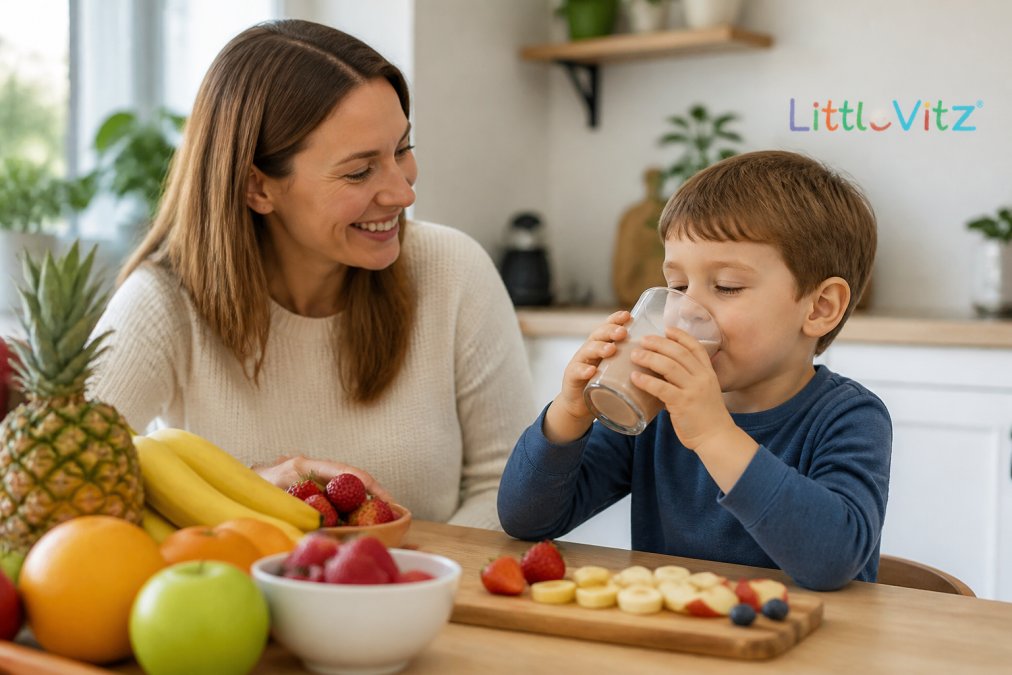
Immune boosting foods for picky eaters do not have to be exotic. The nutrients that matter most, vitamin C, zinc, iron and vitamin D, sit in everyday foods you probably already buy.
Nutrient-Dense Foods That Do the Heavy Lifting
- Citrus and berries for vitamin C and antioxidants
- Eggs, beans and lean meat for zinc and iron-rich foods
- Oily fish for vitamin D and omega-3
- Yoghurt and kefir for gut health
- Nuts and seeds (ground for under-fives) for zinc and healthy fats
Practical Ways to Add Them Without a Fight
A common mistake is presenting a new food on its own and expecting a win. Pair it with something familiar instead. Grate carrot into pasta sauce, blend spinach into a smoothie, or serve berries alongside the yoghurt your child already loves. Repeated gentle exposure works far better than pressure.
How to Improve Child Gut Health Naturally
To improve child gut health naturally, focus on fibre, fermented foods and variety. The gut holds a large share of the immune system, so what feeds the microbiome matters. This is the angle most guides skip, and it is arguably the most useful one for parents, because a well-fed gut does quiet, daily work that no single food can replicate.
Why the Gut Matters for Immunity
Roughly seventy per cent of the body's immune tissue sits in the gut lining (PubMed). That lining is a barrier: it lets nutrients through and keeps pathogens and undigested proteins out. Beneficial bacteria help maintain that barrier, train immune cells to tell friend from foe, and produce short-chain fatty acids such as butyrate, which feed the cells lining the colon and help calm unnecessary inflammation. When the microbiome is out of balance, that barrier weakens and the immune system reacts to things it should ignore.
Fibre, Fermented Foods and Probiotics
Fibre feeds beneficial bacteria. Fermented foods such as plain yoghurt, kefir and mild cheeses add live cultures. Probiotics can help after a course of antibiotics, though food sources are usually the gentlest starting point. Introduce one new fermented food at a time so you can spot any reaction.
A practical way to build variety without a fight:
- Fibre: oats, bananas, apples with the skin on, beans, lentils, wholegrain bread and pasta, and a rotating mix of vegetables
- Fermented foods: plain live yoghurt, kefir, a spoonful of sauerkraut or kimchi for older children, and mild cheeses
- Prebiotic foods: onions, garlic, leeks, asparagus and slightly green bananas feed the good bacteria already there
- Polyphenols: berries, cherries and a little dark chocolate give gut bacteria something to work with
Aim for a wide range of plant foods across the week rather than the same three vegetables on repeat. Diversity of fibre sources matters more than any single "superfood".
A Gentle Way to Start
Begin with one change, not five. Add live yoghurt to breakfast, or swap white pasta for a half-and-half mix with wholegrain. Give it a week or two before adding the next thing. Sudden, large increases in fibre or fermented foods can cause wind, bloating or loose stools, so slow and steady wins here.
For children with constipation or sensitive stomachs, gradual changes and plenty of water make the biggest difference. You can read more via NHS advice on digestive health.
Probiotic supplements are not suitable for every child, particularly those who are very unwell, immunocompromised or have a central line. Check with your GP or health visitor before starting one if your child has any ongoing health condition.
Vitamin D Requirements for Children UK
Vitamin D requirements for children in the UK are simple: babies from birth to one year need 8.5 to 10 micrograms daily, and children aged one to four need 10 micrograms daily, according to NHS vitamin D guidance. Between October and March, sunlight is too weak for the skin to make vitamin D, so a daily supplement is recommended year-round for young children.
This is one gap food alone rarely fills. Oily fish, eggs and fortified cereals help, but a supplement is the reliable route.
Sleep, Movement and Stress: The Everyday Basics
Sleep, movement and calm do more for child immunity than any single food. During sleep, the body releases cytokines, proteins that help fight infection and inflammation, and a consistent bedtime supports the circadian rhythm that governs when those defences are most active. Children who are short on sleep tend to catch more infections and recover more slowly.
How Much Sleep Children Actually Need
Sleep needs shift quickly in the early years. As a rough guide:
- Babies (4 to 12 months): around 12 to 16 hours including naps
- Toddlers (1 to 2 years): around 11 to 14 hours including naps
- Pre-schoolers (3 to 5 years): around 10 to 13 hours
- Primary school age (6 to 12 years): around 9 to 12 hours
These are ranges, not targets to hit exactly. The better question is whether your child wakes reasonably easily and stays settled through the day. A predictable wind-down, dimmed lights, no screens for the last hour and the same bedtime each night do more than any single trick.
Movement That Counts
Physical activity guidelines for this age group suggest around three hours of daily movement for under-fives, spread across the day, and at least 60 minutes of moderate-to-vigorous activity for children aged five and over. It does not need to look like exercise. Chasing games, dancing in the kitchen, scooting to nursery and climbing at the park all count. Movement boosts circulation, which helps immune cells patrol the body more efficiently, and it supports the deep sleep that does the repair work.
Stress, Emotional Security and Social Play
Stress matters too. Raised cortisol levels can wear down immune defences over time, so unhurried play and predictable routines are genuinely protective. This is where the draft can add something most guides miss: emotional regulation and social connection are not soft extras, they are physiological inputs. Children who feel secure and have warm, consistent relationships tend to show calmer stress responses, and rough-and-tumble play with siblings or friends is one of the ways young children learn to regulate their own arousal.
A simple weekly rhythm helps:
- Keep sleep and wake times within about half an hour, even at weekends
- Get outside daily, whatever the weather, ideally in the morning light
- Build in quiet, unstructured play with no adult agenda
- Protect time with friends and family, in person where possible
- Keep screens calm and out of the bedroom before bed
Seasonal Protocols and Everyday Hygiene That Cut Illness
Seasonal illnesses cluster in winter, so a simple seasonal protocol helps. Boost vitamin D, keep hands washed, and teach children to cough into a tissue or elbow.
Hygiene practices reduce respiratory infections without creating a sterile bubble. Wash hands before eating and after school or nursery. Ventilate rooms, especially in colder months, to lower airborne pathogens. Emotional regulation and social connection also matter: children who feel secure recover faster.
Filling the Gaps When Fussy Eating Wins
Some weeks, fussy eating wins and no amount of grated carrot helps. That is where a nutrient-dense top-up earns its place. LittleVitz Kids Super Greens is a chocolate-flavoured powder made with real greens, fruits, vitamins and minerals, with no added sugar, designed to mix into milk or a smoothie. It supports immunity, growth and focus without a mealtime battle. The 25-serving tub is £27.99, or try the 5-serving trial pouch at £12.00.

| Situation | Practical Fix | What It Supports |
|---|---|---|
| Refuses vegetables | Blend into sauces or a chocolate drink | Micronutrients |
| Limited safe foods | Add a daily nutrition powder | Gaps in diet |
| Picky at breakfast | Mix powder into milk | Focus and growth |
| Winter sniffles | Vitamin D plus hygiene | Immune defence |
Frequently Asked Questions
What can I give my child to boost her immune system?
Start with the basics: a varied diet rich in fruit, vegetables, whole grains and lean protein, plus enough sleep and daily movement. Vitamin D is the one supplement the NHS recommends year-round for children, at 10 micrograms daily. If your child is a fussy eater, a nutrient-dense powder mixed into milk or a smoothie can help bridge gaps without a battle at the table.
What are some natural immune boosters for kids?
There is no single food that boosts immunity overnight. What helps is consistency: iron-rich foods like beans and fortified cereals, vitamin C from oranges and peppers, zinc from dairy and pulses, and probiotics from yoghurt. Add plenty of water, outdoor play and a predictable bedtime. Together these support white blood cells and antibodies doing their normal job.
What foods boost kids' immunity?
Foods that carry the most immune-supporting nutrients include citrus fruit, berries, red peppers, broccoli, spinach, yoghurt, eggs, oily fish, beans, nuts and seeds. Aim for a nutrient-dense diet across the week rather than perfect meals every day. If your child refuses vegetables, blending them into sauces or offering a chocolate-flavoured greens powder can help close the gap.
Are there natural supplements that help with child immunity?
Vitamin D is the main one recommended for children in the UK, especially through autumn and winter. Zinc and iron matter too if a child's diet is limited. A children's multivitamin powder made with real fruit and vegetable ingredients can be a practical option for picky eaters, but it should add to a balanced diet, not replace one. Always check the label for age suitability.
How does sleep quality impact a child's immune response?
Sleep is when the body repairs tissue and produces infection-fighting cells. Toddlers generally need 11 to 14 hours including naps, and school-age children around 9 to 11 hours. A consistent bedtime, dimmed lights and no screens an hour before bed support sleep hygiene, which in turn supports the immune system development happening in early childhood.
What role does physical activity play in immune health for children?
Regular movement helps white blood cells circulate more efficiently and lowers cortisol levels, the stress hormone that can wear down immune defences over time. The NHS advises children get at least 60 minutes of activity daily. It does not need to be structured sport: walking to school, dancing in the kitchen or kicking a ball in the garden all count.