How to Get More Nutrients Into Fussy Eaters (Without the Mealtime Battle)
Vitamin D3 and K2 do the quiet work of steering calcium into growing bones and teeth — the pairing most kids' vitamins leave out entirely.

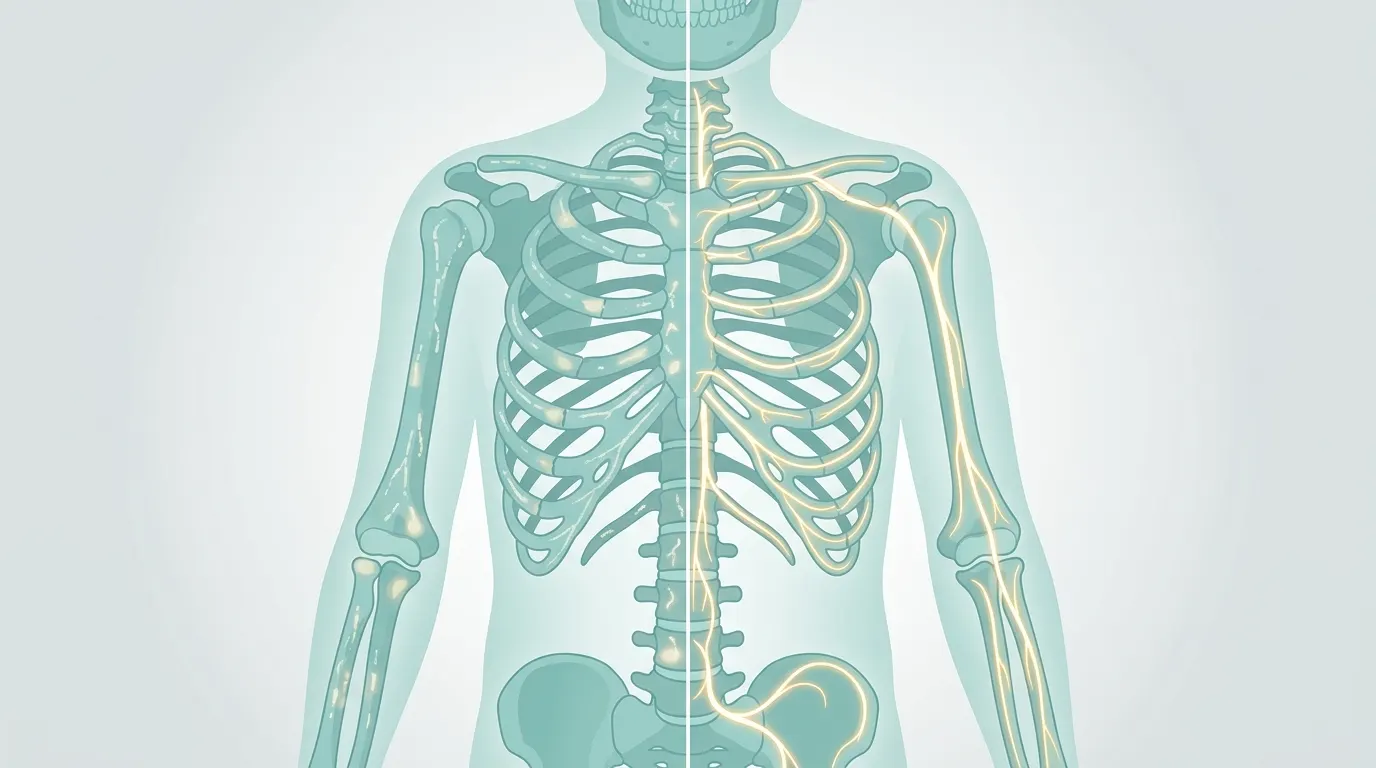
You do the responsible thing. Extra milk with breakfast. A yoghurt in the lunchbox. Cheese on the pasta because at least it's something they'll eat.
And still, at the back of your mind, the same quiet worry sits there. Are those growing bones actually keeping what you're pouring into them?
For a child who lives on beige food and fights every vegetable, the honest answer is rarely as reassuring as the calcium on the carton suggests.
Why does more milk never seem to fix it?
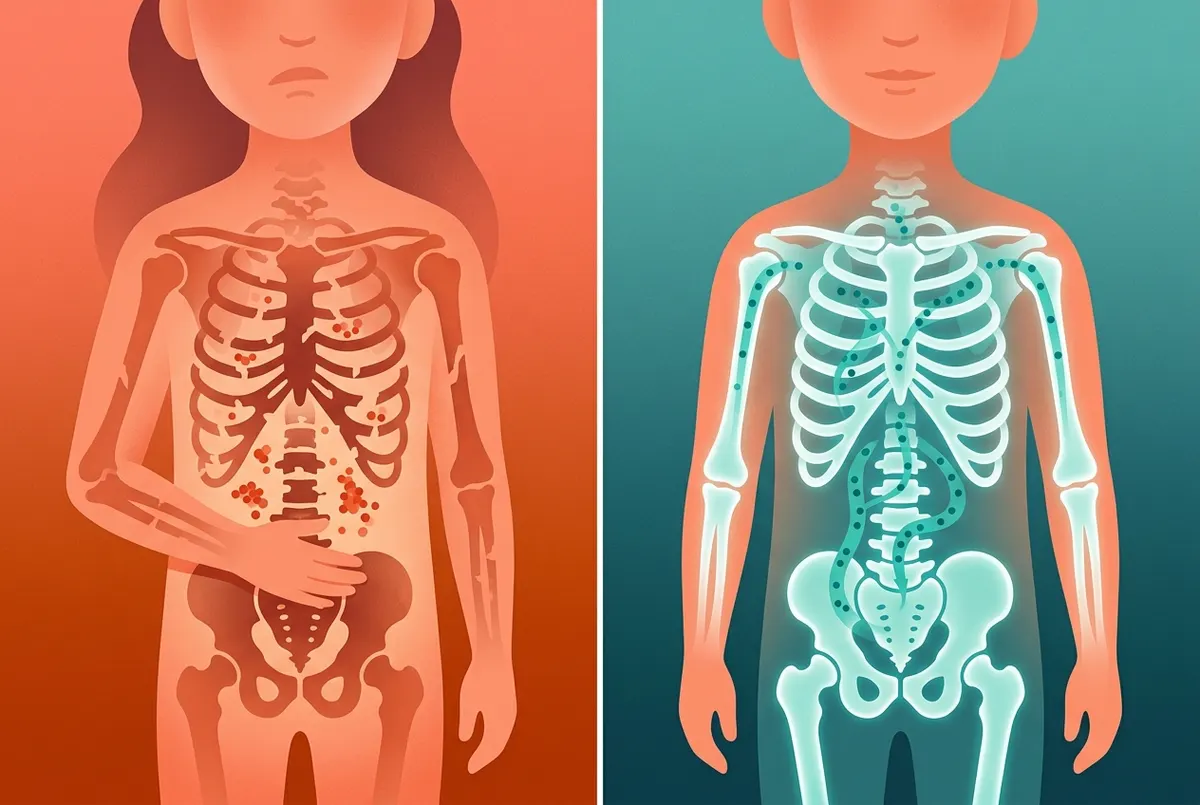
Here's the uncomfortable part. Calcium was never the hard bit.
Milk, cheese, yoghurt — most children get plenty of calcium. The trouble is what happens after it goes down. Calcium doesn't steer itself into bone. It needs help finding its way there.
So you can keep topping up the milk and still miss the point. Many UK children fall short on the nutrients that support bones, teeth and growth. A fussy eater is almost never the exception.
So, what actually gets calcium into bone?
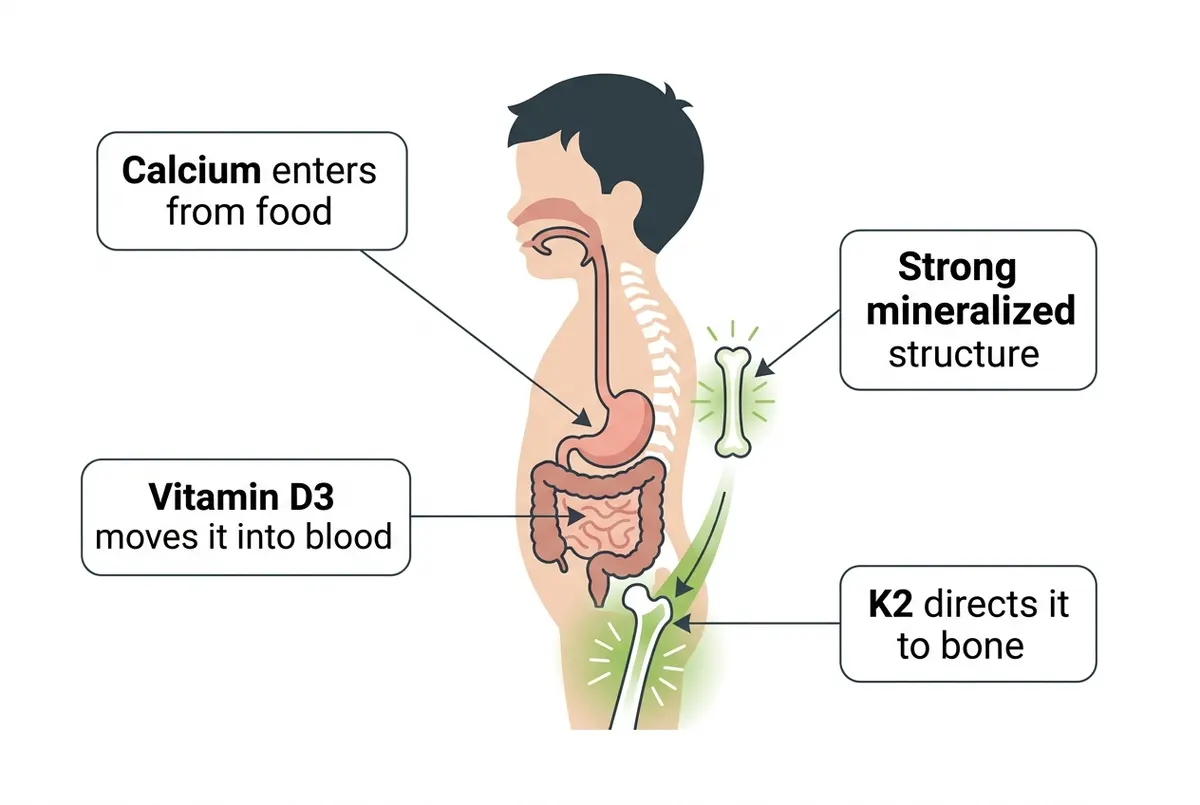
Calcium needs a crew to land in bones.
Two nutrients are that crew. Vitamin D3 helps the body take calcium out of food and into the blood.
Vitamin K2 then directs it into bones and teeth, rather than leaving it to drift where it isn't wanted. Miss either one and the calcium simply doesn't land where it's meant to.
Call it the delivery gap — plenty of calcium arriving, not enough help getting it home. Most children's vitamins simply leave this out.
Iron, folate and the B-vitamins do the same behind-the-scenes work for focus and calm digestion, and they're the first things a beige diet runs low on.
Is there a cleaner way to close the gap?
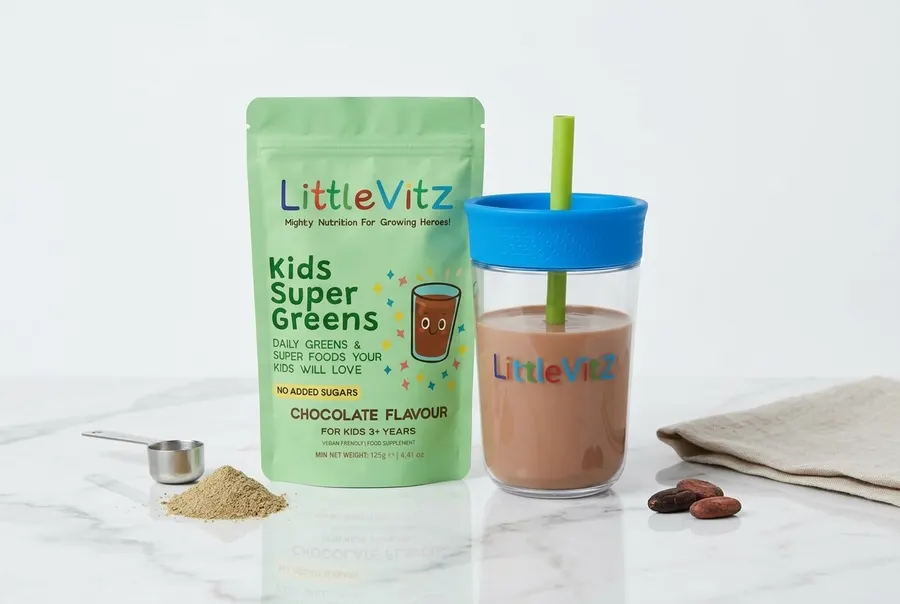
It pairs calcium with D3 and K2.
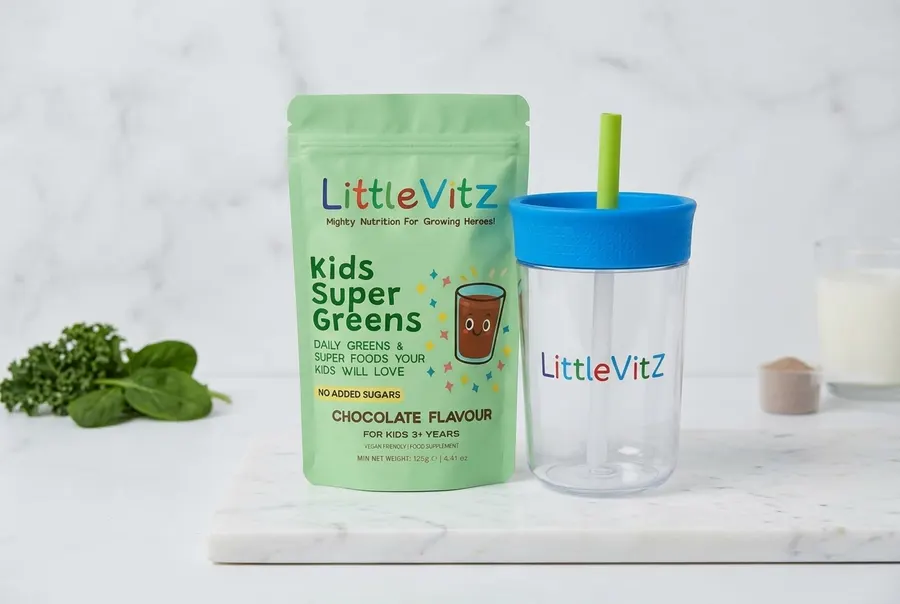
It was formulated by nutritionists for children aged three and up, made in the UK under strict food-safety standards, and third-party tested. The label matches what's really inside.
The real advantage: it tastes like chocolate milk. Thirty-plus whole-food nutrients, zero added sugar — served as the thing your grandchild already asks for, not the vitamin they refuse.
What does one scoop actually cover?
The point isn't a long list for its own sake. It's whether each nutrient does real work for a growing child — bones, brain and digestion included. Here's what one daily serving is built to support.
What's actually in it?
Names matter more than promises here. Rather than a vague blend, each vitamin and mineral is chosen for a specific job — and the bone-building trio of D3, K2 and calcium sits at the centre of it.
Why do parents keep reaching for it?
 1
1
Iron and B12 fuel concentration and learning in growing minds
Iron deficiency is the most common nutritional gap in UK children, directly impairing focus and academic performance. This formula delivers iron alongside B12 and folate—the neurological triad that supports oxygen transport to the brain and DNA synthesis for cognitive development. Research in the Journal of Nutrition confirms B12 and iron deficiency correlate with reduced learning capacity; this powder addresses both in one scoop.
 2
2
Calcium and Vitamin D3 with K2 build bones that keep pace with growth
Growing children need 700–1,000 mg of calcium daily to mineralize bones and teeth; most picky eaters fall short. This formula contains bioavailable calcium alongside Vitamin D3 (which enhances absorption) and K2 (which directs minerals to bone tissue, not soft tissue). The combination ensures the calcium actually deposits where it matters—supporting skeletal development and preventing the brittleness that plagues children with restricted diets.
 3
3
Third-party tested and HACCP-certified—not a marketing claim
Unlike gummy vitamins that mask quality behind colourful packaging, this powder is third-party tested for nutritional accuracy and purity, and manufactured under UK GMP and HACCP standards (the same rigour applied to pharmaceutical production). Every batch is verified for contaminants and potency. For parents seeking clinical credibility over influencer endorsement, third-party certification is the only objective measure that matters.
 4
4
Digestive greens and oat milk support comfortable nutrient absorption
Leafy greens like spirulina and moringa are rich in fibre and chlorophyll, which calm the gut microbiome and improve nutrient absorption—critical for children whose selective eating already limits their intake. Oat milk base adds prebiotic fibre. A comfortable, functioning digestive system means the 30+ nutrients in this formula actually reach the bloodstream, not pass through unabsorbed.
 5
5
Formulated by nutritionists, endorsed by integrative medicine experts
This is the first children's greens powder developed by UK-registered nutritionists and endorsed by integrative medicine practitioners—not created by a supplement company and marketed afterward. The formulation reflects clinical evidence about micronutrient gaps in picky eaters. For parents who distrust generic marketing, expert credentials at the design stage offer reassurance that the formula is built on science, not convenience.
Ready to Start?
What are people saying about Kids Super Greens?
The strongest test of a children's supplement is a simple one: will they actually drink it, and does anything change once they do. On both counts, families have been unusually willing to say so.
How long until you notice a difference?
Nutrition works on a slower clock than a headline suggests. Taste wins on day one; the growth, focus and digestion support build quietly over weeks. Here's what families typically notice week by week.
How does it actually compare?
Sugary gummies win the shelf and lose the biology. Set the everyday alternatives side by side and the difference isn't taste or price — it's whether the nutrients are actually built to be used.
- Added sugar in every serving
- 4-6 isolated synthetic nutrients
- No digestive greens or probiotics
- Vague 'made abroad' sourcing
- Rarely third-party tested for purity
- Single-nutrient focus, missing minerals
- Zero added sugar, sweeteners or preservatives
- 30+ whole-food nutrients in one scoop
- Barley grass, oat milk support digestion
- UK-manufactured under GMP & HACCP standards
- Third-party tested for nutritional accuracy
- B-complex, iron, calcium, D3, K2 together
Still wondering about the details?
The questions come up in the same order every time: will a fussy eater really drink it, is it worth more than cheap gummies, and is any of this actually backed up. Here's what we hear most often—and what we actually know.