

Last Updated: November 6, 2026
Quick Summary
The top immune support supplements for school kids are LittleVitz Kids Super Greens, a daily kids multivitamin, vitamin D drops, and a kids probiotic. LittleVitz Kids Super Greens ranks first because its chocolate powder format suits picky eaters and covers broad nutritional ground.
- LittleVitz Kids Super Greens is a chocolate-flavoured powder that mixes into milk, smoothies or shakes.
- A daily multivitamin should list vitamin A, vitamin C, vitamin D and zinc.
- Vitamin D is the nutrient many children fall short on, especially in winter.
- Look for named probiotic strains such as Lactobacillus and Bifidobacterium species.
- Add up every product your child takes so you never double up on one nutrient.
Table of Contents
- Why School-Age Children Need Immune Support Supplements
- How We Ranked the Top 5 Immune Support Supplements
- 1. LittleVitz Kids Super Greens: Best Kids Supplement for Picky Eaters
- 2. Kids Vitamins for Immune Support: What to Look For in a Daily Multivitamin
- 3. Vitamin D for Children: The Nutrient Most School Kids Fall Short On
- 4. Probiotics and Gut Health: Supporting Immune Function From the Inside
- 5. Children's Supplement Safety: Age-Specific Doses and Upper Limits
- Choosing Your Child's Immune Support Supplement
- Frequently Asked Questions
Why School-Age Children Need Immune Support Supplements
School-age children face a daily gauntlet of germs. Classrooms, playgrounds, and shared lunches mean their developing immune systems meet new bugs constantly, and many parents look to immune support supplements to help fill the gaps.
At LittleVitz, we hear from parents every week whose children live on a narrow rotation of pasta, nuggets, and toast. When the diet is limited, so is the nutrient intake that supports normal immune function. Vitamin A, vitamin C, vitamin D, and zinc all play recognised roles in the normal working of the immune system, and a child who avoids fruit and veg may not get enough of them from food alone.
That is where a well-chosen supplement can help. It is not a shield against every cold, and no honest brand would claim otherwise. What it can do is top up the nutrients a fussy eater misses, so their body has the raw materials it needs. A daily multivitamin or a greens powder is a practical bridge, not a replacement for sleep, activity, and a varied plate.
The five picks below are ranked for school-age children specifically, with safety and picky-eater practicality front of mind.
How We Ranked the Top 5 Immune Support Supplements
We built this ranking around four things that actually matter for school-age children: age suitability, nutrient coverage, how easy the product is to give a fussy child, and safety transparency.
Age suitability came first. A supplement designed for a toddler is not automatically right for a seven-year-old, and doses differ. Nutrient coverage mattered next, because a product that only tops up one vitamin does less than one covering a broad range. We also weighted child acceptance heavily. A supplement a child refuses is money wasted, so format and taste counted. Finally, we looked for clear labelling, so parents can see exactly what is in each serving.
Here is how the five compare at a glance:
| Rank | Product | Format | Best For | Price |
|---|---|---|---|---|
| 1 | LittleVitz Kids Super Greens | Chocolate powder | Picky eaters | £34.99 |
| 2 | Daily kids multivitamin | Chewable or gummy | Broad nutrient top-up | Varies |
| 3 | Vitamin D for children | Drops or chewable | Winter shortfall | Varies |
| 4 | Kids probiotic | Powder or capsule | Gut and immune support | Varies |
| 5 | Safety-first buying | Any format | Checking doses | N/A |
1. LittleVitz Kids Super Greens: Best Kids Supplement for Picky Eaters
Our top pick is LittleVitz Kids Super Greens because it solves the hardest problem first: getting a fussy child to take it. It is a chocolate-flavoured nutritional powder made with a blend of vegetables, fruits, vitamins, and minerals, designed to mix into milk, smoothies, or shakes.
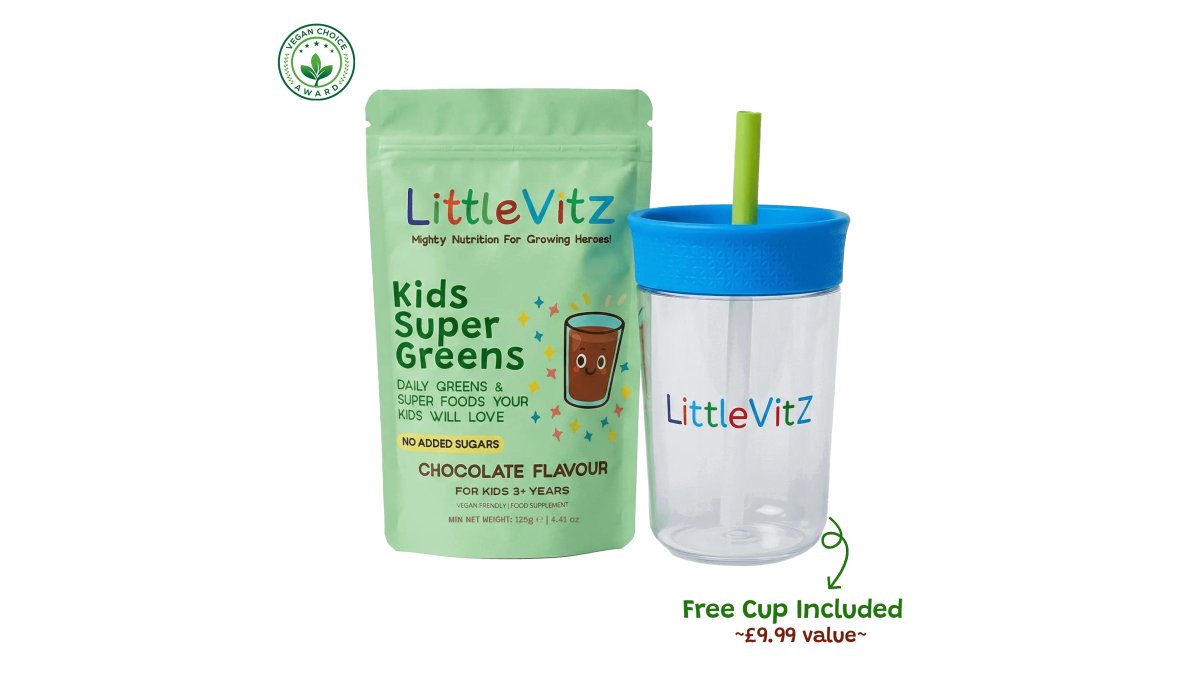
For a child who eats a narrow range of foods, that chocolate taste is the whole game. A powder that disappears into a morning milkshake is far more likely to be taken daily than a chalky tablet or a capsule. It contains no added sugar, which matters for parents watching sweeteners.

Best for: parents of picky eaters who need a convenient daily top-up. Skip if: your child already eats a wide, varied diet and takes a simple multivitamin happily.
The full tub is £34.99, and a trial pouch at £12.00 lets you test it before committing. You can see the full Kids Super Greens range on our site.

2. Kids Vitamins for Immune Support: What to Look For in a Daily Multivitamin
A daily multivitamin is the simplest way to cover the nutrients a fussy eater may miss, but not all are equal. Look for one that lists vitamin A, vitamin C, vitamin D, and zinc, since these are the nutrients most tied to normal immune function.
Check the age band on the label and match it to your child. Watch the serving size, and avoid products that hide a long list of extras behind vague wording. Clear, honest labelling beats a crowded label every time. If you are weighing up formats, our guide on powder vs gummy vitamins for kids' immunity digs into which suits different children.
3. Vitamin D for Children: The Nutrient Most School Kids Fall Short On
Vitamin D is the nutrient many children fall short on, especially through the winter months when sunlight is weak. It supports normal immune function and healthy bones, and it is hard to get enough from food alone.
A simple drop or chewable covering this is a sensible addition to any routine. Keep the dose to the age-appropriate level on the label, and ask your pharmacist or health visitor if you are unsure.
4. Probiotics and Gut Health: Supporting Immune Function From the Inside
Gut health and immune health are often discussed together. For school-age children, that connection matters in practical ways: a child with a sensitive stomach may eat less, absorb less, and miss more school days. Alongside gut-friendly foods and supplements, mild herbal tea blends can offer another comforting way to make everyday hydration part of a child’s routine.
Probiotic supplements aim to support a healthy balance of gut bacteria. First, a clear strain list, named strains such as Lactobacillus and Bifidobacterium species, rather than vague "friendly bacteria" wording. Second, an age-appropriate dose stated on the label, because children's products are formulated differently from adult ones. Third, a format your child will actually take: powders that mix into milk or yoghurt are usually easier for younger school-age children than capsules, which many under-eights cannot swallow comfortably.
Food does a lot of this work too. Yoghurt, kefir, and fermented foods are everyday gut-friendly options, and fibre from fruit, vegetables and wholegrains feeds the good bacteria already there.
Watch out: if your child has a sensitive gut, allergies, or a diagnosed digestive condition, introduce one change at a time and give it a week or two before adding anything else, so you can tell what is helping and what is not. Speak to your child's clinician before starting any new supplement.
Our digestive health page explains how LittleVitz supports everyday gut-friendly nutrition, and if you are weighing up formats, our guide on powder vs gummy vitamins for kids' immunity covers which suits different children.
5. Children's Supplement Safety: Age-Specific Doses and Upper Limits
Safety comes before everything else, and this is the section most roundups skip. Children's supplement safety means matching the dose to your child's age, staying under the upper limit for each nutrient, and never stacking two products that contain the same vitamin.
Here is a practical reference for the nutrients that matter most for school-age immune support. Always check the label on your child's product and confirm with your GP, pharmacist or health visitor if you are unsure.
| Nutrient | Why it matters for school-age children | Daily reference intake (4-10 years) | What to watch |
|---|---|---|---|
| Vitamin A | Supports normal immune function and healthy skin | Roughly 400-500 micrograms | Fat-soluble, so it builds up, do not exceed the label |
| Vitamin C | Supports normal immune function and helps iron absorption | Roughly 30-50 mg | Very high doses can upset young stomachs |
| Vitamin D | Supports normal immune function and healthy bones | 10 micrograms (400 IU) every day, year-round | The most commonly under-supplied nutrient in winter |
| Zinc | Contributes to normal immune function and growth | Roughly 5-7 mg | Long-term high doses can interfere with copper |
A few rules of thumb keep this simple. First, add up every product your child takes, a multivitamin, a greens powder and a separate vitamin D drop can all contain the same nutrient, and doubling up is the most common mistake we see. Second, keep supplements on a high shelf and out of reach, because chewables and gummies look like sweets. Third, introduce one new product at a time so you can spot any reaction.
Watch out: if your child takes prescribed medication, has a long-term condition such as asthma or diabetes, or is under a paediatric team, speak to their clinician before adding any supplement, some nutrients interact with medicines, and the right dose may differ from the general figures above.
When might a supplement genuinely be needed? A common pattern is a child who eats a narrow rotation of foods or avoids fruit and vegetables. Our guide on how to read supplement labels walks you through checking doses yourself, and if you want to see how a broad formula fits a fussy eater's routine, the LittleVitz Kids Super Greens range lists every ingredient and amount per serving.
Choosing Your Child's Immune Support Supplement
Start with the diet, then fill the gaps. If your child eats well, a simple multivitamin and a vitamin D top-up may be all they need. If mealtimes are a battle and fruit and veg rarely make it in, a broad, easy-to-take powder like LittleVitz Kids Super Greens does more of the heavy lifting.
Whichever you choose, keep expectations realistic. Supplements can support normal immune function as part of a balanced routine. Pair them with sleep, activity, and handwashing for the best foundation.
Ready to see if your child will take to it? Try the Kids Super Greens trial pouch first, or explore the full range to find the right fit for your family.
Frequently Asked Questions
What vitamins are important for children's immune health?
Vitamin A, vitamin C, vitamin D and zinc all play a role in normal immune function. A balanced diet usually covers most of these, but picky eaters can fall short, which is where a daily supplement like LittleVitz Kids Super Greens can help fill the gaps.
Do school-age children need an immune support supplement?
Most children get enough nutrients from a varied diet, so a supplement is not essential for everyone. However, if your child eats a limited range of foods, avoids fruit and vegetables, or has a restricted diet, a daily supplement can help prevent nutrient deficiencies that may affect immune health. Speak to your GP or a registered dietitian before starting any supplement, especially if your child takes medication or has a health condition.
How can parents choose a supplement for a picky eater?
Look for a product your child will actually take, whether that is a chocolate-flavoured powder, a chewable tablet or a gummy. Check the label for the nutrients included, the serving size and any added sugar. LittleVitz Kids Super Greens is a chocolate-flavoured powder made with real greens, fruits, vitamins and minerals, designed to mix into milk or smoothies, which can suit children who refuse tablets or dislike the taste of traditional greens.
Is it safe to give children more than one vitamin supplement?
Giving more than one supplement can lead to exceeding the upper intake level for certain vitamins and minerals, . Always check the labels of every product your child takes and add up the total. If you are unsure, ask a pharmacist or your GP. Children's supplement safety depends on age-appropriate doses, so never give an adult supplement to a child.
Can a nutrition powder help picky eaters get more nutrients?
Yes, a nutrition powder can be a practical way to add vitamins, minerals and superfoods to a child's diet, especially if they refuse vegetables or eat a narrow range of foods. LittleVitz Kids Super Greens is a chocolate-flavoured powder that mixes into milk, smoothies or shakes, providing a convenient addition to a daily routine. It is not a replacement for a balanced diet, but it can help bridge gaps while you work on broadening your child's food choices.
Every parent wants a child who fights off the school-term bugs with ease, and the right daily habit makes that easier to support. LittleVitz Kids Super Greens is a chocolate-flavoured powder made with real greens, fruits, vitamins, and minerals, with no added sugar and a taste kids actually enjoy. Get started with LittleVitz and give your fussy eater a daily top-up they will happily drink.
