

Last Updated: November 13, 2026
Quick Summary
The most reliable natural ways to boost child immunity are sleep, food, movement and hygiene, repeated day after day. A varied diet of fruit, vegetables, beans, eggs, dairy, fish and wholegrains covers key nutrients, while a daily vitamin D supplement is recommended.
- Aim for a consistent bedtime and a calm wind-down, as tired children catch more bugs.
- Wash hands with soap and warm water for twenty seconds before meals and after the loo.
- Check the per serving column on supplement labels and stay close to the recommended daily amount.
- Offer new foods alongside safe favourites, keep portions small, and let your child decide how much to eat.
- Speak to your GP if infections are severe, slow to clear, or come with poor growth or tiredness.
Table of Contents
- Start With the Basics: How a Child's Immune System Works
- Foods That Support Children's Immune System: What to Put on the Plate
- Vitamins for Children's Immune System: Which Ones Actually Matter
- Healthy Habits for Children: Sleep, Movement and Hand-Washing
- Picky Eaters and Nutrition: Bridging the Gaps Without the Battles
- When to Speak to Your GP About Frequent Infections
- Building Your Child's Daily Immune Routine
- Frequently Asked Questions
Start With the Basics: How a Child's Immune System Works
A child's immune system is the body's built-in defence network, and the everyday habits that boost child immunity matter more than any one quick fix. That is why the most reliable natural ways to boost child immunity come down to sleep, food, movement and hygiene, repeated day after day. Many parents feel they are losing the veggie battle, and the good news is that small, steady changes genuinely add up.
Think of the immune system as a team in training. It learns by meeting germs, recovering well, and getting the right fuel. No single superfood does the job alone.
If you want the full picture of how this works, our guide to a natural immunity boost for kids walks through the science in more depth.
Foods That Support Children's Immune System: What to Put on the Plate
The foods that support children's immune system are the ordinary ones you already buy: fruit, vegetables, beans, eggs, dairy, fish and wholegrains. Variety matters more than perfection. A child who eats a rainbow across the week is usually getting a good spread of nutrients.

Everyday Foods Worth Reaching For
- Citrus fruit and berries for vitamin C
- Carrots, sweet potato and spinach for vitamin A
- Eggs, beans and chicken for protein and zinc
- Yoghurt and milk for calcium and gut-friendly cultures
- Oily fish for vitamin D and omega-3s
Reading the Label: What to Look For
Packaged snacks are where things get murky. The NHS guidance on food labels explains how to read the nutrition information panel, and it is worth a look before your next shop.
Start with the per 100 g column, then look at the per serving column. A snack can look low in sugar per 100 g but deliver a lot in the portion your child actually eats. Front-of-pack traffic-light colours are a quick guide: aim for more green and amber, and treat red as an occasional choice. Check the total sugars line rather than relying on a "no added sugar" claim, because that claim does not mean low sugar overall.
Portions That Fit Your Child, Not the Packet
A common trap is treating the packet serving as a child-sized portion. A child's age, appetite and eating pattern all affect how much they need, so compare snacks on the same basis, usually per 100 g, and then scale to the portion you would actually serve. A younger child may eat half a packet; an older child may eat more. The label tells you what is in the food, not what is right for your child.
A Worked Snack Comparison
Take two common children's snacks: a cereal bar and a small bag of baked crisps. On the per 100 g column, the cereal bar may show more sugar and the crisps more salt. Per serving, the picture can flip depending on packet size. Read both columns, check the traffic lights, and look at the ingredient list, ingredients are listed in order of weight, so a sugar or syrup near the top means it is a major component. Use-by dates matter for fresh snacks; best-before dates are about quality rather than safety. Store snacks as the pack instructs, especially once opened.
Allergens and Claims
Allergens are usually emphasised in the ingredient list, often in bold, and advisory statements such as "may contain" sit nearby. These are ingredient and safety information, not nutrition information, so read them separately. Marketing claims such as "natural" or character-led packaging can differ from the overall nutrition profile, so let the panel and traffic lights guide you rather than the front of the pack. Fibre, protein and relevant micronutrients all matter too; no single nutrient decides whether a snack is suitable.
Vitamins for Children's Immune System: Which Ones Actually Matter
The vitamins for children's immune system that matter most are vitamin C, vitamin D, vitamin A and zinc. Vitamin D is the one worth knowing about, because it is hard to get from food alone.
The NHS advice on vitamin D for children sets out the daily supplement recommendation for little ones. If you are weighing up vitamin C, our guide on how to tell if daily vitamin C is safe for toddlers covers safe amounts.
Checking Whether the Diet Already Covers It
Before adding a supplement, look at what your child eats across a typical week rather than a single day. Fruit and vegetables cover vitamin C and vitamin A; eggs, beans, chicken and dairy cover protein and zinc; oily fish helps with vitamin D and omega-3s. A child who eats a varied diet most days is usually getting a good spread. Supplements help fill gaps, not replace meals. A varied week of meals can also make it easier to build a plate around nourishing ingredients, as Hot Rawks explores.
Reading a Supplement Label
Supplement labels work differently from food labels. Check the per serving column rather than per 100 g, because you are giving a measured amount. Look for the percentage of the reference intake for each vitamin and mineral, and compare that with the NHS guidance for your child's age. Watch out: more is not better, and some vitamins can be harmful in large amounts, so stay close to the recommended daily amount rather than doubling up.
When a Top-Up Makes Sense
Some children eat well at nursery but barely touch dinner, or go through weeks of refusing vegetables. Speak to your GP or health visitor about whether a supplement is right for your child. If you are worried a limited diet is leaving broader gaps, our article on signs of nutritional deficiencies in children helps you spot the warning signs, and our guide to natural immunity boosters for picky eaters has fussy-eater-specific ideas.
Here are the key nutrients the article highlights, and where children get them from.
| Nutrient | Found in | Note |
|---|---|---|
| Vitamin C | Citrus fruit and berries | Covered by fruit and vegetables |
| Vitamin A | Carrots, sweet potato and spinach | Covered by fruit and vegetables |
| Zinc | Eggs, beans and chicken | Also covered by dairy |
| Vitamin D | Oily fish | Hard to get from food alone; daily supplement recommended |
| Omega-3s | Oily fish | Supports the diet alongside vitamin D |
| Protein | Eggs, beans, chicken and dairy | Part of a varied weekly diet |
Healthy Habits for Children: Sleep, Movement and Hand-Washing
Healthy habits for children do more for immunity than any single ingredient. Sleep is the big one. A tired child catches more bugs. Aim for a consistent bedtime and a calm wind-down.
Movement matters too. Running, climbing and playing outdoors support overall health and mood. And hand-washing remains one of the simplest defences: soap, warm water, twenty seconds, before meals and after the loo.
The NHS hand-washing guidance is a handy one to share with little ones.
Picky Eaters and Nutrition: Bridging the Gaps Without the Battles
Picky eaters and nutrition is where many parents feel stuck. Pressure backfires. A calm, no-drama approach works better: offer new foods alongside safe favourites, keep portions small, and let your child decide how much to eat.
If you are worried a limited diet is leaving gaps, our article on signs of nutritional deficiencies in children helps you spot the warning signs. And for fussy-eater-specific ideas, see our guide to natural immunity boosters for picky eaters.
When a Chocolate Powder Makes Sense
Some days, the plate comes back untouched. That is where a supplement can bridge the gap without a fight.
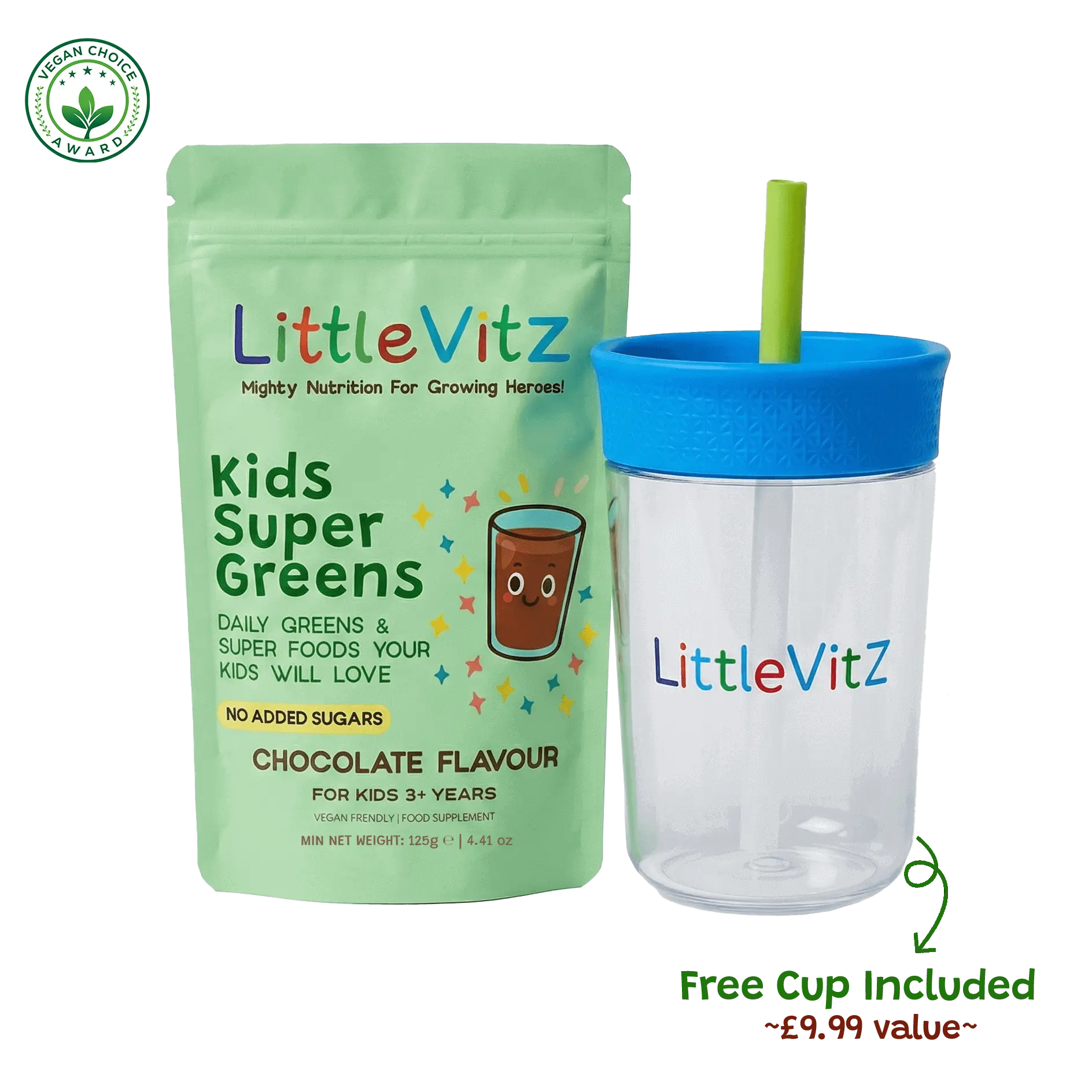
Our Kids Super Greens is a chocolate-flavoured nutritional powder made with a blend of vegetables, fruits, vitamins and minerals. It mixes easily into milk, smoothies or shakes, so it slots into a routine your child already enjoys.
When to Speak to Your GP About Frequent Infections
Most childhood sniffles are normal. But speak to your GP if your child has frequent infections that seem severe, are slow to clear, or come with poor growth or persistent tiredness. Trust your instincts, and a quick check with your GP is always worthwhile.
Building Your Child's Daily Immune Routine
A daily routine beats occasional bursts of effort. Keep it simple and repeatable:
- Morning: a breakfast with fruit or veg, plus milk or yoghurt
- Afternoon: outdoor play and a balanced lunch
- Evening: a calm wind-down and a consistent bedtime
- Daily: a vitamin D supplement, and a nutrient top-up if the plate was light
Small habits, stacked together, add up over time. If you want a simple way to fill the gaps on fussy days, our chocolate Super Greens powder makes it easy.
Building a strong immune system is not about one perfect meal. It is about showing up with small, steady habits, even when the veggie battle feels endless. LittleVitz is here to help you bridge those gaps, with a chocolate-flavoured powder made with real greens, fruits and vitamins that kids actually enjoy. Explore our Kids Super Greens range and turn daily nutrition into a treat, not a fight. Get started with LittleVitz and support your child's immunity with a routine you can both stick to.
Frequently Asked Questions
How can I support my child's immune system naturally?
Focus on the everyday foundations: a varied diet with plenty of fruit and vegetables, enough sleep for their age, regular movement and good hand-washing. These habits do more for a child's immune system than any single product. If your child is a picky eater, bridging nutrient gaps with a supplement can help, but it sits alongside the basics rather than replacing them. Speak to your GP if you are worried about how often your child gets ill.
Do children need vitamin supplements for immune health?
Most children who eat a varied diet get what they need from food. If your child eats a limited range of foods, a supplement can help fill gaps, but check with your GP or health visitor first. Look for one with a clear ingredient list and no added sugar, and check the label for the age range it is suitable for.
How can I encourage a picky eater to eat a balanced diet?
Keep offering new foods without pressure, serve small portions alongside foods they already accept, and eat together where you can. It can take many tries before a child accepts a new food. If their diet stays very limited, a nutritional powder mixed into milk or a smoothie can add vitamins, minerals and superfoods without a mealtime battle. Speak to your GP or health visitor if you are worried about growth or nutrition.
Does sleep affect children's immune health?
Yes. Sleep is when the body does much of its repair work, and children who consistently get enough sleep tend to cope better with everyday bugs. The amount needed varies by age, so check the recommended hours for your child's age and aim for a consistent bedtime routine. A calm wind-down, dimmed lights and a regular schedule all help. If sleep is a persistent struggle, your health visitor or GP can offer guidance.
