

Table of Contents
- Easy Healthy Snack Ideas for Children Who Need More Nutrients
- Healthy Snacks for Picky Eaters: Iron-Rich Snacks for Kids
- How to Hide Vegetables in Smoothies and Snacks
- When Snack Changes Are Not Enough
- Frequently Asked Questions
Last Updated: October 16, 2026
Easy Healthy Snack Ideas for Children Who Need More Nutrients
Worried about healthy snacks for nutrient deficient kids? You are not alone, small, regular snacks quietly close gaps that dinner never will. Build each snack around one nutrient: iron (boiled egg slices, lentil hummus with pitta), calcium (cheese cubes, yogurt with mashed berries), healthy fats (avocado on oatcakes), fibre (sweet potato wedges, unsalted popcorn) and vitamin C (orange segments, tomato halves). Pairing matters: vitamin C helps the body take up iron from plant foods, so berries alongside a lentil dip do more than either alone.
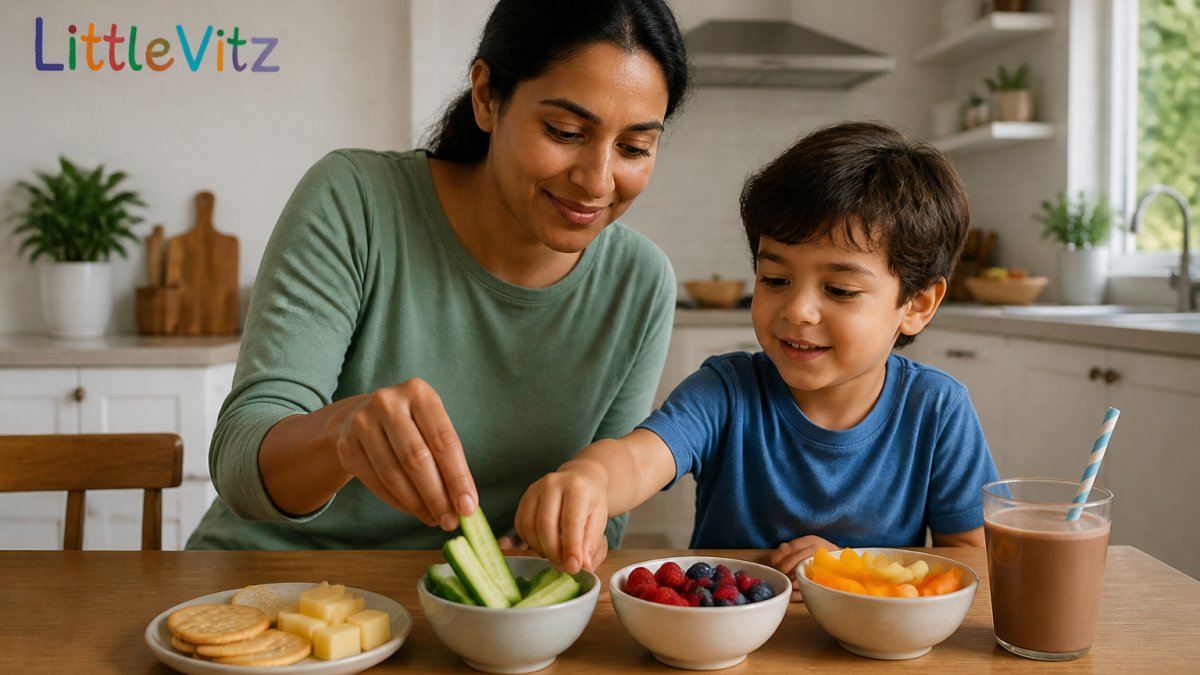
For more on what children actually need at each stage, the NHS guidance on healthy eating for children is a sensible starting point.
Healthy Snacks for Picky Eaters: Iron-Rich Snacks for Kids
Iron supports energy, concentration and growth, and slips first when a child lives on a narrow set of foods. Keep iron-rich snacks for kids small and easy to eat: boiled egg quarters, lentil or chickpea hummus with soft flatbread fingers, fortified oatcakes with nut butter, or beans mashed into a pitta pocket. Serve with a little fruit or a few tomato halves, the vitamin C helps the body absorb more iron. If your child refuses meat, plant sources of iron work well when paired thoughtfully.
How to Hide Vegetables in Smoothies and Snacks
Hiding vegetables is not about tricking your child, it lowers the barrier so a food they would refuse on a plate still reaches them. Smoothies are the easiest place to start: spinach blends invisibly into a banana and berry smoothie, cooked carrot disappears into a mango blend, courgette vanishes into almost any fruit mix, cooked beetroot turns it bright pink, and avocado makes it creamy. In snacks, grate carrot into oat bars, mash sweet potato into flatbread dough, or finely chop mushrooms into a tomato sauce on pitta pizza. Hiding works best as a bridge, not a permanent solution, keep offering the whole vegetable on the plate too. For children with sensory issues or very limited diets, the NHS advice on fussy eating offers practical, judgement-free guidance.
When Snack Changes Are Not Enough
Sometimes the gaps are too wide for food alone. If your child eats a very narrow range of foods, has ongoing digestive trouble, or you have noticed persistent tiredness, a change in appetite or slow growth, speak to your GP or health visitor, guessing at supplements is not reliable. For families who want a simple, everyday top-up alongside real food, our Kids Super Greens is a chocolate-flavoured powder made with a blend of vegetables, fruits, vitamins and minerals. It mixes into milk, smoothies or shakes, making it an easy addition to a routine that already includes the snacks above. If you would rather try it first, the Kids Super Greens Trial Pouch gives you five servings to see how your child gets on.


| What You Need | Snack Idea | Why It Helps |
|---|---|---|
| Iron | Boiled egg, lentil dip | Supports energy and concentration |
| Calcium | Cheese cubes, yogurt | Supports growing bones |
| Healthy fats | Avocado on oatcakes | Steady energy through the day |
Worrying about a child's nutrition is exhausting, especially when mealtimes already feel like a fight. Start with one nutrient, one snack and one small swap, then build from there. If you want a helping hand on the days when the plate comes back untouched, our Kids Super Greens 2 Pack is made with real greens, fruits and vitamins, and mixes into the drinks your child already loves. Get started with LittleVitz and take one small worry off your list.

Frequently Asked Questions
What are some good nutrient-dense snacks for kids?
Think small portions with a clear job to do. Oatcakes with nut butter, plain yogurt with berries, boiled egg with cucumber sticks, hummus with pitta, and mashed avocado on wholemeal toast all pack in nutrients without a battle. For children who refuse most of these, LittleVitz Kids Super Greens mixes into milk or a smoothie as a chocolate drink, adding vegetables, fruits, vitamins and minerals to the day without a plate of food to negotiate over.
Which foods are rich in iron for children?
Lentils, chickpeas, beans, fortified cereal, wholemeal bread, dried fruit and eggs all supply iron. Pair plant sources with vitamin C, such as a few slices of orange or some berries, because that combination helps the body absorb more of the iron. If you suspect your child is low in iron, speak to your GP before adding supplements, since iron needs are individual and a blood test gives a clearer picture.
How can I make healthy snacks more appealing to picky eaters?
Keep the format familiar and the portions small. Cut fruit into skewers, serve dips in little pots, and let your child choose between two options rather than being handed one. Children often accept a new food after seeing it several times without pressure. A chocolate-flavoured drink that mixes into milk can also help, because it feels like a treat while quietly adding vegetables, fruits and vitamins to the day.