

Last Updated: November 5, 2026
Quick Summary
Healthy snack ideas for active growing children combine foods from different groups, such as fruit with yoghurt or vegetable sticks with hummus, to deliver fibre, protein and carbohydrates in one go. Match the snack to the timing and your child's age: a small mini-meal about two hours before activity, a lighter snack an hour before, and a carbohydrate-rich bite around half an hour before.
- Pair fruit with yoghurt, or vegetable sticks with hummus, for fibre, protein and carbohydrate together.
- About two hours before activity, a small wholemeal pitta with cheese and cucumber works well.
- About 30 minutes before activity, go small and mostly carbohydrate, such as half a banana.
- Toddlers need a snack about the size of their palm; older children need one and a half handfuls.
- Cut grapes lengthways into quarters for under-fives to reduce the choking risk.
Table of Contents
- Why Snacks Matter for Active Growing Children
- Pre-Sport Snacks for Children: What to Eat Before Activity
- Post-Exercise Snacks for Kids: Refuelling After Play
- Easy Snacks Children Can Make Themselves
- Healthy Packed Snacks for Kids on the Go
- Hydration, Portions and Safety at Snack Time
- Adding Extra Nutrition to Everyday Snacks with Kids Super Greens
- Putting Your Child's Snack Plan into Action
- Frequently Asked Questions
Why Snacks Matter for Active Growing Children
Snacks do a lot of work for a growing child. They fill the gap between meals, steady energy during busy afternoons, and give small bodies the nutrients they need to keep growing. Choosing healthy snack ideas for active growing children means a well-chosen snack can carry real goodness, while a rushed packet of crisps offers little beyond a quick sugar hit.
The best snacks combine foods from different groups. Pair fruit with yoghurt, or vegetable sticks with hummus, and you get fibre, protein and carbohydrates in one go. Think of snack time as a chance to add nutrition, not just to stop hunger.
Many parents find that their children eat better when they feel involved. Letting your child choose between two healthy options, or help wash the fruit, often makes a real difference at the table.
Pre-Sport Snacks for Children: What to Eat Before Activity
Before football, swimming or a dance class, a small snack gives children the fuel they need without weighing them down. The trick is matching the snack to how long they have before they start moving, and to how old they are, which is the key to picking healthy snack ideas for active growing children.
Timing tiers that actually work
- About 2 hours before: a proper mini-meal sits comfortably. Try a small wholemeal pitta with cheese and cucumber, a bowl of porridge made with milk and topped with banana, or beans on half a slice of wholemeal toast. These combine carbohydrate for energy with protein to steady the release.
- About 60 minutes before: keep it lighter. A banana with two or three oatcakes, a pot of yoghurt with berries, or a slice of malt loaf works well and is easy on the stomach.
- About 30 minutes before: go small and mostly carbohydrate. Half a banana, a few plain rice cakes, or a small handful of low-fibre cereal. Anything heavier may sit uncomfortably once they start running.
Age-aware portions
A four-year-old and a twelve-year-old should not be eating the same pre-match snack. As a rough guide, a younger child needs about half the portion of an older one. A banana plus two oatcakes suits a five- to seven-year-old; an eight- to eleven-year-old may want the banana, three or four oatcakes and a small yoghurt; a teenager heading into a longer session can add a second carbohydrate item. Watch your child rather than the clock, if they leave food, they were probably given too much.
Match the snack to the session
A 20-minute kickabout in the garden needs very little. A 90-minute match or a swimming gala with several races needs more, and the gap between snack and start matters more. For longer or hotter sessions, pair the snack with water and encourage small sips before, during breaks and after.
What to avoid right before activity
Very fatty, very fibrous or very large portions are the usual culprits for stitch and nausea. Chips, heavy cheese-heavy pastries, large salads and big bowls of high-fibre cereal are best saved for afterwards.
Allergy-aware swaps
If your child avoids dairy, swap the yoghurt for a fortified plant-based alternative and the pitta-and-cheese for pitta and hummus. For a nut-free setting, replace any nut butter with sunflower seed butter and check labels on cereal bars. For a gluten-free option, use gluten-free oatcakes or a small portion of gluten-free porridge.
Watch out: a big meal close to activity is a common mistake. If your child is about to play, keep the portion small and give them time to settle before they run around.
Post-Exercise Snacks for Kids: Refuelling After Play
After activity, children need to replace energy and support muscle recovery. A handy mixer wand makes blending greens into milk or water quick and easy after play. A snack that combines carbohydrates with protein works well. Chocolate milk is a classic choice, and a drink made by mixing LittleVitz Kids Super Greens into milk adds vegetables and fruit to the mix.

Keep portions in proportion to the activity. A short play session needs less than a full afternoon of football, and most children will simply tell you when they are hungry again.
Easy Snacks Children Can Make Themselves
Children are far more likely to eat what they have helped prepare. Simple tasks such as spreading, layering or stirring suit most ages and build confidence in the kitchen.
Try a chocolate overnight oats pot. Mix oats with milk and yoghurt, and let it sit in the fridge overnight. In the morning, your child can top it with sliced banana or a few berries.
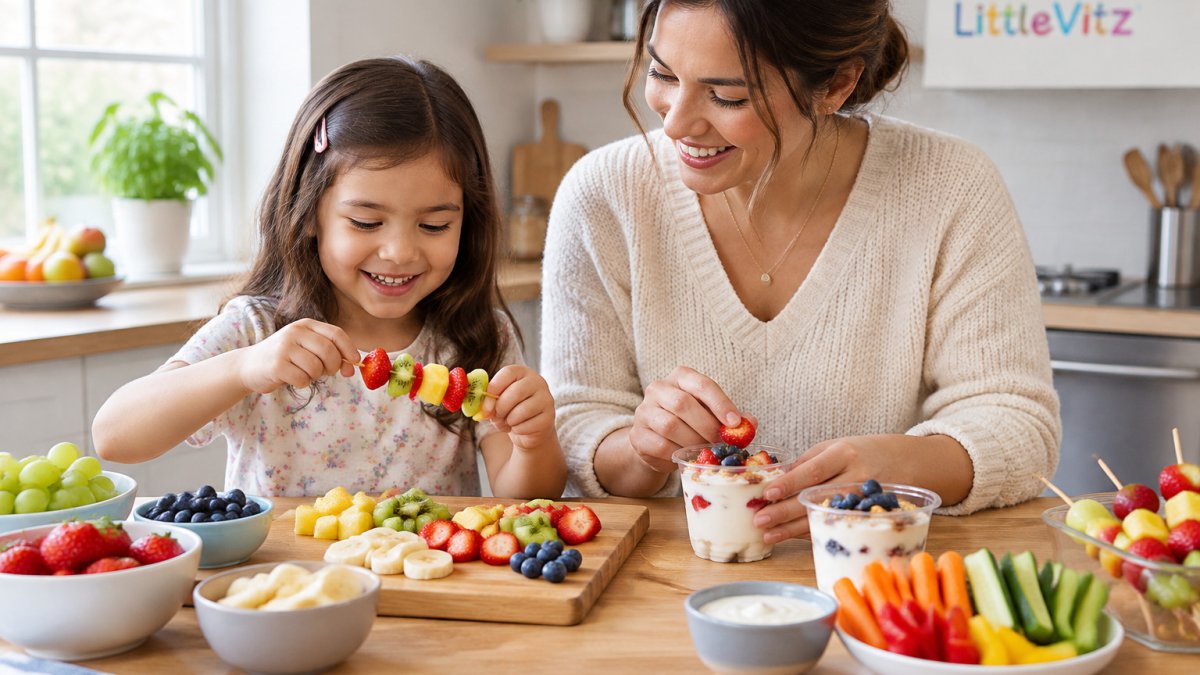
Fruit skewers are another easy win. Let your child thread chunks of melon, grapes and strawberries onto blunt sticks. Choose pieces that are easy to hold, and always cut grapes lengthways for younger children.
For more ideas, see our guide to 5 ways to use LittleVitz Kids Super Greens, which includes simple snacks children can help make.
Healthy Packed Snacks for Kids on the Go
Lunchbox snacks need to survive a morning in a bag. Choose foods that hold up well at room temperature and need no reheating.
Good choices include cheese cubes, whole-grain crackers, cucumber and pepper sticks, hard-boiled eggs and small pots of hummus. Pack a freezer block in the lunchbox to keep yoghurt or milk cool until lunchtime.
Overnight oats also travel well and need no fuss at school. Use an insulated pot to keep it fresh.
Hydration, Portions and Safety at Snack Time
This is where most snack guides stop at 'cut the grapes'. A little more detail makes the difference between a plan that works every day and one that falls apart on a busy Tuesday.
Portions by age and appetite
A snack should bridge the gap to the next meal, not replace it. As a rough guide:
- Toddlers (1-3): a snack about the size of their own palm, half a banana, a few soft vegetable sticks, a small pot of yoghurt.
- Young children (4-8): roughly a handful, a whole banana plus a couple of oatcakes, or a small pitta with hummus.
- Older children (9-12): one and a half handfuls, a pitta with cheese and cucumber, or yoghurt with fruit and a few seeds.
- Teenagers: closer to two handfuls, especially on training days, with an extra carbohydrate item if they are very active.
Appetite varies hugely day to day, so treat these as starting points and let hunger cues lead. A child who regularly leaves half their snack is being over-served; one who is ravenous an hour later may need a slightly bigger or more protein-rich option.
Hydration alongside snacks
Water should be the everyday drink (the NHS). As a rough guide, younger children need around four to five small cups a day, rising to six to eight for older children, and more in hot weather or on active days. Offer a drink with every snack, keep a bottle within reach after play, and encourage small sips rather than large gulps.
Safety and choking-risk adaptations
Whole grapes, whole nuts, popcorn, raw carrot chunks, hard sweets and large dollops of nut butter can cause choking in young children (the NHS). Adapt rather than avoid:
- Cut grapes, cherry tomatoes and large berries lengthways into quarters for under-fives.
- Grate or finely chop raw carrot and apple, or cook them soft.
- Choose smooth nut butter spread thinly rather than a spoonful.
- Halve and quarter round foods, and supervise eating at the table rather than on the move.
Storage and packed-snack safety
Foods that hold up at room temperature include cheese cubes, whole-grain crackers, vegetable sticks, hard-boiled eggs and small pots of hummus. Add a freezer block to keep yoghurt, milk or cooked meats cool until lunch.
Allergy-aware substitutions
For dairy-free families, swap yoghurt for a fortified plant-based alternative and cheese for hummus or mashed avocado. For egg-free, replace hard-boiled eggs with cheese cubes or bean-based dips. For nut-free settings, use seeds, hummus or sunflower seed butter, and always read labels on cereal bars and crackers. For gluten-free, choose gluten-free oatcakes, rice cakes or pitta.
Watch out: the biggest risk is assuming a snack that is safe at home is safe in a shared lunchbox. Check the setting's allergy rules before you pack.
Here is a quick reference for portion sizes by age, drawn from the guidance above.
| Age group | Portion guide | Example snack |
|---|---|---|
| Toddlers (1-3) | About the size of their palm | Half a banana, soft vegetable sticks, small yoghurt |
| Young children (4-8) | Roughly a handful | Whole banana with a couple of oatcakes, small pitta with hummus |
| Older children (9-12) | One and a half handfuls | Pitta with cheese and cucumber, yoghurt with fruit and seeds |
| Teenagers | Closer to two handfuls | Larger snack, extra carbohydrate on training days |
Adding Extra Nutrition to Everyday Snacks with Kids Super Greens
Some children simply will not eat enough vegetables, and that is where an extra boost can help. Kids Super Greens is a chocolate-flavoured powder made with a blend of vegetables, fruits and vitamins. It mixes easily into milk, smoothies or shakes, so it fits into snacks your child already enjoys.
It is designed as a convenient addition to a daily routine, not a replacement for whole foods. Mix it into milk, smoothies or shakes, such as a banana smoothie. You can buy the powder at £34.99, or start with the Kids Super Greens Trial Pouch at £12.00 to see how your child responds.

Putting Your Child's Snack Plan into Action
Start small. Choose two or three snacks from this guide and rotate them through the week. Involve your child in planning, shopping and preparing, and keep a few easy options in the cupboard for busy days.
Plan a simple weekly rhythm: a pre-activity snack on sports days, a fruit-and-protein pick on other afternoons, and a packed lunch snack that travels well. Over time, you will learn what your child enjoys and what they will try again.
If you want to test the waters first, the Kids Super Greens 2 Pack at £52.99 gives you a longer run to build the habit. Whatever you choose, small, consistent changes add up.

Frequently Asked Questions
What are healthy snacks for active children?
Good options include fruit, vegetable sticks with hummus, plain yogurt with berries, oatcakes with cheese, wholemeal pitta with a nut-free spread, and boiled eggs. These foods combine carbohydrates for energy with protein and fibre to keep children going between meals. Choose whole foods where you can, and offer a mix of textures and colours so snack time feels fun rather than like a chore.
What should children eat before sport or exercise?
A pre-sport snack should be easy to digest and give steady energy. Try a banana with a few oatcakes, a small wholemeal sandwich, or a pot of yogurt with fruit, eaten around 30 to 60 minutes before activity. Keep portions modest, as a heavy snack can sit uncomfortably during running or games. Offer water alongside it so your child starts activity well hydrated.
What are good snacks for children after exercise?
After exercise, children benefit from a combination of carbohydrate to replace energy and protein to support recovery. Milk or a smoothie made with yogurt and fruit, a slice of wholemeal toast with cheese or nut butter, or hummus with pitta are all practical choices. Eating within an hour or so of finishing activity works well, and a drink of water helps replace fluid lost while playing.
Which snacks are easy to pack for school or activities?
Lunchbox-friendly snacks should hold up without a fridge for a few hours. Good choices include rice cakes, cherry tomatoes, cucumber sticks, grapes, apple slices with a squeeze of lemon, plain popcorn and small pots of hummus. Pack snacks in separate compartments to keep textures intact, and include a reusable water bottle so hydration is covered too.
